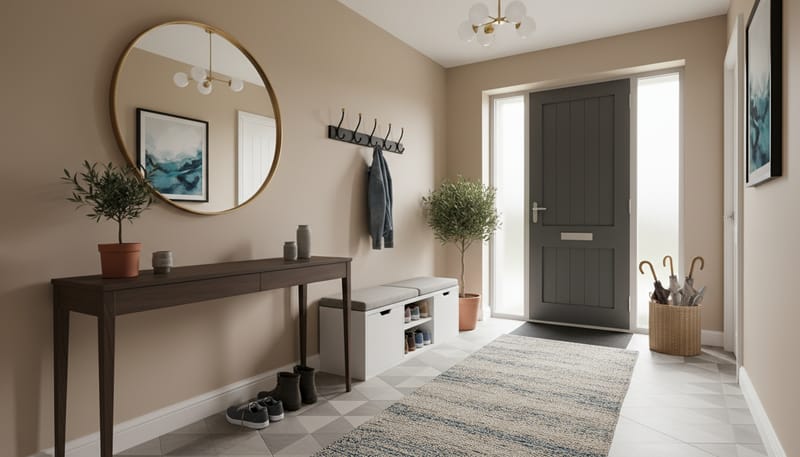
Why Your Hallway Matters More Than You Think
Interior designers call the hallway the "handshake of the home". Research from the National Association of Estate Agents shows that buyers form a lasting opinion of a property within the first 30 seconds of stepping through the front door. A cluttered, dim hallway can undermine thousands of pounds spent on a beautifully styled kitchen. Conversely, a hallway that feels welcoming and intentional carries that positive impression into every room that follows.
Beyond resale value, the hallway shapes your own daily experience. It is the last space you see before work and the first space that greets you at the end of the day. Getting it right does not require a renovation—it requires a plan. For a broader look at making your new build feel personal, see our guide to decorating a new build home.
First Impressions Checklist
- Clean sight line: Ensure the view from the front door is uncluttered and draws the eye to a focal point such as a mirror, artwork, or console table
- Warm lighting: Replace any cool-white bulbs with 2,700K warm white for an inviting glow the moment someone steps inside
- Pleasant scent: A reed diffuser on a console table or shelf adds an invisible layer of welcome
- Practical storage: Coats, shoes, and bags should have a designated home so the hallway stays tidy
- Personal touches: Framed photos, a favourite print, or a houseplant signal that the hallway is a room, not just a corridor
- Quality doormat: A good mat protects your flooring and signals care from the very threshold
What Developers Typically Provide
New build hallways arrive in a practical, move-in-ready state. Understanding the starting specification helps you prioritise upgrades and set a realistic budget.
- Walls: Smooth plasterboard finished in white or magnolia emulsion, ready for repainting without preparation
- Flooring: Builder-grade carpet or basic vinyl—functional but not hardwearing for heavy foot traffic
- Lighting: A single pendant ceiling rose, often with no bulb or shade supplied
- Doors: White moulded internal doors with chrome or satin-nickel handles
- Skirting and architrave: White MDF in an ogee or torus profile, typically 95–120 mm high
- Staircase: Softwood frame with painted square spindles and an oak or painted handrail
- Radiator: Single or double white panel radiator, usually on the wall opposite the staircase
- Under-stair cupboard: A basic door opening into the triangular space beneath the stairs—no shelving or organisation inside
None of these items are flaws; they are a solid, neutral foundation. Every upgrade you make from here is about personalisation, not correction.
Typical New Build Hallway Dimensions
Before ordering furniture or planning a gallery wall, measure your space. New build hallways are more compact than those in Victorian or Edwardian homes, so every centimetre counts. Here are the ranges you can typically expect across different house types.
- Width: 900 mm (compact terrace) to 1,200 mm (detached four-bed). Anything under 1,000 mm rules out standard-depth console tables
- Length: 2,500 mm in a two-bed terrace up to 4,500 mm in a large detached home
- Ceiling height: 2,400 mm as standard—lower than the 2,700–3,000 mm in period properties
- Staircase: Typically rises along one side wall, consuming 800–900 mm of hallway width on the open side
- Under-stair cupboard: Roughly 1.5–2.5 m² of usable floor area inside
Always measure before buying. A console table that looks elegant in a showroom can overwhelm a 950 mm-wide corridor. If in doubt, use painter's tape on the floor to mark the footprint of any furniture you are considering.
Flooring: Hardwearing Options for the Busiest Room
The hallway floor endures more daily traffic than any other surface in the home—muddy boots, pushchair wheels, pet paws, and the constant back-and-forth of family life. Replacing the builder-standard carpet with a durable, easy-clean surface is one of the highest-impact upgrades you can make. For an in-depth look at every flooring type, see our dedicated guide to flooring options for new build homes.
| Flooring Type | Cost per m² (Supply) | Fitted Cost (5 m² Hallway) | Durability Rating | Water Resistance | Underfloor Heating | Best For |
|---|---|---|---|---|---|---|
| Luxury Vinyl Tile (LVT) | £20–£70 | £200–£500 | Excellent | Fully waterproof | Compatible | Families, pets, high traffic |
| Porcelain Tile | £25–£65 | £275–£575 | Outstanding | Fully waterproof | Ideal pairing | Contemporary style, longevity |
| Engineered Oak | £35–£80 | £275–£550 | Good (can scratch) | Moisture-resistant, not waterproof | Compatible | Warmth, natural beauty |
| Ceramic Tile | £15–£40 | £200–£400 | Very good | Fully waterproof | Ideal pairing | Budget-friendly hard floor |
| Laminate | £10–£30 | £100–£250 | Moderate | Splash-proof only | Check manufacturer | Tight budgets, DIY install |
| Carpet Runner over Hard Floor | £20–£60 (runner per linear m) | £80–£250 (runner only) | Good (runner is replaceable) | Hard floor beneath is protected | Depends on base floor | Best of both worlds: warmth + practicality |
LVT remains the most popular hallway choice in UK new builds. Brands such as Amtico, Karndean, and Quick-Step Livyn offer convincing wood and stone-effect finishes that are completely waterproof and scratch-resistant. Budget LVT from Topps Tiles, B&Q, or Wickes starts from as little as £15–£20 per m², making a hallway refresh achievable for under £200.
If you choose hard flooring, consider running the same material into adjacent rooms. This eliminates visual breaks at thresholds and makes both spaces feel larger—one of the most effective design tricks for compact new builds. For more on connecting spaces, see our article on open-plan living in new build homes.
Colour Schemes for Narrow Hallways
Colour has the power to make a narrow corridor feel twice as wide or a dark passage feel bright and airy. The trick is working with the proportions and light levels of your hallway rather than against them. For a full breakdown of colours room by room, see our guide to colour schemes for new build homes.
Recommended Palettes
- Warm whites: Farrow & Ball Skimming Stone (No. 241), Dulux Natural Hessian, Lick White 03—safe, spacious, works with any accent
- Soft greige: Little Greene French Grey (No. 113), Craig & Rose Hog Bristle—adds warmth without shrinking the space
- Pale sage green: Farrow & Ball Mizzle (No. 266), Dulux Heritage DH Green—fresh, on-trend, pairs beautifully with oak accents
- Dusky pink: Farrow & Ball Setting Plaster (No. 231), Lick Pink 03—surprisingly neutral, creates a warm, welcoming glow
- Bold dark (wider hallways only): Farrow & Ball Hague Blue (No. 30), Little Greene Obsidian Green (No. 216)—dramatic and cocooning when paired with strong lighting
- All-one-colour trick: Paint walls, skirting, architrave, and doors in a single shade to blur boundaries and make narrow spaces feel wider
Colour Tricks for Proportions
- Paint the end wall one or two shades deeper than the side walls to shorten a tunnel-like corridor
- Keep the ceiling white or very pale—even in a dark scheme—to preserve a sense of height
- Use eggshell or satin on woodwork rather than high gloss, which reflects light unevenly in narrow spaces
- Test paint samples on the darkest wall of your hallway; colours look very different away from windows
- If choosing a dark palette, add a large mirror opposite the lightest point to bounce light back into the space
A 2.5-litre tin of premium emulsion from Farrow & Ball costs around £55, Dulux Heritage around £32, and Lick around £28. Most hallways need only one or two tins, making a colour refresh one of the cheapest transformations available.
Lighting: Layering Warmth and Atmosphere
A single overhead pendant casting flat, shadowless light is the hallway equivalent of an office strip light. The goal is layered lighting—a combination of ambient, task, and accent sources that create depth and warmth. For a complete guide, see our article on new build lighting design.
| Lighting Type | Examples | Cost Range | Best Position | Effect |
|---|---|---|---|---|
| Flush/Semi-Flush Pendant | Glass globe, drum shade, small chandelier | £30–£250 | Centre ceiling | General ambient light; statement piece |
| Wall Sconces | Brass arm, industrial cage, fabric shade | £30–£150 per pair | 1,600–1,800 mm above floor | Warm pools of light; adds depth |
| LED Strip Lighting | Philips Hue, IKEA MYRVARV, Govee | £13–£40 | Under console, stair nosing, shelf | Subtle accent glow; nighttime navigation |
| Recessed Step Lights | LED brick lights, plinth lights | £15–£30 each + fitting | Skirting level along corridor | Low-level wayfinding; cinematic feel |
| Picture Lights | Battery-operated, hardwired brass or black | £15–£80 | Above artwork or mirror | Gallery atmosphere; highlights features |
| Table Lamp on Console | Ceramic base, rechargeable cordless | £20–£120 | Console table surface | Warm, homely glow at entry height |
For hallways with 2,400 mm ceilings, always choose flush or semi-flush fittings rather than long pendant drops that create a head-clearance hazard. If your hallway is long enough for two fittings, a pair of matching pendants creates rhythm and even light distribution. Adding a second ceiling point typically costs £80–£150 for an electrician.
Smart bulbs from Philips Hue (from £15 per bulb) or IKEA TRÅDFRI (from £8) let you adjust colour temperature and brightness from your phone—warm and dim for evenings, bright and cool for cleaning. For more on smart home integration, see smart home features in new builds.
Console Tables and Hallway Furniture
A console table is the anchor piece of any hallway. It provides a surface for keys, post, and decoration, a visual focal point, and often storage beneath. The critical measurement in a new build is depth. Standard consoles are 350–400 mm deep; for hallways under 1,100 mm wide, look for slim designs at 200–300 mm deep.
| Style | Example | Typical Depth | Price Range | Storage | Best For |
|---|---|---|---|---|---|
| Slim Metal & Glass | IKEA VITTSJÖ | 360 mm | £45–£80 | Lower shelf | Narrow hallways, modern style |
| Scandi Oak | John Lewis ANYDAY range | 320–380 mm | £129–£199 | 1–2 drawers | Clean lines, versatile |
| Industrial | Graham & Green iron-and-mango-wood | 350 mm | £295–£495 | Drawers + shelf | Character and warmth |
| Traditional Painted | Neptune Chichester, Dunelm Mango Wood | 370–400 mm | £89–£575 | 2–3 drawers | Classic, country, heritage |
| Floating Wall Shelf | IKEA LACK, John Lewis solid oak | 260 mm (wall-mounted) | £15–£60 | Surface only | Very narrow hallways, minimalist |
- Styling tip: Place a table lamp, a small plant, and a decorative tray for keys on the console for a curated, magazine-worthy look
- Proportion rule: The console should be no wider than two-thirds of the wall it sits against
- Mirror pairing: Hang a mirror directly above the console to create a classic hallway vignette and reflect light
- Basket storage: Woven baskets beneath the console hide scarves, gloves, and dog leads while adding texture
Storage: Coats, Shoes, and Everyday Clutter
Without a plan, the hallway becomes a dumping ground for coats, shoes, bags, and everything that enters or leaves the house. New builds rarely include generous hallway storage, so creating an organised system is essential. For a full exploration of clever storage throughout your home, see new build storage solutions.
| Storage Solution | Footprint / Depth | Capacity | Price Range | Where to Buy |
|---|---|---|---|---|
| IKEA STÄLL Shoe Cabinet | 170 mm deep | 12 pairs | £100 | IKEA |
| IKEA HEMNES Shoe Cabinet | 220 mm deep | 16 pairs | £130 | IKEA |
| Wall-Mounted Hook Rail + Shelf | 150 mm deep (wall-mounted) | 4–6 coats + shelf | £25–£80 | IKEA, Dunelm, John Lewis |
| Hallway Bench with Storage | 350–400 mm deep | 4–6 pairs shoes + seat | £80–£250 | John Lewis, Dunelm, Wayfair |
| Over-Door Hook Strip | Zero floor space | 4–6 items | £10–£25 | Dunelm, IKEA, Amazon |
| Stackable Shoe Rack | 260–300 mm deep | 8–12 pairs per tier | £15–£40 | Lakeland, Dunelm, Amazon |
| Bespoke Under-Stair Drawers | Uses dead space | Varies; maximises entire triangle | £500–£1,500 | Local joiner / carpenter |
Storage Ideas for Small Hallways
- Assign spots per person: Give each family member a designated hook and shoe shelf to prevent pile-ups
- Use vertical space: High shelves above the door frame or along the top of the wall store items used less frequently (hats, bags, seasonal gear)
- Boot tray by the door: A metal or rubber tray (£15–£35 from Garden Trading or John Lewis) catches mud and water before it reaches the floor
- Pegboard system: A hallway pegboard lets you rearrange hooks, shelves, and bins to suit changing needs
- Bench with lift-up lid: Hide shoes, shopping bags, and dog-walking gear out of sight while creating a seat for putting on shoes
- Wall-mounted letter organiser: Stops post piling up on the console table (£10–£25 from IKEA or Amazon)
- Umbrella stand: A slim ceramic or metal stand (£15–£45 from Habitat or John Lewis) prevents wet umbrellas dripping across the floor
- Seasonal rotation: Store off-season coats and shoes elsewhere; keep only current-season items in the hallway
Staircase Styling
The staircase is often the dominant architectural feature in a new build hallway. Upgrading it turns a purely functional element into a genuine design statement—and the results are visible from the moment anyone walks through the door.
Staircase Styling Tips
- Replace spindles: Swap painted softwood spindles for sleek black metal ones (£8–£15 per spindle) for an instant modern upgrade. A typical staircase of 30–40 spindles costs £240–£600 in materials plus around £300–£500 for a joiner
- Glass balustrade panels: Create a light, open feel at £50–£100 per panel. Full staircase conversion: £1,500–£3,000 fitted
- Oak handrail: Replace a painted softwood rail with natural oak (£30–£60 per linear metre) for warmth and quality
- Carpet runner: A wool runner in stripes or herringbone on painted treads looks tailored and classic. Crucial Trading from £50/m, Roger Oates from £65/m, Runrug from £20/m
- Stair rods: Brass, chrome, or black rods finish a runner beautifully—£6–£15 per rod from John Lewis or Amazon
- Paint the risers: Painting stair risers a contrasting colour (or the same shade as the walls) adds graphic interest at almost zero cost
- Gallery wall up the stairs: The angled wall alongside the staircase is a natural spot for a salon-style gallery arrangement
- Under-stair nook: If the space beneath the first few treads is open, tuck a small bench or reading nook into the alcove
Under-Stairs Storage: Maximising Dead Space
The triangular volume beneath the staircase is one of the most underused areas in a new build home. A basic cupboard with a single door hides potential that a little organisation—or a bespoke fit-out—can unlock.
Steps to Organise Your Under-Stair Cupboard
- Clear everything out and measure the internal dimensions at the tallest, middle, and shortest points
- Categorise items into zones: tall items (vacuum cleaner, ironing board) at the tall end, medium items (shoes, cleaning products) in the middle, small items (tools, batteries, light bulbs) at the shallow end
- Install adjustable shelving—IKEA BOAXEL or JONAXEL systems (£40–£100) adapt well to the tapering space
- Add hooks and door-back organisers for brooms, dustpans, and small bags
- Use stackable boxes or baskets with labels so everything has a home and can be found quickly
- Install a battery-powered LED light (from £8) inside the cupboard so you can actually see what is in there
For a more ambitious project, a local carpenter can build pull-out drawers that glide out from the staircase profile, maximising every inch of the awkward triangular space. Expect to pay £500–£1,500 depending on the number of drawers and materials. The result is dramatically more useful storage than a single cupboard door can provide.
Mirrors and Artwork
A mirror and a curated selection of artwork can transform a plain corridor into a space with personality and depth. Mirrors reflect light and create the illusion of width; artwork adds colour, narrative, and visual interest that draws the eye through the space.
Mirror Placement Tips
- Opposite a window or open doorway: Maximises reflected natural light
- Above a console table: Creates a classic hallway vignette
- At the end of a long corridor: A full-length leaning mirror adds dramatic depth
- Avoid directly facing the front door: This can feel confrontational as guests enter
- Round mirrors: Soften angular new build walls; 600–900 mm diameter works well in most hallways
- Arched mirrors: On-trend and create an illusion of height
Budget mirrors: IKEA HOVET full-length (£40), Dunelm Arch Mirror (£30–£45). Mid-range: John Lewis Round Metal (£89), Oliver Bonas statement pieces (£60–£180). Premium: Cox & Cox large-scale designs (£195–£495), Graham & Green antiqued glass arch (£295).
Gallery Wall Artwork
A gallery wall is one of the most personal ways to add character. Use painter's tape to plan the layout on the wall before drilling. Stick to a consistent frame finish (all black, all oak, or all white) for cohesion even when the artwork varies. Leave 50–75 mm between frames.
Affordable art prints from Desenio (from £7), King & McGaw (from £15), and the IKEA Art Event collection make gallery walls accessible on any budget. Frames from IKEA RIBBA (£3–£15) or John Lewis (£10–£35) keep costs down without sacrificing quality.
Wallpaper Feature Walls
A single papered wall can inject pattern, texture, and personality into a new build hallway without overwhelming a narrow space. The most popular approach is to paper the chimney-breast-equivalent wall—typically the wall at the far end of the corridor or the wall behind a console table—and keep the remaining walls in a coordinating plain colour. For more inspiration, see our guide to feature walls and statement pieces.
- Geometric patterns: Art Deco fans, hexagons, or subtle linear designs add interest without clashing in a small space
- Botanical prints: Ferns, palms, or wildflower patterns bring life and a sense of the outdoors into a windowless hallway
- Textured grasscloth: Adds depth and warmth; looks sophisticated paired with brass accessories
- Mural wallpapers: A large-scale landscape or abstract mural creates a dramatic focal point at the end of a corridor
Quality wallpaper from Graham & Brown (from £20 per roll), Cole & Son (from £70 per roll), or Farrow & Ball (from £95 per roll) transforms the space. Budget-friendly options from Dunelm and B&Q start from £8–£15 per roll. A single feature wall in a new build hallway typically needs just two to three rolls.
Radiator Covers
The standard white panel radiator in a new build hallway is functional but not decorative. A radiator cover conceals the hardware and adds a shelf surface for plants, frames, or a lamp.
- Ready-made MDF covers: £40–£100 from Screwfix, B&Q, or Amazon. Available in standard sizes; paint to match your wall colour for a seamless look
- Made-to-measure covers: £100–£300 from specialists like Radiator Cabinets Direct. Built to your exact dimensions with a choice of grille patterns
- Heat loss: Covers reduce output by roughly 10–15%, which is rarely noticeable in a well-insulated new build. Use open-weave grilles or wide louvres to minimise the reduction
- Column radiator upgrade: For a different approach, replace the panel radiator entirely with a column radiator in anthracite, matt black, or brass (from £150–£400 from Trade Radiators or BestHeating)—these look attractive without needing a cover
For guidance on your home's heating efficiency, see our article on EPC ratings in new build homes.
Mudroom and Boot Room Alternatives
Few new builds include a dedicated mudroom or boot room, but you can create the functionality of one within the existing hallway footprint—or by repurposing an adjacent space.
- Under-stair boot station: Fit the cupboard with a boot rack, coat hooks, and a shelf for hats and gloves. Line the floor with a washable rubber mat
- Porch zone: If your new build has an internal porch or recessed entrance, treat it as a miniature boot room with a sturdy mat, a wall-mounted shoe rack, and hooks for outdoor coats
- Utility room overflow: If the utility room is adjacent to the hallway, use it for outdoor gear storage and reserve the hallway for cleaner, everyday items. See our utility room design guide for layout ideas
- Freestanding hallway unit: A tall, slim storage unit with hooks, shelves, and a bench seat (£150–£400 from John Lewis or Wayfair) replicates boot room functionality in a single piece of furniture
- Back-door zone: If the rear entrance sees more daily use than the front, set up your mudroom functionality there and style the front hallway purely for guests
Creating a Welcoming Entrance
Beyond the big-ticket items of flooring, lighting, and storage, it is the layered details that elevate a hallway from functional to genuinely welcoming.
Scent
A reed diffuser on the console table provides continuous, low-maintenance fragrance. Hallway-friendly scents include white tea, fig leaf, fresh linen, and light amber. The White Company diffusers start at £28, while Dunelm and IKEA offer options from £5–£12.
Plants
Most hallways receive limited natural light, so choose shade-tolerant varieties: ZZ plant, snake plant, peace lily, or trailing pothos on a high shelf. Available from IKEA (from £6) and Patch Plants (from £8). Style them in ceramic or rattan planters to add texture.
Doormats
Use a two-mat system: a coir scraper mat outside (£15–£40 from John Lewis or Garden Trading) and a washable absorbent mat inside (£10–£30 from Dunelm or IKEA). This traps dirt before it reaches your flooring.
Wall Panelling
Vertical tongue-and-groove or shaker-style panelling to dado height (approximately 900 mm) adds texture, protects walls from scuffs, and introduces an architectural detail that new builds often lack. MDF panelling kits start from around £50–£150 for a hallway wall, and DIY installation is achievable with a mitre saw and No More Nails adhesive.
Seasonal Styling
One of the joys of a well-styled hallway is the ability to refresh it with the seasons without spending a fortune. Small, low-cost swaps keep the entrance feeling current and considered all year round.
- Spring: Fresh tulips or daffodils in a vase on the console, a lighter-coloured doormat, swap heavy throws for a woven basket
- Summer: A bowl of dried lavender, lighter artwork or prints, a linen runner on the console
- Autumn: A foliage wreath on the front door, warm-toned candles, copper or amber accessories, a chunky knit draught excluder
- Winter: Fairy lights along a mirror or shelf, an evergreen wreath, a spiced-scent diffuser, a thick doormat for wet boots
- Christmas: Garland along the staircase handrail, a statement wreath, fairy-lit branches in a tall vase—the hallway is the perfect stage for festive dressing
Seasonal swaps cost as little as £10–£30 per season and keep the hallway feeling fresh without a redesign.
Quick Wins Under £200
Not ready for a full hallway makeover? These affordable changes deliver visible impact without breaking the bank.
- New pendant light: £30–£80 from Dunelm, John Lewis, or BHS—instant character upgrade
- Large mirror: £30–£50 from IKEA or Dunelm—adds light and depth
- Set of coat hooks: £15–£40—gives coats a proper home and clears the clutter
- Quality doormat: £15–£30—first and last thing every visitor notices
- Fresh paint: £25–£55 for one or two tins—the cheapest way to completely change the mood
- Framed prints: £20–£60 for a small gallery of three to five frames—adds personality
- Reed diffuser: £5–£28—the invisible touch that makes the biggest impression on guests
- Houseplant in a stylish pot: £10–£25—brings life and colour to any corner
All of the above together total approximately £150–£370, and the transformation is genuinely dramatic.
Common Hallway Mistakes to Avoid
Even with the best intentions, certain choices can work against you in a narrow new build hallway. Steering clear of these pitfalls saves money and frustration.
- Oversized furniture: A beautiful console table means nothing if you have to turn sideways to pass it. Always check the depth against your hallway width and leave at least 700 mm of clear walkway
- Cool-white lighting: Bulbs above 4,000K cast a cold, clinical light that makes hallways feel unwelcoming. Stick to 2,700–3,000K warm white
- Ignoring the floor: Carpet in a hallway wears, stains, and traps dirt faster than in any other room. Prioritise hard flooring if budget allows
- Too many patterns: In a small space, competing patterns on wallpaper, runner, and artwork create visual chaos. Pick one statement element and keep the rest tonal
- No storage plan: Without designated spots for coats, shoes, and keys, clutter will overwhelm the space within weeks of moving in
- Hanging artwork too high: Centre artwork at eye level (approximately 1,500 mm from the floor to the centre of the frame), not at ceiling height
- Forgetting the view from outside: When the front door is open, visitors see straight into the hallway. Style the end-of-corridor view as carefully as the rest
- Blocking natural light: If your hallway has a glazed front door or sidelight, avoid placing tall furniture or accessories that block incoming daylight
Hallway Makeover Budget Breakdown
To help you plan realistically, here is a comprehensive cost guide for transforming a typical three-bedroom new build hallway, broken down by budget tier. All prices reflect UK retail as of early 2026.
| Item | Budget Tier (£200–£500) | Mid-Range (£500–£1,500) | Premium (£1,500–£4,000+) |
|---|---|---|---|
| Flooring (5 m²) | Keep existing or budget LVT: £0–£150 | Mid-range LVT or engineered oak: £250–£500 | Premium LVT, porcelain, or oak: £400–£600 |
| Paint / Wallpaper | Dulux or Lick emulsion: £25–£55 | Farrow & Ball or feature wallpaper: £55–£150 | Premium paint + feature wall paper: £100–£250 |
| Ceiling Light | Dunelm or IKEA pendant: £30–£80 | John Lewis or Dar Lighting: £80–£180 | Designer pendant or chandelier: £150–£350 |
| Wall Lights / Accent | LED strips or battery picture lights: £15–£40 | Pair of wall sconces: £60–£160 | Sconces + recessed step lights: £150–£400 |
| Mirror | IKEA or Dunelm: £30–£50 | John Lewis or Oliver Bonas: £80–£200 | Cox & Cox or Graham & Green: £200–£500 |
| Console / Shelf | Floating shelf or IKEA console: £15–£80 | John Lewis or Habitat: £129–£300 | Graham & Green or Neptune: £300–£600 |
| Storage (shoes/coats) | Hooks + over-door strip: £20–£50 | IKEA STÄLL + hook rail: £100–£200 | Bespoke under-stair fit-out: £500–£1,500 |
| Staircase Upgrade | — | Carpet runner + rods: £150–£400 | Metal spindles + oak rail + runner: £500–£1,500 |
| Accessories | Doormat + diffuser + plant: £25–£60 | Above + artwork + radiator cover: £100–£250 | All above + panelling + column radiator: £250–£600 |
| Estimated Total | £200–£500 | £500–£1,500 | £1,500–£4,000+ |
The beauty of hallway styling is that you can start at the budget tier and add elements over time. A £200 investment in a new light, mirror, hooks, and fresh paint delivers a transformation that is visible from the moment you open the front door. Everything else is a bonus you can layer in as and when budget allows. For more on prioritising upgrades that add value, see our article on styling your new build for resale.
Final Thoughts
Your new build hallway starts life as a simple corridor, but it has the potential to become one of the most characterful rooms in the house. The recipe is straightforward: durable flooring that handles daily traffic, layered lighting that creates warmth rather than glare, clever storage that keeps clutter invisible, and personal touches—a mirror, artwork, a favourite plant, a welcoming scent—that make the space unmistakably yours.
You do not need to do everything at once. Start with the high-impact, low-cost changes: swap the pendant light, hang a mirror, add hooks and a mat, and give the walls a coat of paint. Then build toward the bigger projects—new flooring, a staircase runner, bespoke storage—as your budget allows. The hallway is where your home begins. Treat it like a room that matters, because it does. For the latest ideas across every room, see our roundup of new build interior design trends for 2026.