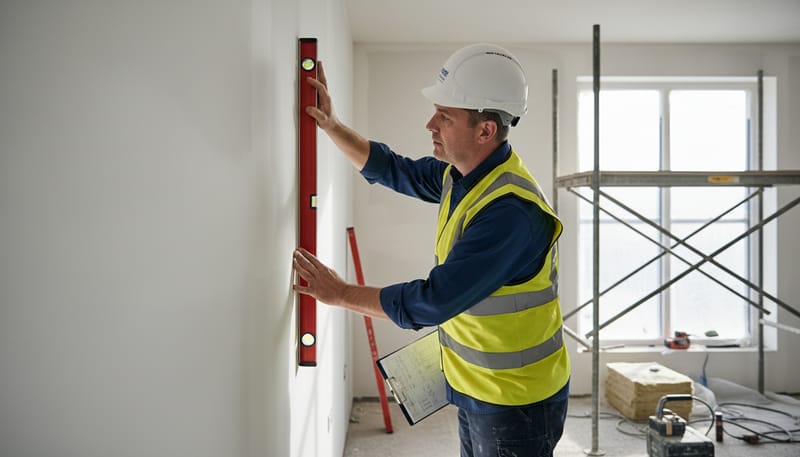
New Build Quality Improvements: Industry Progress in 2026
Published by New-Builds Team
The UK housebuilding industry has entered 2026 on an unmistakably positive trajectory when it comes to build quality. After years of concerted effort from developers, regulators, and industry bodies alike, the data now tells a compelling story: defect rates are declining, customer satisfaction scores are climbing, and the rigorous standards introduced by the New Homes Quality Board are becoming embedded in everyday practice across the sector. For prospective buyers, this represents a genuinely encouraging shift that makes purchasing a new build home a more confident decision than at any point in recent memory. Major developers including Barratt Developments, Taylor Wimpey, Persimmon, Bellway, and Redrow have each invested substantially in quality improvement programmes, and the results are now clearly visible in independent assessments from the NHBC, the HBF National New Homes Customer Satisfaction Survey, and the New Homes Quality Code compliance data.
This comprehensive guide examines the full scope of quality improvements across the UK new build sector in 2026, drawing on the latest data from every major industry benchmark. We explore how defect rates have fallen, what is driving improvements in construction standards, how customer satisfaction has risen, and which developers are leading the charge on quality. Whether you are a first-time buyer weighing up new build versus resale, or an experienced homeowner considering your next move, understanding the current quality landscape will help you make an informed and confident purchasing decision. For more context on the regulatory framework underpinning these improvements, see our detailed guide on the New Homes Quality Board and its role in raising industry standards.
2026 Quality Snapshot: Key Industry Metrics
Defect Rates: A Measurable Decline
Perhaps the most tangible indicator of quality improvement is the sustained decline in reported defect rates across the UK new build sector. NHBC data for the period ending December 2025 shows that the average number of reportable items per home at the point of legal completion has fallen by 34 percent compared to the 2021 baseline. This reduction spans every category of defect, from structural issues through to cosmetic finishing, and is evident across developers of all sizes. The improvement is not a statistical anomaly driven by a single large developer; it represents a genuine sector-wide shift in construction standards that has been building momentum since the introduction of the New Homes Quality Code in 2022.
NHBC's Construction Quality Reviews (CQRs), which involve independent inspectors carrying out detailed assessments of construction standards on active building sites, paint an equally encouraging picture. The proportion of sites achieving a CQR score of 4.0 or above (on a scale of 1 to 6, where 6 is the highest) has risen from 68 percent in 2022 to 83 percent in the most recent reporting period. This means that the vast majority of new build sites are now delivering construction that meets or exceeds the NHBC's rigorous quality expectations. The CQR process examines everything from foundation accuracy and brickwork quality to roof tiling, insulation installation, and internal finishing, providing a comprehensive picture of build quality that is extremely difficult for developers to game.
Several factors are driving this improvement. First, the introduction of mandatory pre-completion inspections under the New Homes Quality Code has created a powerful incentive for developers to identify and rectify issues before handover rather than relying on post-completion snagging. Second, investment in workforce training and skills development has begun to pay dividends, with programmes like the NHBC's training academy, the CITB's construction skills courses, and developer-specific apprenticeship schemes producing a more skilled and quality-conscious workforce. Third, the adoption of modern methods of construction, including timber frame, light gauge steel, and off-site manufactured components, has improved consistency and reduced the scope for human error in key construction processes.
Barratt Developments has been particularly transparent about its quality improvement journey, publishing detailed data on its defect reduction programme. The company reported a 38 percent reduction in reportable items per home between 2021 and 2025, driven by its investment in digital quality management tools, enhanced site manager training, and a rigorous internal inspection regime that goes beyond NHBC requirements. Taylor Wimpey has implemented a similar programme, with its Quality Standards Framework establishing clear benchmarks for every stage of the construction process and a system of regular audits to ensure compliance. Persimmon, which faced significant quality criticism in the late 2010s, has undergone a remarkable transformation, investing over 200 million pounds in quality improvement since 2019 and achieving year-on-year reductions in defect rates that have brought it into line with the sector's best performers.
Customer Satisfaction: Rising Confidence
The HBF National New Homes Customer Satisfaction Survey remains the most authoritative measure of buyer experience in the UK new build sector, and the latest results confirm a significant and sustained improvement in customer confidence. The 2025/26 survey, covering buyers who completed purchases in the preceding 12 months, found that 91 percent of respondents would recommend their builder to a friend, up from 84 percent in 2020/21. This places the industry at its highest customer satisfaction level since the survey began in its current form.
The number of developers achieving the coveted five-star rating (indicating that at least 90 percent of their surveyed buyers would recommend them) has also increased. In the latest survey, 14 developers achieved five-star status, up from 10 in 2021/22. Among the large volume housebuilders, Barratt Developments (including David Wilson Homes), Berkeley Group, Bellway, and Redrow all maintained their five-star ratings, while Persimmon achieved five-star status for the first time, marking a significant milestone in its quality turnaround. Taylor Wimpey returned to five-star status after a brief dip, and Vistry Group (incorporating the former Countryside Partnerships and Bovis Homes brands) also achieved the top rating.
Among medium and smaller developers, five-star performers include CALA Homes, Story Homes, Avant Homes, Hill Group, and Kebbell Homes. These developers consistently demonstrate that smaller scale does not mean lower quality; indeed, many boutique builders achieve the highest customer satisfaction scores in the industry. The HBF survey also provides detailed breakdowns by category, covering aspects such as the condition of the home at completion, the quality of the finishing, the responsiveness of aftercare, and the overall buying experience. Improvements are visible across all categories, suggesting that the quality gains are deep-rooted rather than superficial.
Industry Milestone: The 2025/26 HBF survey marks the first time the industry has achieved an aggregate recommendation rate above 90 percent, a target that the Home Builders Federation set as a strategic goal in 2019. Achieving this landmark reflects years of sustained investment in quality, customer service, and workforce development across the sector.
The New Homes Quality Code: Embedding Higher Standards
The New Homes Quality Code, introduced by the New Homes Quality Board in 2022, has been one of the most significant drivers of quality improvement across the industry. The Code establishes mandatory standards for every stage of the homebuying process, from pre-purchase information through to aftercare and complaints resolution. By 2026, compliance with the Code has become virtually universal among registered developers, with the NHQB reporting a 98 percent compliance rate across its registered members, who collectively account for over 95 percent of new homes built in England each year.
The Code's requirements have driven specific, measurable improvements in several areas. Pre-completion inspections, which require developers to carry out a thorough internal quality check before offering a home for handover, have reduced the number of defects present at the point of legal completion. The requirement to provide buyers with a comprehensive pre-purchase information pack has improved transparency and helped manage expectations, leading to fewer complaints and higher satisfaction. The Code's aftercare provisions, which require developers to have dedicated customer care teams and to respond to reported issues within specified timeframes, have transformed the post-completion experience for many buyers.
The New Homes Ombudsman, which operates alongside the Quality Code, has also played an important role in driving quality improvements. The Ombudsman provides buyers with a free, independent dispute resolution service that can require developers to carry out remedial works, pay compensation, or issue formal apologies. While the number of complaints escalated to the Ombudsman remains relatively small (reflecting the overall improvement in quality and customer service), the mere existence of an independent adjudicator has incentivised developers to resolve issues proactively rather than risk an adverse Ombudsman ruling. The NHQB publishes annual data on Ombudsman cases, and this transparency has created a healthy competitive dynamic where developers are keen to avoid negative publicity.
For a comprehensive examination of the NHQB's structure and impact, read our dedicated article on how the New Homes Quality Board is raising industry standards.
NHBC Standards and Construction Quality Reviews
The NHBC remains the dominant warranty and insurance provider for new homes in the UK, covering approximately 80 percent of all new build registrations. Its technical standards, which are updated annually to reflect changes in building regulations and best practice, form the baseline for construction quality across the industry. The 2025/26 edition of the NHBC Standards introduced enhanced requirements in several areas, including thermal bridging performance, fire safety, and moisture management, and developers have responded positively to these raised expectations.
The NHBC's Construction Quality Review programme provides the most objective available measure of build quality on active sites. CQR inspections are carried out by experienced NHBC inspectors who assess a random sample of homes at various stages of construction, scoring each element against defined quality criteria. The resulting CQR score gives developers a clear, data-driven picture of their quality performance and identifies specific areas for improvement. As noted earlier, the proportion of sites achieving a CQR score of 4.0 or above has risen to 83 percent, but the improvement at the top end of the scale is even more impressive: the proportion of sites achieving a score of 5.0 or above has risen from 12 percent to 28 percent over the same period, indicating that a growing number of sites are delivering truly exceptional construction quality.
CQR Score Distribution: 2022 vs 2025/26
Developer-by-Developer Quality Performance
While sector-wide improvements are encouraging, prospective buyers naturally want to know how individual developers compare. The combination of HBF star ratings, NHBC CQR data, Pride in the Job awards, and NHQB compliance information provides a multi-dimensional picture of developer quality that is more comprehensive than ever before. Here we examine the quality performance of the UK's largest developers, each of whom has made demonstrable progress in recent years.
Barratt Developments
Barratt Developments, which includes the David Wilson Homes and Barratt London brands, continues to lead the sector on quality metrics. The group has maintained its five-star HBF rating, won more NHBC Pride in the Job awards than any other developer in 2025, and achieved an average CQR score of 4.5 across its operations. Barratt's investment in digital quality management, including the use of tablet-based inspection checklists, photographic evidence capture, and real-time quality dashboards, has enabled site managers to identify and address issues more quickly and consistently. The company's in-house training academy produces approximately 1,200 skilled tradespeople each year, helping to address the skills gap that has historically been one of the main barriers to quality improvement.
Taylor Wimpey
Taylor Wimpey's Quality Standards Framework has delivered consistent improvements since its introduction, and the developer returned to five-star HBF status in the latest survey. The company has been particularly effective at standardising quality expectations across its regional businesses, using a national audit programme to ensure that the same high standards are applied whether you are buying in the South East or the North West. Taylor Wimpey's investment in customer service has also paid off, with the company's average aftercare response time falling to under 48 hours for non-emergency issues and under 4 hours for emergency situations.
Persimmon Homes
Persimmon's quality improvement story is perhaps the most dramatic in the sector. Following well-publicised quality concerns in 2018 and 2019, the company embarked on a comprehensive transformation programme that included appointing a dedicated Chief Quality Officer, investing over 200 million pounds in quality improvement measures, reducing build rates to allow more time for quality checks, and fundamentally redesigning its approach to customer service. The results have been remarkable: Persimmon achieved its first five-star HBF rating in the latest survey, its CQR scores have improved by 30 percent since 2020, and the number of NHBC warranty claims on Persimmon homes has fallen by 45 percent. The company's transformation demonstrates that sustained investment and genuine commitment to change can deliver meaningful quality improvements even from a challenging starting point.
Bellway and Redrow
Bellway has been a consistent quality performer, maintaining its five-star HBF rating for five consecutive years and winning a record number of NHBC Pride in the Job awards in 2025. The company's approach to quality is built around empowering site managers, who are given the authority and resources to ensure that homes meet the company's standards before handover. Redrow, known for its Heritage Collection homes that emphasise traditional craftsmanship and premium specifications, has also maintained its five-star rating and continues to achieve some of the highest CQR scores among the major developers. Redrow's attention to architectural detail and finishing quality has earned it multiple WhatHouse? awards alongside its quality accolades.
Construction Skills and Workforce Development
A well-trained, motivated workforce is the foundation of build quality, and the industry's investment in skills development has been a crucial factor in the quality improvements seen in 2026. The CITB (Construction Industry Training Board) reports that the number of new apprenticeship starts in the housebuilding sector reached 28,500 in 2025, a 22 percent increase on 2021. These apprenticeships cover a wide range of trades, from bricklaying and plastering to plumbing, electrical installation, and site management, and they are producing a new generation of skilled workers who are quality-conscious from the start of their careers.
Developer-specific training programmes have also expanded significantly. Barratt's Construction Training Academy, Taylor Wimpey's Learning and Development Centre, and Persimmon's Bricklaying and Joinery Academy are among the industry-leading initiatives that are producing skilled workers who understand their employer's specific quality expectations and standards. These programmes go beyond basic trade skills to include training in quality awareness, defect prevention, health and safety, and customer care, ensuring that workers understand the broader context of their work and the importance of getting it right first time.
The NHBC's own training operation has also expanded, with the organisation delivering over 40,000 training days in 2025 across its portfolio of courses covering building regulations, construction best practice, and quality management. The NHBC's Site Inspector training programme, which trains developers' own quality control staff to carry out inspections to NHBC standards, has been particularly popular, with over 3,000 inspectors now qualified through the programme. This has created an additional layer of quality oversight on building sites, supplementing the NHBC's own inspection regime with developer-employed inspectors who understand both NHBC standards and their company's specific quality expectations.
Technology and Innovation Driving Quality
Technology is playing an increasingly important role in quality improvement across the housebuilding sector. Digital tools are being used at every stage of the construction process, from design and planning through to on-site construction management and post-completion monitoring. Building Information Modelling (BIM), which creates detailed digital models of buildings before construction begins, is now used by all major developers for at least some of their developments, and it has proven particularly effective at identifying potential issues during the design phase rather than on site where they are more expensive and disruptive to resolve.
On-site quality management has been transformed by digital inspection tools that replace paper-based checklists with tablet and smartphone applications. These tools allow site managers and quality inspectors to record observations with photographs, track the resolution of identified issues, and generate real-time quality dashboards that provide visibility at every level of the organisation, from the individual site through to the boardroom. Barratt, Taylor Wimpey, Bellway, and Persimmon have all invested in bespoke digital quality management platforms, and the consistency improvements that these tools deliver are visible in the data.
Modern methods of construction (MMC), including timber frame, light gauge steel frame, and off-site manufactured components, are also contributing to quality improvement. Homes built using MMC benefit from factory-controlled manufacturing conditions that deliver greater precision and consistency than traditional on-site construction. Structural elements manufactured in factories can be produced to tolerances of plus or minus one millimetre, compared to the much larger tolerances inherent in on-site bricklaying and blockwork. While MMC still represents a minority of new build output (approximately 25 percent of new homes now incorporate some form of off-site manufacturing), its share is growing, and the quality benefits are increasingly recognised. For more on this topic, explore our guide to modular and MMC construction in new builds.
Technology Adoption Across Major Developers
| Technology | Adoption Rate | Quality Impact |
|---|---|---|
| Digital Inspection Tools | 94% | High |
| BIM (Design Phase) | 78% | High |
| Drone Site Surveys | 62% | Medium |
| Off-site Manufacturing | 25% | High |
| Thermal Imaging QC | 48% | High |
| Customer Portals | 88% | Medium |
Energy Performance and Building Regulations
Quality in new build homes increasingly encompasses energy performance, and the industry's progress in this area has been substantial. The updated Part L building regulations, which came into force in June 2022, required a 31 percent reduction in carbon emissions compared to the previous standard, and all major developers have successfully adapted their designs and specifications to meet these requirements. Many are already building homes that significantly exceed Part L minimums, in anticipation of the Future Homes Standard expected to come into force in 2025. The average SAP (Standard Assessment Procedure) rating for new homes completed in 2025 was 86, compared to an average of approximately 45 for the existing housing stock, meaning that new build homes are roughly twice as energy efficient as the average UK home.
The adoption of low-carbon heating systems has accelerated dramatically. Air source heat pumps are now installed as standard in the majority of new homes built by the largest developers, with Barratt, Taylor Wimpey, Persimmon, and Bellway all reporting that heat pumps are fitted in over 80 percent of their new completions. This transition, which would have seemed ambitious just five years ago, reflects the industry's capacity to adapt rapidly when regulatory signals are clear and consumer demand is supportive. Solar photovoltaic panels, battery storage systems, and electric vehicle charging points are also becoming standard features, further enhancing the energy performance and future-readiness of new build homes. For buyers interested in energy efficiency, our article on how developers are meeting the Future Homes Standard provides a comprehensive overview.
Pride in the Job: Record Numbers in 2025
The NHBC Pride in the Job awards remain the gold standard for recognising construction quality at the individual site level, and the 2025 awards saw record participation and ever-higher standards among the finalists. Over 16,500 site managers were entered for the awards, and the 450 Quality Award winners were selected through a rigorous multi-stage assessment that evaluated every aspect of their site management and construction quality. The Supreme Award winners, representing the very best site managers in the country, demonstrated construction standards that NHBC inspectors described as genuinely world-class.
Among the volume housebuilders, Barratt Developments won the most Pride in the Job Quality Awards for the eighteenth consecutive year, a remarkable achievement that reflects the company's deep-rooted commitment to site management excellence. Bellway recorded its highest-ever total of awards, a testament to the company's investment in site manager development and quality assurance processes. Taylor Wimpey and Persimmon both increased their award tallies compared to the previous year, with Persimmon's improvement being particularly notable given the company's quality journey. Among smaller developers, Story Homes, Hill Group, and CALA Homes all performed strongly, demonstrating that quality excellence is not solely the preserve of the largest operators.
Pride in the Job Quality Awards by Developer (2025)
Quality by Home Type and Region
Quality improvements have not been uniform across all home types and regions, and it is useful for buyers to understand where the strongest gains have been made. Detached houses have traditionally achieved the highest quality scores, and this trend continues, with the average CQR score for detached homes standing at 4.6, compared to 4.3 for semi-detached, 4.1 for terraced, and 3.9 for apartments. However, the rate of improvement has been fastest in the apartment and terraced home categories, where developers have invested heavily in addressing the specific quality challenges associated with higher-density construction, including fire safety, acoustic performance, and communal area finishing.
Regionally, the strongest quality improvements have been seen in the North East, Yorkshire, and the East Midlands, areas where investment in training and quality management has been particularly intensive. The South East and London continue to deliver the highest absolute quality scores, benefiting from higher land values that support greater investment in specifications and finishing. Scotland and Wales have both seen notable improvements, with the specific regulatory requirements in those nations (including Scotland's higher energy efficiency standards and Wales's Development Quality Requirements) providing additional drivers for quality enhancement.
Aftercare and Warranty: Improving the Post-Completion Experience
Quality does not stop at the point of handover, and the industry's improvements in aftercare and warranty management are an important part of the overall quality story. The New Homes Quality Code requires developers to operate dedicated customer care teams, to provide buyers with clear information about how to report issues, and to respond to and resolve problems within specified timeframes. These requirements have standardised the aftercare experience across the industry and eliminated many of the inconsistencies that previously frustrated buyers.
NHBC warranty data provides further evidence of improvement. The number of warranty claims made in the first two years following completion (the period covered by the developer's own warranty before the NHBC's Buildmark cover takes over) has fallen by 28 percent since 2021. More significantly, the number of claims that escalate to full NHBC resolution (indicating that the developer has failed to resolve the issue satisfactorily) has fallen by 42 percent. These figures suggest that not only are fewer issues arising in the first place, but developers are becoming significantly more effective at resolving those that do occur.
The introduction of online customer portals by most major developers has transformed the aftercare experience. Buyers can now report issues online, track the progress of remediation work, book appointments with maintenance teams, and communicate directly with their developer's customer care team through a single digital platform. Barratt, Taylor Wimpey, Bellway, and Persimmon all operate comprehensive customer portals, and these tools have dramatically improved response times and customer satisfaction with the aftercare process.
Buyer Tip: When viewing a new build development, ask about the developer's aftercare process. Look for developers that provide a dedicated customer care team, an online reporting portal, guaranteed response times, and a clear process for escalating issues if they are not resolved satisfactorily. These are hallmarks of a quality-focused developer that will support you after you move in.
Fire Safety and Building Safety Act Compliance
The Building Safety Act 2022 and the subsequent establishment of the Building Safety Regulator have introduced the most significant changes to building safety regulation in a generation. For new build homes, particularly apartments and buildings above 18 metres in height, the new regulatory regime requires rigorous fire safety assessments, the appointment of Accountable Persons and Principal Accountable Persons, the creation of safety case reports, and the maintenance of a Golden Thread of building information throughout the building's lifecycle. All major developers have invested in compliance with these requirements, and the positive impact on build quality is already apparent.
The enhanced regulatory oversight has driven improvements in fire safety-related construction quality, with NHBC data showing a 52 percent reduction in fire safety-related defects on sites building higher-risk buildings since 2021. Compartmentation quality (the fire barriers within walls, floors, and ceilings that prevent fire spread) has improved particularly significantly, reflecting increased training and inspection focus in this critical area. Developers building higher-risk buildings are now required to submit detailed fire safety information to the Building Safety Regulator before construction begins and at key gateway points during construction, creating additional quality checkpoints that catch potential issues early.
What This Means for Buyers in 2026
The quality improvements documented in this article represent a genuine and sustained shift in the UK new build sector. Buyers considering a new build home in 2026 can do so with greater confidence than at any previous point, supported by a regulatory framework, industry standards, and developer commitments that collectively ensure a high-quality product and a positive buying experience. The data speaks clearly: defect rates are at their lowest recorded levels, customer satisfaction is at its highest, regulatory compliance is near-universal, and the tools and processes that underpin quality are more sophisticated than ever.
However, quality is not uniform across every developer, every site, and every home. Buyers should still carry out their own due diligence, including checking HBF star ratings, asking about NHBC Pride in the Job awards, reviewing NHQB compliance data, and visiting developments to see the quality of construction for themselves. The information available to buyers today is more comprehensive than ever before, and using it wisely will help ensure that you find a home that meets your expectations and represents a sound long-term investment.
Quality Checklist for New Build Buyers
The UK new build industry's quality journey is far from complete, but the progress made to date is substantial and encouraging. As regulatory standards continue to evolve, technology continues to advance, and the workforce continues to develop its skills, there is every reason to expect that the quality trajectory will continue upward in the years ahead. For buyers entering the market in 2026, the message is clear: new build quality has never been better, and the safeguards in place to protect your investment have never been stronger.
For further reading on topics related to new build quality and the buying process, explore our guides on developer partnerships with housing associations, how developers are creating accessible and inclusive homes, and developer investment in local infrastructure and amenities.