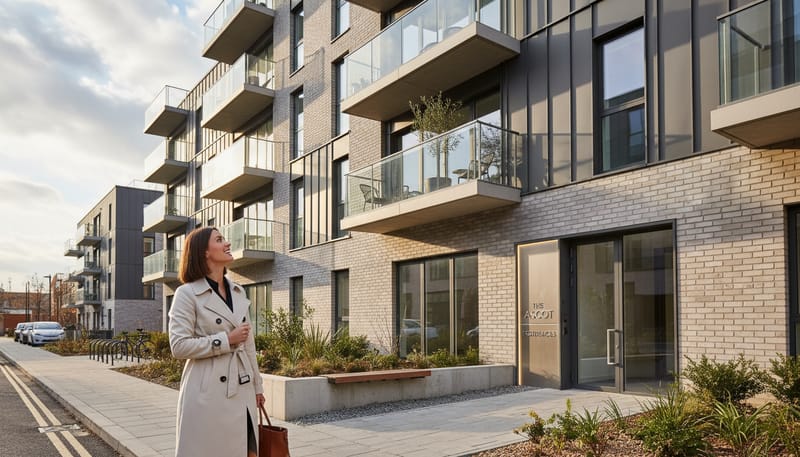
Why a New Build Apartment Could Be Your Smartest First Step
For many first-time buyers, a new build apartment represents the most accessible and practical route onto the property ladder. Apartments are typically more affordable than houses, they are available in locations closer to town and city centres where employment opportunities are strongest, and modern new build apartments come with energy-efficient specifications that keep running costs low. If you are weighing up your options as a first-time buyer, an apartment deserves serious consideration — even if your long-term goal is eventually to own a house.
The UK new build apartment market has evolved significantly in recent years. Developers are investing in high-quality communal areas, energy-efficient building systems, and community-focused designs that make apartment living genuinely attractive rather than a compromise. From converted mill buildings in the North to purpose-built waterside developments in the South, the range and quality of new build apartments available in 2026 is impressive.
However, buying an apartment is different from buying a house in several important ways. The legal structure (leasehold versus freehold), ongoing costs (service charges and ground rent), and ownership responsibilities (shared areas and management companies) all require careful consideration. This guide explains everything you need to know as a first-time buyer purchasing a new build apartment, from the legal framework to apartment-specific snagging points. If you are still deciding between an apartment and a house, our new build versus older home guide explores broader options.
Pros and Cons of New Build Apartment Living
Like any home, apartments come with their own set of advantages and trade-offs. Understanding these before you commit helps ensure you make a decision you are comfortable with for the medium to long term.
Advantages of New Build Apartments
- Lower purchase price: Apartments are generally £50,000–£150,000 cheaper than equivalent houses in the same area, making them more achievable with a smaller deposit. This lower price point also means lower stamp duty (often zero for first-time buyers).
- Better locations: Apartment developments are commonly built in town and city centres, near transport links, shops, restaurants, and workplaces. This can reduce or eliminate commuting costs and improve your quality of life.
- Lower energy bills: Apartments benefit from shared walls (less heat loss), compact floor plans, and modern insulation standards. Most new build apartments achieve an EPC rating of A or B, with monthly energy costs typically 30–50% lower than a comparable house.
- Low maintenance: External maintenance (roof, guttering, external walls, communal gardens) is handled by the management company. You do not need to worry about re-roofing costs, exterior painting, or garden maintenance.
- Security: Many new build apartment developments include secure entry systems, CCTV, and well-lit communal areas. Upper-floor apartments also benefit from reduced risk of break-in compared to ground-level homes.
- Community amenities: Some developments include shared facilities such as residents’ lounges, cycle storage, roof terraces, or even gyms and concierge services, particularly in urban areas.
Considerations and Trade-Offs
- Leasehold ownership: Almost all apartments are sold as leasehold, which means you own the property for the duration of the lease but not the building or land. We explain this in detail in the next section.
- Service charges: You pay a monthly or annual service charge towards the maintenance of communal areas, the building exterior, shared facilities, and building insurance. These charges can increase over time.
- Less space: Apartments typically offer less internal floor space than houses, and you will not have a private garden (though you may have a balcony, terrace, or access to communal gardens).
- Noise from neighbours: Living in close proximity to other residents means you may hear noise from adjacent and upstairs apartments. New build construction standards have improved sound insulation significantly, but it remains a factor.
- Parking: Parking may be limited, allocated (one space per apartment is common), or available only at additional cost. In city-centre developments, parking may not be included at all.
- Pet and subletting restrictions: The lease may include restrictions on keeping pets, making alterations, or subletting the property. Always check these before committing.
Leasehold Explained: What It Means for Apartment Buyers
If you are buying a new build apartment, you will almost certainly be purchasing a leasehold interest. Understanding leasehold is essential because it determines your rights, obligations, and costs as a homeowner.
What Is Leasehold?
When you buy a leasehold apartment, you are purchasing the right to occupy the property for a specific number of years as defined by the lease. A new build apartment will typically have a lease of 125 to 999 years. The freeholder (who owns the building and land) grants you this lease, and in return, you may pay ground rent and must comply with the terms of the lease.
The lease is a legal document that sets out everything from your responsibility for internal maintenance to restrictions on alterations, noise, pets, and subletting. It also defines the service charge arrangements and the responsibilities of the freeholder and management company. Your conveyancing solicitor will review the lease in detail before you commit to the purchase.
Key Changes to Leasehold Law
The UK government has introduced significant leasehold reforms that benefit apartment buyers. Under the Leasehold Reform (Ground Rent) Act 2022, ground rent on new residential leases granted after 30 June 2022 is capped at a peppercorn — effectively £0 per year. This is a major improvement for first-time buyers, as it eliminates what was previously an ongoing cost that could increase significantly over the life of the lease.
Further reforms are being introduced to make it cheaper and easier to extend your lease, to give leaseholders more control over the management of their building, and to increase transparency around service charges. These changes strengthen the position of apartment owners and make leasehold purchases more secure and predictable than they have been historically.
Lease Length Matters
For a new build apartment, your lease will typically start at 125 or 999 years, which is more than sufficient. However, if you are ever considering a resale apartment, lease length becomes critical. Most mortgage lenders require at least 70–80 years remaining on the lease at the point of application, and a lease below 80 years becomes significantly more expensive to extend. For a new build purchase, this is not a concern — but it is worth understanding for future reference.
Service Charges, Ground Rent, and Management Companies
Understanding the ongoing costs of apartment ownership is crucial for accurate budgeting. Beyond your mortgage, council tax, and utilities, apartments come with additional costs that houses typically do not.
Service Charges
The service charge is a payment you make towards the maintenance and management of the communal areas and building structure. It covers items such as communal area cleaning, lighting and heating of shared spaces, lift maintenance, building insurance, external repairs, landscaping of communal gardens, window cleaning, and the management company’s fees. Typical annual service charges for a new build apartment range from £1,200 to £3,500 per year, depending on the size and amenities of the development.
Service charges can increase year on year as maintenance costs rise. Most leases specify how increases are calculated — commonly in line with actual costs incurred, with accounts provided to leaseholders annually. As a leaseholder, you have the right to see a breakdown of the service charge and to challenge charges you believe are unreasonable through the First-tier Tribunal (Property Chamber).
Ground Rent
For new build apartments with leases granted after 30 June 2022, ground rent is set at a peppercorn (£0). This is a significant benefit and means ground rent is no longer a factor in your budget calculations. If you are looking at apartments built before this date, check the ground rent terms carefully — some older leases include escalating ground rent clauses that can become very expensive over time.
Sinking Fund (Reserve Fund)
Many developments also require contributions to a sinking fund or reserve fund. This is a savings pot used to pay for major future works such as re-roofing, external repainting, or lift replacement. Contributing regularly to a sinking fund spreads these large costs over time, rather than requiring a large one-off payment when major works are needed. Typical sinking fund contributions are £200–£800 per year and are usually included within the service charge figure.
Management Companies
The management company is responsible for the day-to-day and long-term management of the building and communal areas. For new build developments, the developer initially appoints the management company, but leaseholders have the right to take over management through a Residents’ Management Company (RMC) or by exercising the Right to Manage (RTM). Getting involved in the management of your building ensures service charges are spent wisely and the development is maintained to a high standard.
Apartment vs House: Total Monthly Cost Comparison
| Cost Category | New Build Apartment (£200,000) | New Build House (£300,000) | Difference |
|---|---|---|---|
| Mortgage (25yr, 4.5%, 90% LTV) | £1,000 | £1,500 | £500 saving |
| Council tax (Band B vs C) | £140 | £175 | £35 saving |
| Energy bills | £65 | £110 | £45 saving |
| Water | £25 | £40 | £15 saving |
| Service charge | £175 | £0–£40 (estate charge) | £135–£175 extra |
| Ground rent | £0 (new lease) | £0 (freehold) | Equal |
| Buildings insurance | Included in service charge | £25 | Included vs separate |
| Garden maintenance | £0 (communal) | £30–£80 | Saving |
| Total monthly | £1,405 | £1,880–£1,970 | £475–£565 saving |
The table above illustrates a typical comparison. While apartments have service charges that houses do not, the significantly lower mortgage, energy bills, and council tax more than compensate. For a first-time buyer on a moderate income, this difference in total monthly outgoings can be the deciding factor in affordability. Our budgeting guide helps you plan these ongoing costs in detail.
Monthly Cost Breakdown: Apartment vs House
Based on typical new build apartment (£200k) vs house (£300k), 90% LTV mortgage at 4.5% over 25 years.
What to Check in the Lease Before You Buy
The lease is the single most important document when buying a leasehold apartment. Your solicitor will review it in detail, but as a buyer, you should understand the key clauses and ensure nothing will cause problems during your ownership or when you eventually sell.
Essential Lease Checks
| Clause | What to Look For | Why It Matters |
|---|---|---|
| Lease length | 125+ years for a new build | Short leases are difficult and expensive to extend; affect mortgage availability |
| Ground rent | £0 (peppercorn) for new leases after June 2022 | Older leases may have escalating ground rent that becomes very expensive |
| Service charge provisions | Clear breakdown of what is covered; mechanism for increases | Protects you from unreasonable or unexplained charges |
| Sinking fund | Contributions defined; fund is held in trust | Ensures major works are funded gradually, not via one-off bills |
| Alterations | What requires consent; process for obtaining it | You may want to update your kitchen or bathroom in future |
| Subletting | Whether subletting is permitted, and any conditions | Affects flexibility if you need to relocate or rent out the property |
| Pets | Any restrictions on type, size, or number of pets | Important if you have or plan to have pets |
| Assignment | Process for selling the lease (transferring to a new owner) | Overly complex assignment provisions can slow down a future sale |
| Insurance | Who arranges building insurance; how it is charged | Ensure the building is adequately insured and costs are reasonable |
| Management company | Who manages the building; leaseholders’ rights | Ensures you have a voice in how the building is run |
| Parking | Whether a space is included or available to purchase | Parking allocation varies; some developments charge separately |
| Use restrictions | Residential only; restrictions on business use | May affect you if you work from home or run a business |
Do not hesitate to ask your solicitor to explain any clause you do not understand. The lease will govern your ownership for as long as you own the apartment, so it is worth taking the time to understand it fully. If there are clauses that concern you, your solicitor can sometimes negotiate amendments before exchange of contracts, particularly on new build developments where the developer is granting leases for the first time.
Apartment-Specific Snagging Points
When you complete on your new build apartment, a thorough snagging inspection is essential. Apartments have some unique snagging considerations beyond those that apply to houses. Here is what to focus on during your inspection.
Inside Your Apartment
- Sound insulation: This is one of the most critical aspects of apartment living. Listen carefully for noise from adjacent apartments, corridors, and the floor above. Tap walls between your apartment and neighbouring units — they should feel solid. New builds must comply with Part E of the Building Regulations for sound insulation, but quality can vary.
- Water pressure: Upper-floor apartments can sometimes experience lower water pressure than ground-floor units. Run taps and showers simultaneously to test the pressure under load. Flush the toilet while a tap is running to check for pressure drops.
- Ventilation: Apartments rely heavily on mechanical ventilation, particularly in bathrooms and kitchens without external windows. Check that extractor fans are working correctly, are not excessively noisy, and effectively clear steam and cooking odours.
- Windows and doors: Check all windows open and close smoothly, locks engage correctly, and there are no gaps around frames. Trickle vents should be present and functional. Balcony doors should seal tightly when closed.
- Flooring quality: Walk across every floor area and listen for squeaks, hollow sounds, or unevenness. Check that floor coverings meet walls and thresholds neatly with no gaps or lifting edges.
- Paint and finishes: Inspect walls and ceilings in good light for uneven paint, roller marks, drips, and missed areas. Check skirting boards, architraves, and window sills for chips, scratches, or poor fitting.
Communal Areas and Building
- Entrance and security: Test the main entrance door intercom and security system. Ensure your fob or key works on all access points you should have access to.
- Lifts: If your building has lifts, check they are operational, respond promptly, and stop level with the floor. Note the size of the lift — this affects furniture deliveries on moving day.
- Corridors and stairwells: Check lighting, flooring, and decoration in communal corridors. Note any fire safety equipment (extinguishers, smoke detectors, fire doors) and ensure it is properly installed.
- Bin stores: Locate the bin storage area and check it is clean, accessible, and clearly labelled for recycling.
- Parking: If you have an allocated parking space, confirm its location and that it is adequately sized and accessible. Check for any obstructions or design issues that make parking difficult.
- Cycle storage: If the development includes cycle storage, check that it is secure, adequately sized, and easy to access from your apartment.
- Post boxes: Confirm your post box is installed, labelled, and you have a key. Check that the postal delivery arrangement works correctly.
Report all snagging issues to the developer using the snagging checklist process. For issues in communal areas, report these to both the developer and the management company, as responsibility for communal area defects may transfer to the management company once the development is completed.
Resale Considerations and Future Planning
As a first-time buyer, you may not be thinking about selling your apartment right now, but understanding resale factors from the outset helps you make a better purchasing decision and protects the value of your investment.
Factors That Affect Apartment Resale Value
- Location: Apartments in well-connected urban locations with good transport links, amenities, and employment opportunities tend to hold their value better than those in peripheral areas.
- Lease length: A long lease (125+ years) is essential for resale. Buyers and mortgage lenders are reluctant to commit to properties with shorter leases.
- Service charge level: High or rapidly increasing service charges can deter future buyers. Developments with well-managed, transparent service charges are more attractive.
- Management quality: A well-maintained building with a responsive management company is a significant selling point. Poor management leads to deterioration that affects values.
- Floor and aspect: Upper floors generally command higher prices due to better views, more natural light, and reduced noise from the street. South or west-facing aspects are preferred for natural light.
- Parking: An allocated parking space significantly enhances resale value, particularly in areas where on-street parking is limited.
- Building reputation: The overall reputation of the development and the developer matters. Developments by well-regarded builders with a track record of quality construction attract stronger buyer interest.
Planning for the Future
Many first-time buyers purchase an apartment with the intention of moving to a house within five to ten years. If this is your plan, focus on building equity through regular mortgage overpayments if your mortgage terms allow it, maintaining the property in good condition, and staying engaged with the management company to protect the development’s long-term appeal. When you are ready to move on, a well-maintained apartment in a good location should sell efficiently and provide you with a deposit and equity for your next home. For guidance on the financial journey ahead, explore our renting versus buying comparison to understand the value of ownership over time.
Frequently Asked Questions
Do I have to pay ground rent on a new build apartment?
No. Under the Leasehold Reform (Ground Rent) Act 2022, any new residential lease granted after 30 June 2022 must have ground rent set at a peppercorn, which effectively means £0 per year. This applies to all new build apartments currently being sold. You will still pay a service charge towards the maintenance and management of the building and communal areas, but ground rent itself is no longer a cost for new lease purchases. If you are looking at apartments built before this date that are being resold, check the ground rent terms carefully as they may include escalating charges under the original lease.
What is a typical service charge for a new build apartment?
Service charges for new build apartments in the UK typically range from £1,200 to £3,500 per year, though this varies widely based on the size of the development, the facilities provided, and the location. A small development with minimal communal areas will be at the lower end, while a larger development with lifts, a concierge, landscaped gardens, and gym facilities will be at the higher end. The service charge should be disclosed before you commit to the purchase, and your solicitor will review the service charge budget and accounts as part of the conveyancing process. Always factor the service charge into your monthly budget alongside your mortgage, council tax, and utilities.
Can I make alterations to a leasehold apartment?
Most leases allow internal alterations with the freeholder’s consent, which should not be unreasonably withheld. Non-structural changes such as redecorating, replacing kitchen units, or updating bathroom fittings typically do not require consent. Structural alterations, changes to plumbing or electrics, or modifications that affect the external appearance of the building usually require written consent. Always check your lease terms before starting any work, and obtain consent in writing before proceeding. Unauthorised alterations can breach the lease and cause problems when you come to sell.
Is it harder to get a mortgage on a leasehold apartment?
Not for new build apartments with standard lease terms. Mortgage lenders are very familiar with leasehold properties and will lend on them provided the lease meets their criteria. The key requirements are a sufficiently long lease (most lenders want at least 70–80 years remaining), reasonable service charges, a properly constituted management arrangement, and no onerous ground rent clauses. New build apartments almost always meet all these criteria. Your mortgage broker can confirm that the specific apartment you are interested in meets your chosen lender’s requirements.
What happens if the management company does a poor job?
As a leaseholder, you have several options if you are unhappy with the management company. First, raise your concerns formally with the management company and freeholder. If issues persist, leaseholders collectively have the Right to Manage (RTM), which allows you to take over management of the building without needing to prove fault by the current manager. Alternatively, you can apply to the First-tier Tribunal (Property Chamber) to appoint a new manager. Getting involved in any residents’ association or management company meetings early is the best way to ensure the building is managed well from the start.
Your Apartment, Your First Home
Buying a new build apartment as your first home is a smart, practical, and increasingly popular choice for first-time buyers across the UK. The lower purchase price, reduced running costs, prime locations, and modern specifications make apartments an excellent stepping stone onto the property ladder — and for many people, a genuinely enjoyable long-term home.
The key to a successful apartment purchase is understanding the leasehold structure, budgeting accurately for service charges, choosing a well-managed development, and conducting a thorough snagging inspection before you settle in. With the right preparation and professional advice from your solicitor and mortgage broker, buying your first apartment can be a smooth and rewarding experience.
For more guidance on your first home journey, explore our guides on saving for your deposit, the step-by-step buying process, and current schemes for first-time buyers to make sure you are taking advantage of every opportunity available to you.