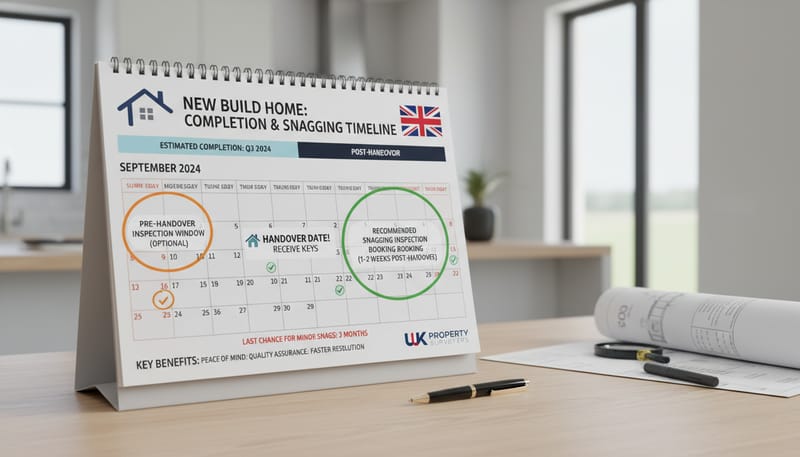
Why Timing Your Snagging Inspection Matters
Buying a new build home is one of the biggest financial commitments you’ll ever make, and a professional snagging inspection is your best tool for ensuring you get the quality you’ve paid for. But timing is everything. Book too early and the developer may not have finished all the finishing touches; book too late and you could miss critical warranty deadlines or find yourself living with defects for months while waiting for repairs.
A snagging inspection identifies defects, incomplete work, and deviations from building regulations in your new property. These range from minor cosmetic issues like paint drips and scuffed skirting boards through to serious structural concerns such as cracked lintels or poorly sealed windows. The average new build home in the UK has between 100 and 150 snags, so this is not a process you want to leave to chance.
Understanding exactly when to book your inspection — and what factors should influence that decision — can save you thousands of pounds in future repair costs and months of frustration dealing with your developer. In this guide, we’ll walk through the optimal timing, the pros and cons of professional versus DIY inspections, typical costs across the UK, and exactly what happens on the day.
Whether you’re buying through a Help to Buy scheme, shared ownership, or purchasing outright, the snagging inspection process remains the same. Let’s look at the key timing considerations that will help you get the most from your inspection.
Pre-Completion vs Post-Completion Inspections
The single biggest decision you’ll face is whether to arrange your snagging inspection before or after legal completion. Both approaches have distinct advantages, and the right choice depends on your specific circumstances, your developer’s policies, and how much leverage you want over the remediation process.
A pre-completion inspection takes place after your developer invites you for a home demonstration or handover viewing, but before you exchange keys and complete the purchase. This is widely considered the gold standard because it gives you the strongest negotiating position. Any defects found can be raised before you part with your money, and you can request that the developer fixes them as a condition of completion. Some buyers even negotiate retention clauses in their contracts, holding back a percentage of the purchase price until snags are resolved.
However, not all developers allow pre-completion inspections. Some of the larger housebuilders — including Barratt, Persimmon, and Taylor Wimpey — have historically been reluctant to permit independent inspectors on site before completion. In recent years, pressure from the New Homes Quality Board and the Consumer Code for Home Builders has improved access, but you should check your developer’s policy early in the process.
A post-completion inspection happens after you’ve completed the purchase and received your keys. The major advantage here is that the property is entirely yours, giving you unrestricted access and as much time as you need. You can inspect at your own pace, test every system thoroughly, and you don’t need developer permission. The downside is that your negotiating position weakens once the money has changed hands, though your developer is still legally obligated to fix defects under your warranty.
If you opt for a post-completion inspection, aim to book it within the first seven days of moving in. This ensures you catch defects before they worsen and demonstrates to your developer that you’re proactive about quality. Many professional snagging companies offer a fast turnaround report specifically for this window.
What Affects Your Timing Decision
Several practical factors will influence exactly when you should book your snagging inspection. Understanding these will help you plan effectively and avoid common pitfalls that catch first-time new build buyers off guard.
Build stage and completion date: Developers often give indicative completion dates that slip by weeks or even months. Don’t book your snagging inspector until you have a firm completion date confirmed in writing by your solicitor. Most professional inspectors need just 48 to 72 hours’ notice, so there’s no need to book weeks in advance and risk having to reschedule.
Season and weather: If your completion falls during winter, some exterior defects may be harder to spot due to shorter daylight hours and wet conditions. Conversely, summer completions can mask issues with heating systems that only become apparent when temperatures drop. Consider booking a follow-up inspection in the opposite season to catch anything the first visit might miss.
Developer workload: The busiest completion periods for UK housebuilders are typically the end of June and December, when developers rush to meet half-year and year-end targets. Properties completed during these peak periods often have more defects because of the pressure to hit targets. If your completion falls in these windows, a professional inspection becomes even more important.
Your mortgage timeline: If your mortgage offer has an expiry date, this can create pressure to complete quickly. However, never rush the snagging process to meet a mortgage deadline. It’s far better to request a mortgage extension than to move into a property with serious unresolved defects. Most lenders will grant extensions of two to four weeks without issue.
Estate phase: If your home is on a development that’s still being built, you may face ongoing construction noise, incomplete roads, and shared access issues. These aren’t snagging items per se, but they can affect your inspection — for example, heavy construction vehicles can damage newly laid driveways or paths that were fine on inspection day.
Professional Inspector vs DIY: Making the Right Choice
One of the most common questions new build buyers ask is whether they need a professional snagging inspector or whether they can do it themselves. The honest answer depends on your confidence, experience, and how thorough you want to be.
A professional snagging inspector brings specialist knowledge of building regulations, construction methods, and the most common defects in new builds. They use professional equipment including thermal imaging cameras, moisture meters, spirit levels, and electrical testers. A qualified inspector will typically identify two to three times more defects than a homeowner conducting their own inspection. They also provide a formal, detailed report that carries more weight when presented to developers.
Professional inspectors are usually qualified surveyors, building control professionals, or construction industry specialists. Look for membership of bodies such as RICS (Royal Institution of Chartered Surveyors), RPSA (Residential Property Surveyors Association), or the Property Ombudsman scheme. Always check reviews and ask for sample reports before booking.
A DIY snagging inspection can still be valuable if you’re methodical and use a comprehensive checklist. You’ll need a good torch, a spirit level, a plug-in socket tester (around £15 from any DIY store), and plenty of sticky notes or blue tape to mark issues. Our complete snagging checklist is a great starting point for self-inspections.
The risk with DIY inspections is that you’ll likely miss issues that aren’t visible to the untrained eye — things like inadequate loft insulation depth, missing cavity wall ties, incorrect fire stopping, or non-compliant electrical work. These hidden defects can be far more costly than cosmetic issues in the long run.
Many buyers opt for a combined approach: conducting their own walkthrough first to catch obvious issues, then booking a professional for a thorough inspection. This gives you the best of both worlds and means you can focus the professional’s time on the technical aspects while you handle the cosmetic checks.
What Snagging Inspections Typically Cost
Professional snagging inspections in the UK typically range from £300 to £750, depending on the size and type of property. This may feel like a significant outlay on top of all the other costs of buying a home, but when you consider that the average new build has over 100 defects — some of which could cost thousands to fix out of warranty — it’s one of the smartest investments you can make.
Prices vary by region, with London and the South East typically commanding premiums of 15–25% over the national average. Some inspectors offer package deals that include a re-inspection visit to verify that defects have been properly rectified, usually at an additional cost of £100–£200. Others include drone surveys for roof inspections or thermal imaging as standard, while some charge these as extras.
When comparing quotes, always check what’s included. A cheaper inspection that skips the loft, doesn’t test electrics, or provides only a basic summary report may end up costing you more if it misses critical defects. The best inspectors provide photographic evidence of every issue, categorised by severity, with reference to the relevant building regulation or British Standard where applicable.
It’s also worth noting that some mortgage providers and conveyancing solicitors can recommend trusted local snagging inspectors. Your solicitor may even be able to arrange the inspection as part of the overall transaction, which can streamline the process considerably.
What to Expect on Inspection Day
Whether you’ve booked a professional or you’re doing it yourself, knowing what to expect on the day will help you prepare properly and make the most of the time available. A thorough snagging inspection of a typical three-bedroom house takes between two and four hours.
Your inspector will work methodically through every room, starting from the outside and working in. They’ll check external walls, the roofline, drainage, windows, and doors before moving inside to inspect every surface, fitting, and system in the property. The inspection follows a structured approach designed to catch everything from major structural issues down to minor cosmetic blemishes.
If you’re present during the inspection, resist the temptation to point out issues as you spot them. Let the inspector work systematically and save your questions for afterwards. Many inspectors will do a verbal walkthrough at the end, highlighting the most significant findings before they compile their formal report.
The written report typically arrives within 24 to 48 hours and will include photographs of every defect, a severity rating (cosmetic, functional, or structural), and often a recommendation for how the developer should fix each issue. The best reports are formatted in a way that can be sent directly to the developer’s customer care team.
After the Inspection: Next Steps
Once you have your snagging report in hand, the real work of getting defects fixed begins. Your first step should be to submit the complete report to your developer’s customer care or aftercare department. Send it by email with a covering letter requesting acknowledgement of receipt and a timeline for remediation. Keep a copy of everything for your records.
Under the Consumer Code for Home Builders, your developer must have a formal complaints procedure and should respond to your snagging list within a reasonable timeframe. For minor cosmetic issues, most developers aim to complete repairs within 28 to 56 days. More complex issues, such as those requiring specialist trades or materials, may take longer but should still be resolved within the two-year builder warranty period.
If your developer is unresponsive or disputes items on your snagging list, your warranty provider (typically the NHBC, LABC, or Premier Guarantee) can intervene. You also have the option of referring disputes to the New Homes Ombudsman, which has the power to order developers to carry out repairs and pay compensation of up to £25,000.
Keep a log of all communications with your developer, including dates, times, and the names of people you speak to. Take your own photographs of defects before and after any repair work to ensure the fix meets an acceptable standard. If a repair is substandard, don’t sign it off — request it be done again. You’re entitled to work that’s completed to a reasonable standard, and the developer cannot simply mark an issue as closed without your agreement.
Finally, consider booking a re-inspection three to six months after the initial visit. This allows time for settlement cracks, seasonal movement, and other issues to manifest that may not have been apparent during your first inspection. Many snagging companies offer discounted re-inspections for returning customers, and it provides valuable peace of mind as you settle into your new home.