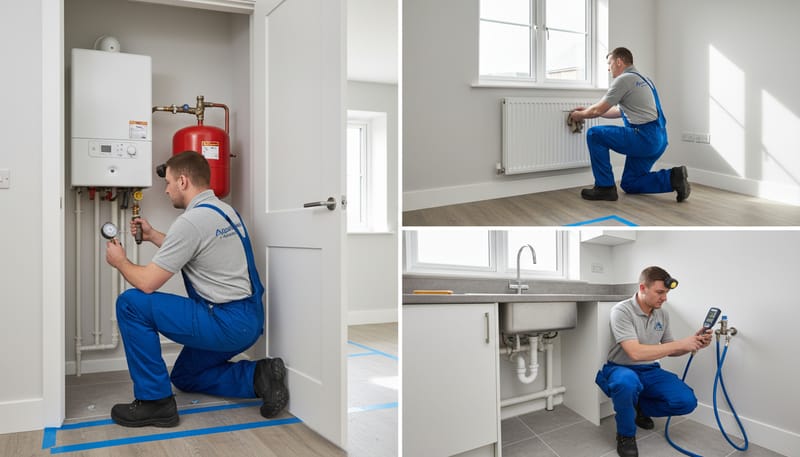
Why Plumbing and Heating Defects Deserve Special Attention
Plumbing and heating systems are the lifeblood of any home, yet they are among the most common sources of snagging defects in new build properties. Unlike a scuffed skirting board or a misaligned door, a plumbing or heating fault can cause real damage – from burst pipes flooding your kitchen to a poorly balanced heating system that leaves half your rooms freezing in winter. These systems are also largely hidden behind walls and under floors, making early detection critical before small issues escalate into expensive emergencies.
New build plumbing and heating installations are typically carried out by subcontractors under time pressure, and the quality of workmanship can vary significantly even within the same development. A thorough snagging inspection should test every aspect of these systems to ensure they are functioning correctly, safely, and efficiently. For a broader overview of the snagging process, see our complete guide to snagging a new build home.
Boiler Issues and Central Heating Problems
The boiler is the heart of your home’s heating and hot water system, and new build boiler installations are a frequent source of snagging issues. Most new builds are fitted with combi boilers (providing instant hot water without a storage cylinder) or system boilers (used with an unvented hot water cylinder). Both types should be thoroughly tested during your snagging inspection.
Check the boiler system pressure gauge – it should read between 1 and 1.5 bar when cold. Run the heating on full for at least 30 minutes and check that the pressure remains stable. Test the hot water at multiple outlets simultaneously to check for temperature drops or flow rate issues. Ensure the flue terminal outside is correctly positioned (at least 300mm from any opening window) and that the condensate drain is properly routed. Your developer must provide a benchmark commissioning checklist, Gas Safe certificate, and manufacturer’s warranty registration as part of your handover pack.
Radiator Balancing and Heat Distribution
Even when the boiler is working perfectly, unbalanced radiators can leave some rooms uncomfortably cold while others overheat. Radiator balancing is the process of adjusting the flow rate to each radiator so that heat is distributed evenly throughout the property. In new builds, this step is frequently skipped or done poorly due to time pressure on site.
To test your radiators, turn the heating on full and wait 20 to 30 minutes. Every radiator should be hot across its entire surface. Cold patches at the top suggest trapped air (the radiator needs bleeding), while cold patches at the bottom may indicate sludge build-up – uncommon in a new system but not unheard of. Check that all thermostatic radiator valves (TRVs) turn freely and that the valves haven’t been painted over, which is a surprisingly common new build defect that prevents them from operating correctly.
Checking for Leaks and Water Pressure
Water leaks are one of the most damaging defects you can encounter in a new build home. Even a small, slow leak behind a wall or under a floor can cause extensive damage to plasterwork, flooring, and personal belongings before it becomes visible. Testing for leaks should be a priority during your snagging inspection.
Water pressure at the kitchen tap should be at least 1 bar (10 litres per minute) for a combi boiler system to function properly. Low pressure can indicate an issue with the mains supply, a partially closed stopcock, or a restriction in the pipework. Run multiple taps simultaneously to check for significant pressure drops, which could indicate undersized pipework.
Bathroom Fixtures and Waste Pipes
Bathrooms are among the most defect-prone areas in any new build home. The combination of plumbing connections, waterproofing, tiling, and sanitary ware creates multiple opportunities for poor workmanship. Every bathroom, en-suite, and WC in your property should be thoroughly tested.
Fill every basin and bath to the overflow, then release the plug and check for leaks beneath. Flush every toilet and check for running cisterns (a constantly running toilet can waste over 200 litres of water per day). Check that shower trays are level and drain completely without pooling. Inspect all silicone sealant joints around baths, showers, and basins – gaps or poor application here are a leading cause of water damage in new builds. Waste pipes under sinks should be properly connected with no leaks at the joints, and should include a trap that holds water to prevent sewer gas entering the property.
Underfloor Heating Zones and Thermostat Placement
Underfloor heating (UFH) is increasingly common in new build homes, particularly on ground floors. While UFH provides comfortable, even heat distribution, it requires careful installation and commissioning to work effectively. UFH snagging issues can be particularly difficult to diagnose because the system is entirely hidden beneath the floor surface.
Run each UFH zone independently and check that the floor warms evenly across the entire area. Cold spots may indicate a kinked or blocked pipe loop, air trapped in the system, or an incorrectly wired zone valve. Thermostats should be positioned on internal walls at approximately 1.5 metres height, away from direct sunlight, draughts, and heat sources that could give false readings. The UFH manifold (typically located in a utility cupboard or under the stairs) should be accessible for future maintenance and clearly labelled to identify which zone valve controls which room.
Noisy Pipes and How to Address Them
Noisy plumbing is one of the most frequently reported issues in new build homes. While some pipe noise is normal (particularly when hot water causes thermal expansion), persistent banging, hammering, whistling, or gurgling sounds indicate installation defects that should be rectified by the developer.
Water hammer is the most concerning pipe noise and occurs when a valve closes suddenly, creating a shockwave through the pipework. In new builds, it’s usually caused by pipes that haven’t been properly clipped to joists, or by the absence of hammer arrestors on quick-closing valves (such as those on washing machines and dishwashers). This should be raised as a snagging issue as it can cause pipe joints to fail over time. Clicking or ticking sounds from under the floor when the heating is running are usually caused by expansion of copper pipes against joist notches – the pipes should be sleeved where they pass through timber to prevent this. For a comprehensive checklist of all areas to inspect, see our new build snagging checklist.
Documenting Plumbing and Heating Snags
When reporting plumbing and heating defects, be as specific as possible. Note the exact location (which room, which fixture), describe the symptoms clearly, and include photographs or video evidence where possible. For intermittent issues such as noisy pipes or temperature fluctuations, a video recording with audio is far more effective than a written description.
Request copies of all plumbing and heating certificates from your developer, including: the Gas Safe certificate for boiler installation, the benchmark commissioning checklist, the unvented hot water cylinder commissioning record (if applicable), and the building regulations completion certificate. These documents are essential for warranty claims and future servicing. If any are missing from your handover pack, raise this as a snagging item immediately. For guidance on escalating unresolved defects, see our article on common defects in new build homes and our NHBC warranties guide.