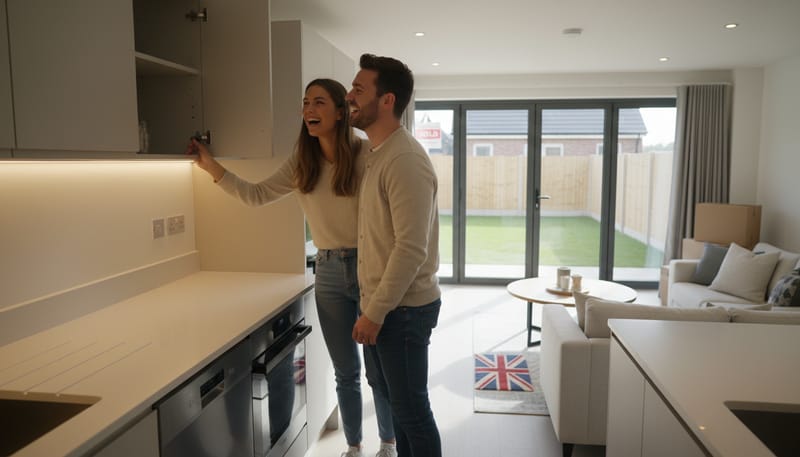
Week One: The Handover and First Inspection
Your journey begins on completion day — the moment you collect your keys and step into your new build for the first time as its owner. This is when the handover process takes place, and it is one of the most important moments of your entire purchase. The site manager or a dedicated handover coordinator will walk you through the property, demonstrating how everything works: the boiler and heating system, the consumer unit (fuse box), the water stopcock, the ventilation system, kitchen appliances, and any smart home features.
Pay close attention during this demonstration. New build homes often have systems that operate differently from older properties. Modern boilers, particularly combination boilers, have specific pressure requirements and may need occasional re-pressurising. Mechanical ventilation with heat recovery (MVHR) systems, which are increasingly common in new builds, have filters that require regular cleaning. Your developer should provide a comprehensive homeowner’s manual — keep this safe, as it contains essential information about every installed product, along with warranty details and maintenance schedules.
Top Tip: Take photos and videos during your handover, especially of meter readings, the boiler settings, and the consumer unit layout. These will be invaluable reference points throughout your first year and can serve as evidence if any disputes arise later.
During the first week, you should also take meter readings for gas, electricity, and water. Register with your preferred energy suppliers — your developer will tell you who currently supplies the property, but you are free to switch immediately. Register with the local council for Council Tax, set up your broadband (ideally ordered a few weeks before completion), and redirect your post from your previous address via Royal Mail.
The Snagging Process: Your Most Important Task
Snagging is the process of identifying defects, imperfections, and unfinished work in your new build home. Every new build — even those from the most reputable developers — will have snags. These range from cosmetic issues like paint drips, scuffed skirting boards, and poorly fitted doors, to more significant problems like plumbing leaks, faulty electrics, or drainage issues. Identifying and reporting these quickly is essential, as developers are legally obligated to rectify them under your warranty terms.
DIY Snagging
- ✓ No cost involved
- ✓ You know your home best
- ✓ Can do it at your own pace
- ✗ May miss structural issues
- ✗ Less weight with developers
Professional Snagging
- ✓ Expert eye catches hidden defects
- ✓ Detailed professional report
- ✓ Developers take it more seriously
- ✗ Costs £300–£600
- ✗ Need to book in advance
We strongly recommend investing in a professional snagging inspection. Companies like New Build Inspections, Snagging.org, and HouseScan typically charge between £300 and £600 depending on the size of your property. They use specialist equipment including spirit levels, moisture meters, thermal imaging cameras, and drainage testing kits to identify issues that the untrained eye would miss. A typical snagging report for a new build home will identify between 50 and 150 items, though this varies considerably depending on the developer and build quality.
Common Snagging Items by Category
Months 1–3: The Drying-Out Period
One of the most distinctive features of living in a new build during the first year is the drying-out period. A typical new build home contains thousands of litres of water trapped in the plaster, concrete, mortar, and other building materials. As these materials dry and cure over the first 9 to 12 months, the moisture gradually evaporates into your living space. This is completely normal and expected, but it does have some noticeable effects that can catch first-time new build owners off guard.
The most visible sign of drying out is condensation on windows, particularly in the mornings during autumn and winter. You may notice water pooling on window sills or running down glass panes. In some cases, you might see dark spots of mould forming in corners or behind furniture that sits against external walls. This is not a sign of a defective home — it is a natural consequence of the drying-out process. However, you need to manage it actively to prevent lasting damage.
Managing the Drying-Out Period: Essential Checklist
- ✓ Keep your home at a consistent temperature of 18–21°C — avoid extreme fluctuations
- ✓ Open windows for at least 15–20 minutes each day, even in winter, to ventilate
- ✓ Use extractor fans in kitchens and bathrooms every time you cook or shower
- ✓ Do NOT dry clothes on radiators — use a vented tumble dryer or outdoor line
- ✓ Leave a small gap between furniture and external walls (at least 50mm)
- ✓ Invest in a dehumidifier (especially useful in the first winter) — budget £150–£300
- ✓ Wipe condensation from windows every morning with a squeegee or cloth
- ✓ Keep trickle vents open on your windows at all times (the small slots at the top)
Another consequence of the drying-out process is settlement cracking. As the building materials shrink and settle, you will almost certainly see hairline cracks appearing in plaster, particularly around door frames, window reveals, and where walls meet ceilings. These are cosmetic and structurally insignificant — they are caused by the natural movement of materials as they cure. Most developers advise waiting until after the first 12 months before redecorating, as filling and painting over these cracks too early is likely to be wasted effort.
Important: If you notice cracks wider than 2mm, cracks that are growing, or cracks accompanied by dampness, these may indicate a more serious structural issue. Report them to your developer and warranty provider immediately. The NHBC defines cracks over 5mm as potentially requiring investigation.
Understanding Your Warranty: NHBC, LABC, and Premier Guarantee
Every new build home in the UK should come with a structural warranty, typically lasting 10 years. The most common warranty providers are the NHBC (National House Building Council), LABC Warranty, and Premier Guarantee. Understanding how your warranty works is crucial, as it provides your safety net against defects and construction issues for the next decade.
The warranty is divided into distinct periods with different levels of coverage. The first two years are particularly important, as this is when the developer has primary responsibility for fixing defects. After year two, the warranty provider takes over, but only for specific structural issues. Knowing which problems fall under which period is essential for getting issues resolved quickly and by the right party.
NHBC Buildmark Warranty Breakdown
Years 0–2: Builder Warranty Period
The developer must fix any defects or items that do not meet NHBC standards. This covers everything from cosmetic issues to plumbing, electrics, and structural problems. Report all snags during this period. If the builder fails to act, NHBC can intervene through their Resolution Service.
Years 3–10: NHBC Insurance Period
NHBC provides insurance cover for physical damage caused by defects in specified parts of the home: foundations, load-bearing walls, external render, roof structure, flues and chimneys, and drainage below the building. Cosmetic issues and wear and tear are NOT covered during this period.
Month-by-Month Guide: Your First Year Timeline
To help you stay organised and on top of everything, here is a detailed month-by-month breakdown of what to expect and what actions you should take throughout your first year in your new build home.
Month 1: Move In and Inspect
Complete your snagging list (DIY or professional). Set up utilities, broadband, and Council Tax. Register with a local GP, dentist, and optician. Take meter readings. Familiarise yourself with all systems and appliances. Begin monitoring for condensation and keeping the home ventilated.
Month 2: Follow Up on Snags
Chase the developer on outstanding snagging items. Continue monitoring moisture levels with a hygrometer (aim for 40–60% relative humidity). Start identifying any new issues that emerge with regular use — slow drains, sticking doors, noisy pipes. Keep a written log with dates and photos.
Month 3: Garden and External Areas
If you moved in during warmer months, your garden should be starting to establish. Check turf (if laid by the developer) for coverage and health. Inspect fencing, external drainage, and paths for any issues. Many developers only provide basic garden finishes — now is a good time to plan landscaping improvements and get quotes for patios, decking, or planting schemes.
Months 4–6: Settling In and Seasonal Changes
By now you should be familiar with your home’s quirks. Settlement cracks may become more visible — photograph them but resist the urge to redecorate yet. If you’re approaching your first winter, test the heating system thoroughly before you need it. Bleed radiators, check boiler pressure, and ensure all thermostats are working correctly. Service your boiler if the developer’s initial service period is approaching.
Months 7–9: Winter Stress Test
Your first winter is when any heating, insulation, or drainage issues will become apparent. Monitor energy usage and compare with estimated figures. Check for draughts around windows and doors. Ensure gutters and downpipes are functioning correctly during heavy rain. If you notice persistent dampness (beyond normal condensation), report it to the developer. Keep managing ventilation actively.
Months 10–12: Review and Redecorate
The drying-out period should be largely complete. Compile a final list of any remaining snags or warranty issues and report them before the 12-month mark. Now is the ideal time to fill and paint over settlement cracks, as the majority of movement will have occurred. Plan any cosmetic changes you want to make — feature walls, wallpaper, upgraded lighting — knowing the building has largely stabilised.
Essential Costs to Budget For in Year One
While one of the major advantages of a new build is the reduced need for immediate repairs and renovations, there are still costs that many new homeowners underestimate. Being financially prepared for these expenses will prevent any unwelcome surprises during your first twelve months.
One of the biggest expenses is often garden landscaping. Many developers provide only basic turf and boundary fencing, leaving the rest to you. Depending on the size of your garden and your ambitions, landscaping can cost anywhere from a couple of thousand pounds for basic planting and a simple patio up to £8,000 or more for a comprehensive garden design with decking, a patio, planting beds, a shed, and fencing upgrades. Getting multiple quotes from local landscapers is essential — prices vary significantly across the UK.
Window dressings are another significant cost that new build buyers sometimes overlook. New builds come with bare windows — no curtains, blinds, or shutters. For a three-bedroom house, a full set of quality blinds or curtains from companies like Hillarys, Thomas Sanderson, or Dunelm can easily cost £1,500 to £4,000. Plantation shutters are more expensive, typically £300–£500 per window, but add a premium look and increase property value.
Dealing With Your Developer’s Aftercare Team
Your relationship with the developer’s aftercare or customer care team will be one of the most important aspects of your first year. All major housebuilders — including Barratt, Taylor Wimpey, Persimmon, Bellway, and Redrow — have dedicated aftercare departments responsible for handling defect reports, arranging repairs, and managing the snagging process. Your experience with aftercare can vary enormously depending on the developer, the specific site team, and how busy they are at any given time.
Tips for Effective Communication with Aftercare
Be aware that developers handle emergency and non-emergency repairs differently. Emergency issues — such as total loss of heating in winter, a burst pipe, or a gas leak — should be addressed within 24 hours. Non-emergency snagging items typically have a longer response time, and developers often batch repairs to minimise disruption. It is common for a developer to schedule a “snag day” where multiple trades visit your property to address all outstanding items in one go.
Energy Efficiency: Understanding Your New Build’s Performance
One of the major benefits of a new build home is significantly better energy efficiency compared to older properties. New builds constructed under current Building Regulations (Part L) are designed to be highly insulated, airtight, and energy-efficient. Your home will have an Energy Performance Certificate (EPC), typically rated A or B, compared to the D or E rating of most older UK homes. This translates directly into lower energy bills and a more comfortable living environment all year round.
However, there are some caveats. During the drying-out period, your heating costs may be slightly higher than expected as the home releases moisture. You may also find that your home heats up very quickly but also cools down rapidly if windows are left open, due to the airtight construction. If your home has an MVHR system, it is essential to keep it running continuously — do not switch it off to save energy, as it is designed to provide constant fresh air while recovering heat from outgoing stale air. Turning it off can lead to poor air quality and increased condensation.
Many new builds now come with smart thermostats (such as Hive, Nest, or Honeywell Evohome) that allow you to control heating room by room and set schedules via your smartphone. Take the time to set these up properly — optimising your heating schedule can save hundreds of pounds per year. Some new builds also include solar panels, battery storage, or air source heat pumps, all of which come with their own learning curves and maintenance requirements.
Money-Saving Tip: Register for the smart meter rollout if your home doesn’t already have one. Smart meters give you real-time visibility of your energy usage, helping you identify where you can cut costs. Most energy suppliers offer free smart meter installation. Combined with a smart thermostat, you could save £200–£400 per year on energy bills.
Common First-Year Surprises (And How to Handle Them)
Even the best-prepared new build homeowners encounter a few surprises during the first year. Here are the most common ones, along with practical advice on how to deal with them.
Doors That Stick or Won’t Latch
As the house dries out and settles, internal doors frequently need adjustment. They may stick in humid conditions and then gap in dry conditions. This is a snagging item that your developer should address, but it may recur until the building has fully settled. Many homeowners learn to adjust door hinges and latches themselves — it is a straightforward DIY task that requires only a screwdriver.
Noisy Pipes and Plumbing Sounds
New plumbing systems can produce a range of unexpected noises — gurgling, banging (water hammer), or whooshing sounds when taps are turned on or off. These are often caused by air in the system or by pipes expanding and contracting as hot water flows through them. Bleeding radiators and ensuring proper pipe insulation usually resolves these issues. If persistent, report to your developer’s aftercare team.
Unfinished Communal Areas
If you have moved onto an estate that is still being built, be prepared for ongoing construction work, mud, heavy vehicles, and incomplete roads, paths, and green spaces. Developers are required to adopt roads and install permanent infrastructure, but this can take months or even years on large developments. Check your developer’s phasing plan to understand the timeline for completion of communal areas.
Slower Internet Than Expected
While many new builds are marketed as having fibre broadband, the actual speed can vary depending on infrastructure rollout. Some new estates have full fibre to the premises (FTTP), while others may only have fibre to the cabinet (FTTC), which limits speeds. Check availability with Openreach and consider providers like BT, Sky, Virgin Media, or specialist full-fibre providers like Hyperoptic or Gigaclear where available.
Sparse Gardens and Bare Landscaping
The gardens provided by developers are typically minimal — basic turf, a patio slab area, and panel fencing. Planting, hedging, garden buildings, and decorative features are entirely down to you. Many new build owners spend their first year gradually transforming the outdoor space. Visit garden centres like B&Q, Dobbies, or local independent nurseries for advice on suitable planting for your soil type and aspect.
Essential Maintenance Schedule for Year One
While new build homes require far less maintenance than older properties, there are still essential tasks you should perform during the first year to keep everything in top condition and protect your warranty coverage. Neglecting basic maintenance can void certain warranty provisions, so treat this schedule as your minimum commitment.
Personalising Your New Build Home
New build homes, particularly those on larger estates, can sometimes feel homogeneous. One of the joys of the first year is gradually personalising your space to reflect your taste and lifestyle. However, it is wise to be strategic about when and how you make changes during the first twelve months, given the ongoing drying-out process and the potential need for snagging repairs.
In the first six months, focus on soft furnishings, artwork, and accessories that do not require permanent installation. Cushions, throws, rugs, mirrors (freestanding or lean-against), and decorative objects can transform a space without drilling into walls that may still be drying and settling. After the first year, when the building has stabilised, you can confidently undertake more permanent changes such as feature walls, wallpaper, upgraded lighting fixtures, built-in shelving, and kitchen or bathroom upgrades.
Popular First-Year Upgrades (and When to Do Them)
Insurance and Protection for Your New Home
Arranging the right insurance cover is essential from day one. While your structural warranty covers defects, you still need buildings insurance (required by your mortgage lender) and contents insurance to protect your belongings. New build homes can sometimes be cheaper to insure than older properties due to their modern construction, updated wiring and plumbing, and lower risk of subsidence, but it is still important to shop around for the best deal.
Buildings Insurance
Covers the structure of your home including walls, roof, floors, and permanent fixtures. Required by your mortgage lender from the day of exchange (not completion). Average cost for a new build: £150–£400 per year.
Key providers: Aviva, Direct Line, LV=, Admiral
Contents Insurance
Covers your personal belongings, furniture, electronics, and valuables against theft, fire, and accidental damage. Strongly recommended but not legally required. Average cost: £100–£300 per year depending on coverage level.
Key providers: John Lewis, M&S, Hiscox, Aviva
Consider also whether you need life insurance and critical illness cover to protect your mortgage payments. If you have a partner or dependants, income protection insurance can provide a safety net if you are unable to work. Your mortgage adviser or an independent financial adviser can help you assess the right level of cover for your circumstances.
Building Relationships with Your New Neighbours
Moving onto a new build estate offers a unique social opportunity — everyone is new. Unlike established streets where neighbours have lived for decades, on a new development you are all starting from scratch. This creates a natural sense of camaraderie and shared experience. Many new build estate residents form lasting friendships through the shared journey of settling in, dealing with snagging, and watching the development take shape around them.
Take the initiative to introduce yourself to neighbours as they move in. Many new build communities organise residents’ WhatsApp groups or Facebook groups that become invaluable resources for sharing information about developer aftercare, local services, and community events. If no such group exists, consider starting one. Some estates also hold informal street parties or welcome gatherings — these are excellent opportunities to build connections early on.
Community Tip: If your estate has communal green spaces, play areas, or shared facilities, get involved in any residents’ association or management company that oversees these areas. Having a voice in how your estate is managed from the early days ensures that community spaces are well-maintained and that any estate charges are fair and transparent.
Your Rights as a New Build Homeowner
As a new build homeowner, you have strong legal protections under consumer legislation. The Consumer Rights Act 2015 requires that goods (including new homes) must be of satisfactory quality, fit for purpose, and as described. If your home has significant defects that were not disclosed, you may have legal recourse beyond the warranty provisions. The New Homes Quality Code, introduced in 2022 and administered by the New Homes Quality Board, sets out standards that developers must meet in areas including sales, aftercare, and complaints handling.
If you are unhappy with how your developer is handling snagging or defect repairs, you can escalate through the following channels: first, the developer’s internal complaints procedure; second, the New Homes Ombudsman (for developers registered under the New Homes Quality Code); third, your warranty provider’s dispute resolution service; and finally, legal action through the courts if necessary. In practice, most issues are resolved at the aftercare level without needing to escalate, but knowing your options gives you confidence and leverage.
Escalation Path for Unresolved Issues
The Emotional Journey: From House to Home
Amid all the practical considerations, it is worth acknowledging the emotional journey of the first year. Moving into a new build is exciting, but it can also be overwhelming. The combination of financial pressure (mortgage payments, furnishing costs, unexpected expenses), the stress of dealing with snags and defects, and the adjustment to a new neighbourhood can take its toll. Many new homeowners report feeling a sense of anticlimax after the initial excitement fades, particularly if they are dealing with ongoing construction on the estate or unresolved snagging issues.
This is completely normal. Give yourself time to settle in. Focus on the positives — the brand-new kitchen, the energy-efficient heating, the blank canvas of your garden, the opportunity to make this space truly yours. The first year is a process of discovery, adjustment, and gradual personalisation. By the end of twelve months, the house that felt like a show home will have become a home filled with your memories, your touches, and your character.
Remember that every homeowner — whether in a new build or an older property — goes through this adjustment period. The advantage of a new build is that you are starting with a clean slate, a warranty that protects you against major defects, and a home built to modern standards. With the right preparation, realistic expectations, and a proactive approach to maintenance and aftercare, your first year can be the beginning of many happy years in your new home.
First-Year New Build Homeowner Rating Guide
How does the new build first-year experience rate across key areas?
Frequently Asked Questions
Can I redecorate my new build in the first year?
You can, but most developers and industry experts recommend waiting at least 12 months before repainting or wallpapering, as settlement cracks and the drying-out process may damage your new finishes. Soft furnishings and accessories are a better way to personalise in the short term. If you cannot wait, use a flexible filler such as Caulk Once or similar acrylic products that can accommodate minor movement.
How many snags is normal for a new build?
A professional snagging report typically identifies between 50 and 150 items for an average three or four-bedroom house. The majority are minor cosmetic issues. Even five-star rated developers will have some snags — it is a normal part of the construction process. What matters is how efficiently and willingly the developer addresses them.
What should I do if my developer refuses to fix a snag?
Document the issue thoroughly with photos, dates, and written communication. Escalate through the developer’s formal complaints procedure, then contact the New Homes Ombudsman or your warranty provider’s resolution service. If the issue relates to a breach of Building Regulations or the NHBC Technical Standards, your warranty provider has the power to require the developer to carry out remedial work.
Is it worth getting a snagging inspection before completion?
Ideally, yes. A pre-completion snagging inspection gives the developer an opportunity to fix issues before you move in, meaning fewer disruptions to your settled home. However, some developers resist allowing inspectors access before completion. Even if you can only arrange a post-completion inspection, doing so within the first week is the next best option. Aim to submit your snagging list as early as possible to maximise the developer’s obligation to respond.
Final Thoughts: Making the Most of Your First Year
Your first year in a new build home is a unique experience — one that combines the excitement of new homeownership with the practical realities of settling into a brand-new property. By understanding the drying-out process, managing your snagging proactively, maintaining your home’s systems, and building relationships with your neighbours and your developer’s aftercare team, you can navigate the first twelve months with confidence and ease.
Keep your homeowner’s manual handy, maintain a log of all defects and communications, and do not be afraid to assert your rights as a homeowner. The warranty protection afforded to new build buyers is among the strongest consumer protections in the UK housing market. Use it wisely, and your new build will reward you with years of comfortable, energy-efficient, and low-maintenance living.
For more guidance on new build homeownership, explore our other guides on home security, building community on a new estate, and setting up a home office. Your new build journey is just beginning — make the most of every moment.