Chapter 1: The Starting Point — Renting, Saving, and Dreaming
My name is Alex. I am 29 years old and I work as a junior accountant at a mid-sized firm in Nottingham, earning £31,000 per year before tax. After tax, national insurance, and my workplace pension contribution, my monthly take-home pay is approximately £2,050.
For the past four years, I have been renting a one-bedroom flat in Beeston, a suburb just south of Nottingham city centre. The rent is £625 per month — reasonable for the area but still a significant chunk of my income. After rent, council tax (£115), utilities (£85), food (£250), transport (£90), phone (£35), and other essentials, I was left with about £200 to £250 per month that I could put into savings. Some months, after a car repair or an unexpected bill, the savings amount was closer to £50 or nothing at all.
By the time I seriously started thinking about buying a home, I had accumulated £8,000 in a Lifetime ISA and a regular savings account combined. The LISA had been open for two years, meaning I had received two annual bonuses of 25% on my contributions — an extra £1,000 in government bonuses on top of my £4,000 of contributions. The total LISA balance was approximately £5,200 (including some modest interest). The remaining £2,800 was in a regular savings account.
£8,000 felt like a decent sum — until I started looking at property prices. A two-bedroom terraced house in a reasonable area of Nottingham was £170,000 to £200,000. Even at 95% LTV (the maximum most lenders offer for first-time buyers), I would need a 5% deposit of £8,500 to £10,000, plus solicitor fees (£1,500 to £2,000), mortgage fees (£500 to £1,000), surveys, moving costs, and furnishing. The total cash needed was more like £12,000 to £15,000. I was short.
"I remember sitting at my kitchen table one evening, spreadsheet open on my laptop, trying to make the numbers work," I recall. "I kept adjusting the purchase price downward, hoping to find a price point where my savings were enough. At £160,000, I was just about there. But £160,000 did not buy much in Nottingham — we were talking ex-council flats or properties that needed significant work. I felt stuck, like homeownership was always going to be just out of reach."
Then something changed. I received a modest pay rise — £31,000 to £33,000, effective from April. Not life-changing, but it added about £120 per month to my take-home. More importantly, my parents offered to gift me £4,000 toward a deposit. They had been saving for exactly this purpose, putting aside small amounts over years. With that gift, my total savings would be approximately £12,000 — enough, if I was careful, to cover a 5% deposit on a property up to £200,000 plus the essential costs.
That parental gift was the turning point. I went from dreaming about buying to actively planning it. For a comprehensive guide to the first-time buyer process, see our first-time buyer new build guide.
Chapter 2: Getting Mortgage-Ready — The Affordability Check
The first thing I did was speak to a mortgage broker. A colleague at work recommended an independent broker who did not charge an upfront fee (they earned commission from the lender). I booked a telephone appointment for the following week.
The conversation was enlightening and slightly deflating. The broker ran through my finances in detail: salary (£33,000), savings (£12,000 including the parental gift), existing debts (none — I had paid off my student overdraft and had no credit card balance), regular commitments (rent, utilities, phone contract), and credit history (good — I had a credit card that I used for small purchases and paid off in full each month).
Based on my salary, the maximum mortgage I could obtain was approximately 4.5 times my income — £148,500. Combined with a 5% deposit, this gave me a maximum purchase price of about £156,000. That was lower than I had hoped. The broker explained that some lenders would stretch to 5 times income for certain borrowers, which would push the maximum to £165,000 plus deposit, giving a purchase price of approximately £173,500.
"The broker was honest with me: at £33,000 salary, a single income, the options were limited. A two-bedroom house in a nice area of Nottingham at £170,000 was possible but tight. A three-bedroom house was out of reach unless I was willing to look at less popular areas or consider a flat instead of a house."
The broker also explained the Lifetime ISA rules: I could use the LISA balance (including the government bonus) toward my deposit, but only on properties priced at £450,000 or below, and I had to be a first-time buyer. Both conditions were easily met. However, the LISA withdrawal process took about 30 days, which needed to be factored into the timeline.
With the broker's guidance, I obtained a mortgage agreement in principle (AIP) — a conditional commitment from a lender to offer me a mortgage of up to £155,000. The AIP was valid for 90 days and was based on a soft credit check (which does not affect your credit score). Having the AIP was essential before viewing properties because it proved to sellers and developers that I was a serious, financially qualified buyer.
The AIP process took three days from application to confirmation. Total cost: £0 (the broker's fee was payable only upon mortgage completion).
Chapter 3: New Build vs Resale — Making the Decision
With my budget set at approximately £170,000 maximum, I started researching what was available. I spent two weeks browsing Rightmove, Zoopla, and OnTheMarket every evening, saving properties and comparing options.
The Resale Options
At £170,000 in the Nottingham area, the resale market offered:
- Two-bedroom terraced houses in Beeston, Lenton, and Sneinton — typically Victorian or Edwardian, needing varying degrees of updating
- Two-bedroom ex-council flats in Bulwell, Bestwood, and St Ann's — lower prices but less desirable areas
- Occasional two-bedroom semi-detached houses in Arnold or Carlton — 1950s to 1970s builds, often needing new kitchens and bathrooms
I viewed five resale properties over two weekends. The experience was mixed. Two were in good condition but above my budget after accounting for offers above asking price (both had multiple interested buyers). One was within budget but needed a new kitchen, bathroom, and rewiring — the estate agent estimated £15,000 to £20,000 of work, which I could not afford. The remaining two were in locations I was not comfortable with.
The New Build Discovery
A friend suggested I look at new build developments, particularly those offering first-time buyer incentives. I was sceptical — I assumed new builds were more expensive and that my budget would not stretch. But a Saturday morning drive around the outskirts of Nottingham revealed several new build developments with properties starting at prices within my range.
I visited three show homes that first Saturday:
Development A (Taylor Wimpey): A large development on the edge of Hucknall, about 8 miles north of Nottingham city centre. Two-bedroom semi-detached houses from £172,995. The show home was impressive — modern kitchen, integrated appliances, contemporary bathroom, decent garden. But Hucknall felt remote from my workplace and social life, and the quoted price was at the very top of my budget with no room for negotiation.
Development B (Regional Developer): A smaller development of 45 homes in Gedling, about 4 miles east of the city centre. Two-bedroom terraced houses from £164,995. Gedling had good bus links to the city centre and felt like a proper community. The houses were compact but well-designed, with a modern kitchen, a downstairs cloakroom, and a decent rear garden. The show home was dressed to perfection, of course, but even allowing for the staging, the house felt like a genuine home.
Development C (Persimmon): A large development in Bingham, about 10 miles east of Nottingham. Two-bedroom semi-detached houses from £169,995. Bingham is a pleasant market town but the commute to Nottingham concerned me. The houses were a good size but the specification felt slightly lower than Development B — standard rather than premium fittings.
After those three visits, Development B stood out. The location worked, the price was within budget, and the houses felt well-built and thoughtfully designed. I registered my interest with the sales team and booked a return visit for the following Saturday.
Why I Chose New Build Over Resale
The decision ultimately came down to five factors:
- Move-in condition: Every resale property I could afford needed work. As a single buyer with limited DIY skills and no budget for renovation, a move-in-ready new build was hugely attractive.
- Known costs: With a new build, I knew exactly what I was paying. No hidden surprises behind the walls — no asbestos, no dodgy wiring, no subsidence. The NHBC warranty covered structural issues for 10 years.
- Energy efficiency: New builds are built to current building regulations, which means better insulation, efficient boilers, and lower energy bills. Every resale property I viewed had an EPC rating of D or E. The new builds were rated B.
- First-time buyer incentives: The developer at Development B was offering a first-time buyer package that included legal fees paid (saving approximately £1,500) and a contribution toward flooring. This significantly improved the overall value.
- No chain: Buying new build meant no chain of transactions to manage, no risk of the seller pulling out, and a predictable (in theory) timeline.
For a comprehensive comparison, see our step-by-step guide to buying a new build home.
Chapter 4: Visiting the Show Home and Choosing a Plot
I returned to Development B the following Saturday, armed with my mortgage AIP and a list of questions I had prepared during the week. The sales advisor — a friendly, knowledgeable woman named Karen — gave me a thorough tour of the show home and the development.
The development had 45 homes in total: a mix of two-bedroom terraced houses, three-bedroom semi-detached houses, and a small number of three-bedroom detached houses. Phase 1 (20 homes) was largely complete and occupied. Phase 2 (25 homes) was under construction, with completion dates ranging from 3 to 8 months depending on the plot.
At £164,995, the two-bedroom terraced house (the "Chesham" house type) was within my budget. Karen walked me through the standard specification: fitted kitchen with laminate worktops and a stainless steel sink, four-ring gas hob with electric oven, downstairs cloakroom, family bathroom with shower over bath, turfed rear garden, and one allocated parking space.
Three Chesham plots were available:
- Plot 28: Mid-terrace, east-facing rear garden, estimated completion 4 months. Price: £164,995.
- Plot 31: End-terrace, south-west facing rear garden, estimated completion 6 months. Price: £169,995 (£5,000 premium for the end-terrace position and better garden orientation).
- Plot 34: Mid-terrace, west-facing rear garden, estimated completion 8 months. Price: £164,995.
I was drawn to Plot 31 — the end-terrace with the south-west facing garden. The extra £5,000 was a stretch, but Karen explained that end-terrace positions hold their value better, and a south-west facing garden gets afternoon and evening sun, which significantly improves the enjoyment of outdoor space.
"I was torn," I recall. "Plot 31 was £5,000 more, which pushed my total budget uncomfortably. But it was a better house in a better position, and I was buying a home to live in for at least five years, probably longer. £5,000 spread over five years is £1,000 per year, or about £83 per month. When I thought about it that way, the premium seemed worth it."
Karen also explained the available upgrades. The developer offered a menu of optional extras: upgraded kitchen worktops (Silestone), built-in wardrobes in the master bedroom, USB sockets, exterior lighting, and various tile and paint upgrades. Each came at additional cost, ranging from £150 for USB sockets to £2,500 for the kitchen worktop upgrade.
"I went home with a folder full of brochures, a site plan, floor plans, and the optional extras price list. I spent the entire week analysing everything, running numbers, and talking it through with my parents and friends. By Thursday, I had made my decision: I wanted Plot 31."
Chapter 5: Reservation Day — The Pressure, the Fee, and What I Signed
I returned to the sales office the following Saturday morning. I told Karen I wanted to reserve Plot 31. What followed was both exciting and slightly overwhelming.
Karen sat me down in the sales office and began working through the reservation paperwork. This included:
- Reservation agreement: A document confirming the property I was reserving (Plot 31, Chesham house type), the agreed purchase price (£169,995), the estimated completion date (6 months), and the incentive package (legal fees paid, flooring contribution of £1,000).
- Reservation fee: £500, payable by debit card. This fee was deducted from the purchase price on completion but was non-refundable if I pulled out without a valid reason (e.g., failed mortgage application).
- Financial questionnaire: Confirming my income, deposit, mortgage AIP details, and confirming I was a genuine first-time buyer.
- Optional extras selection: I chose to add USB sockets in the kitchen and living room (£150) and exterior lighting (front and rear: £250). Total extras: £400. I declined the kitchen worktop upgrade — it was nice but £2,500 was money I did not have.
- Solicitor nomination: Karen asked if I had a solicitor. I did not. She offered to recommend the developer's panel solicitor, who would handle the conveyancing at no cost to me (as part of the legal fees paid incentive). I asked if I could use my own solicitor instead and still get the legal fees contribution. Karen confirmed that the contribution was £1,500, which I could put toward any solicitor — but if I used the panel solicitor, the developer would cover the full cost regardless. I decided to use the panel solicitor to keep things simple, though in hindsight I might have chosen differently (more on this later).
The entire reservation process took about two hours. I handed over my £500 reservation fee and walked out of the sales office with a folder of documents, a confirmation email, and a strange mixture of elation and terror.
"I phoned my mum from the car park," I remember. "She screamed. Then she cried. Then I cried. It felt enormous — the biggest financial commitment of my life, made in two hours on a Saturday morning. There is a surreal quality to reserving a property: you hand over £500 and suddenly you are committed to spending £170,000. The gap between those two numbers is dizzying."
Looking back, there are a few things I wish I had done differently on reservation day. I wish I had negotiated harder on the price — £169,995 was the listed price and I accepted it without pushing back. I could have asked for a reduction, additional upgrades, or a larger flooring contribution. The sales team expected negotiation and I did not deliver it. For practical negotiation strategies, see our guide on negotiating new build incentives.
Chapter 6: Choosing Upgrades — What Was Worth It and What Was Not
In the weeks after reservation, I finalised my upgrade choices. The developer allowed four weeks to confirm optional extras before the relevant stage of construction.
What I Chose (and Why)
- USB sockets in kitchen and living room (£150): Absolutely worth it. I use them every day. A small cost for genuine daily convenience.
- Exterior lighting — front and rear (£250): Worth it. Having an outdoor light above the front door and a light in the rear garden means I am not fumbling in the dark. The cost of retrofitting would be higher.
- Downstairs radiator upgrade to chrome towel rail in cloakroom (£180): Nice but not essential. It looks good but a standard radiator would have done the same job.
Total upgrades: £580
What I Declined (and Whether I Regret It)
- Silestone kitchen worktops (£2,500): Declined due to cost. Mild regret — the laminate worktops are fine but they scratch easily. I may replace them in a few years when I have more savings.
- Built-in wardrobe in master bedroom (£1,800): Declined. No regret — I bought a freestanding wardrobe from IKEA for £250 that does the job perfectly well.
- Premium bathroom tiles (£600): Declined. No regret — the standard tiles are perfectly acceptable.
- Turf to rear garden (£800): Declined — this was already included as part of the development's standard specification for end-terrace plots. Karen confirmed this at the time, but I mention it because on some developments, a turfed garden is an optional extra and not included as standard.
My advice to other first-time buyers: upgrades that are difficult or expensive to retrofit (electrical work, plumbing, structural changes) are worth considering. Upgrades that are easy to change later (worktops, tiles, paint colours) can wait. And always, always get a quote for the same work from an independent tradesperson before paying the developer's price — sometimes the developer's price is competitive, but sometimes it is significantly marked up.
Chapter 7: The Mortgage Application — Complications and Lessons
With the reservation confirmed, I needed to convert my mortgage agreement in principle into a full mortgage application. This is where things got more complicated than I expected.
My broker submitted the full application to the lender two weeks after reservation. The application required:
- Three months of payslips
- Three months of bank statements
- Proof of deposit (savings account statements plus the gifted deposit letter from my parents)
- P60 from the previous tax year
- Proof of identity and address
- Details of the property (address, price, developer, build stage)
Complication 1: The Gifted Deposit
The parental gift of £4,000 required a specific process. My parents had to provide a signed letter confirming that the money was a gift (not a loan), that they had no expectation of repayment, and that they would not have any interest or charge over the property. The lender also requested proof of the source of the funds — my parents had to provide their bank statements showing where the £4,000 came from (their savings account). This felt invasive, but it is standard anti-money-laundering procedure.
Complication 2: New Build Lending Criteria
Not all lenders are equally comfortable with new build properties. Some have specific criteria: maximum LTV for new builds (some cap at 90% rather than 95%), minimum property size requirements, restrictions on certain developers, or concerns about high-density developments. My broker navigated this by selecting a lender with strong new build credentials, but it meant the very best rate on the market was not available to me — the lender offering the lowest rate did not lend on new builds at 95% LTV.
The mortgage I was offered: £161,495 (95% of £169,995) on a 2-year fixed rate at 5.49%, with monthly payments of £986. That was significantly more than my current rent of £625 — an increase of £361 per month. Combined with the additional costs of homeownership (buildings insurance, maintenance fund, increased council tax for a house vs flat), my monthly outgoings would increase by approximately £500. It was affordable, but there was very little room for error.
Complication 3: The Valuation
The lender commissioned a valuation of the property to confirm it was worth the purchase price. For new builds, this can be complicated because there are limited comparable sales — especially on a development where the houses are a new design. The valuer assessed Plot 31 at £170,000 — essentially confirming the purchase price. If the valuation had come in lower (a "down-valuation"), I would have needed to find additional deposit money to bridge the gap or renegotiate the price with the developer.
"I was nervous about the valuation," I admit. "If it had come in at, say, £160,000 instead of £170,000, I would have needed an extra £8,500 in deposit to maintain the same LTV ratio — money I simply did not have. Fortunately, it was fine, but it's a risk that every new build buyer should be aware of."
The full mortgage application process, from submission to formal offer, took five weeks. Total cost: £0 for the application (fee-free product) plus £0 for the valuation (included with the mortgage product).
Chapter 8: Conveyancing — The Slow, Invisible Process
While the mortgage application was progressing, the conveyancing process began in parallel. The developer's panel solicitor was handling my purchase, which I chose for convenience and cost reasons (the developer was paying the fees).
Conveyancing for a new build purchase involves several steps that are different from — and generally more complex than — a resale purchase:
- Title investigation: The solicitor checks the developer's title to the land, ensuring they have the legal right to sell the property.
- Searches: Local authority searches, environmental searches, drainage searches, and mining searches (relevant in parts of Nottinghamshire). These checks whether there are any planned developments, flood risks, contamination, or other issues affecting the property.
- Review of the transfer deed: The legal document that transfers ownership from the developer to you.
- Review of NHBC documentation: Confirming the new build warranty is in place.
- Review of estate management arrangements: Many new build developments have management companies that maintain communal areas, roads, and green spaces. The solicitor reviews the management company structure and your obligations as a homeowner.
- Review of restrictive covenants: Conditions attached to the property that restrict what you can do — for example, no commercial use, no external alterations without consent, no caravans or commercial vehicles on the drive.
The conveyancing process took approximately 10 weeks from instruction to exchange of contracts. During that time, I had very little visibility of what was happening. The solicitor sent occasional emails confirming that searches had been ordered or received, but there were long silences — sometimes two to three weeks without any communication.
"The waiting was the hardest part of the entire process," I recall. "You've reserved a property, you've applied for a mortgage, your solicitor is doing... something... and you just wait. You check your email constantly, you phone the solicitor and get voicemail, you phone the sales advisor and she says 'the legal process is progressing normally.' Nobody gives you a clear timeline or tells you what specifically is happening on any given day."
In hindsight, I would have two pieces of advice about conveyancing. First, appoint your own solicitor rather than using the developer's panel solicitor. A panel solicitor is paid by the developer, which creates a potential conflict of interest — they may be less inclined to raise issues that could delay or jeopardise the sale, because the developer is their client too. Second, establish a clear communication schedule at the outset — ask the solicitor to provide weekly updates, even if the update is simply "no change this week, still waiting for search results." The silence is more stressful than bad news.
Chapter 9: Waiting for Build Completion — Anxiety, Delays, and Site Visits
With the mortgage offer secured and conveyancing underway, I entered the waiting period while my house was being built. The estimated completion date was six months from reservation, putting it in early December.
The developer provided monthly build updates — a brief email with a photograph and a sentence or two about progress. Month 1: foundations complete. Month 2: brickwork to first floor. Month 3: roof timbers going on. It was reassuring to see physical progress, though the updates were not detailed enough to assess whether the build was on schedule.
I also drove past the development every couple of weeks to see progress for myself. This was both exciting and anxiety-inducing. Exciting because I could see my house taking shape — from a concrete slab to walls to a recognisable house. Anxiety-inducing because on some visits, there seemed to be no workers on site, or progress appeared slow, or I could see things that worried me (a pile of bricks sitting in the rain, scaffolding that had not moved in two weeks).
The Delay
In month 4, I received an email from the developer. Completion would be delayed by approximately six weeks, from early December to mid-January. The reason: supply chain delays on roof tiles and internal doors. The developer apologised and assured me that the quality of the finished product would not be compromised.
Six weeks does not sound catastrophic, but the implications were significant:
- Rental overlap: My tenancy agreement ran until the end of November, timed to align with the original December completion. I now needed to extend for at least two months (December and January). My landlord agreed, but at £625 per month, that was an additional £1,250 in rent.
- Mortgage offer validity: My mortgage offer was valid for six months from the date of issue. With the delay, the offer would expire just two weeks after the new estimated completion date. If there were any further delays, I would need to reapply, potentially at a higher rate. My broker contacted the lender and secured a one-month extension at no additional cost, but it was a worrying few days.
- Christmas complications: A mid-January completion meant moving in the depths of winter — short days, cold weather, and the post-Christmas period when everyone is tired and broke. Not ideal.
"The delay was disappointing but manageable," I say. "I'd read enough about new build delays to know that some slippage is normal, especially for winter completions when weather can affect construction. What frustrated me was the lack of detail — 'supply chain delays' is vague. Which supplier? What specifically is delayed? When is the delivery now expected? I would have appreciated more transparency."
Chapter 10: Pre-Completion Inspection — The Snagging Process
Three weeks before the revised completion date, the developer invited me to a pre-completion inspection of the property. This was my first opportunity to see the inside of the actual house (as opposed to the show home) and to identify any defects ("snags") that needed rectifying before I moved in.
I booked a professional snagging inspector for the visit. The cost was £350, which felt like a lot at a time when every penny counted, but I had been advised by multiple sources (including our snagging checklist guide) that professional inspectors find issues that untrained eyes miss.
The inspection took about two and a half hours. The professional inspector — a former building site manager — went through every room methodically, checking everything from the plumb of the walls to the operation of every window, the alignment of every door, the finish of every surface, and the function of every fitting.
What Was Found
The report documented 38 snagging items. Here are the most notable:
- Kitchen: A chip in the edge of the laminate worktop near the hob cutout. One cupboard door was slightly misaligned — it did not close flush. The silicone seal between the worktop and the wall had a gap at one end.
- Bathroom: Grout was missing from two joints between tiles near the shower valve. The toilet seat was loose. The bath panel had a visible scratch.
- Bedrooms: Paint finish on the master bedroom ceiling had a visible roller mark (an uneven texture where the painter had changed direction). The windowsill in bedroom 2 had a paint drip.
- Living room: One electrical socket was not sitting flush against the wall — there was a 3mm gap behind the faceplate.
- Exterior: A mortar joint in the brickwork near the front door was cracked. The rear garden gate did not latch properly. The driveway had a small area where the tarmac had not been properly compacted.
- General: Several areas of incomplete or poor-quality paintwork, minor plaster imperfections behind where radiators would be fitted, and dust and construction debris in the loft space.
"Thirty-eight items sounds like a lot," I acknowledge, "and I was disheartened when I first saw the report. But the inspector reassured me that this was a fairly typical snagging list for a new build, and that none of the items were structural or safety-critical. Most were cosmetic finish issues that would be resolved quickly."
I submitted the snagging report to the developer's aftercare team the same day. They confirmed that all items would be addressed before completion where possible, and any remaining items would be rectified within 28 days of completion.
Chapter 11: Completion Day — Keys, Chaos, and the First Night
Completion day arrived on a grey Thursday in mid-January. The process, in theory, is simple: your solicitor transfers the purchase money to the developer's solicitor, the developer confirms receipt, and you collect your keys. In practice, it was a day of excruciating waiting.
My solicitor had confirmed the day before that everything was in order — the mortgage funds had been received from the lender, my deposit (including the LISA withdrawal, which had been processed the previous month) was in the solicitor's client account, and the transfer deed was ready to submit. All that remained was for the money to move.
I took the day off work. The money transfer was initiated at 9:30am. I expected to hear confirmation by lunchtime. At 1pm, nothing. I phoned the solicitor — "funds are being processed, we'll let you know." At 2:30pm, still nothing. I phoned again — "we're just waiting for confirmation from the developer's solicitor." At 3:15pm, my phone rang: "Completion is confirmed. You can collect your keys."
I drove to the sales office in a daze. Karen — the same sales advisor who had first shown me around all those months ago — handed me a brown envelope containing two sets of keys, a folder of documentation (NHBC warranty, boiler manual, appliance instructions, meter readings), and a small gift bag with a bottle of Prosecco and a card that read "Welcome to your new home."
"I sat in my car outside the house for about five minutes before going in," I remember. "I held the keys and just looked at the front door. My front door. A door that nobody had ever opened before. I was the first person ever to put a key in that lock. That moment — the weight of the keys in my hand, the knowledge that this was mine — was the most profound moment of the entire journey. I am not ashamed to say I cried."
The first night was less romantic. The house was cold (the heating had been on low to prevent pipes freezing, but the house had not been properly heated). I had a blow-up mattress, a sleeping bag, a kettle, and a mug. The curtains had not arrived yet, so I pinned sheets to the bedroom window. The fridge had been delivered but was still reaching temperature. I ate a takeaway pizza on the living room floor.
"It was the best terrible night of my life," I say. "Cold, uncomfortable, eating pizza off a cardboard box in an empty room. But it was my room, in my house, and I was the happiest I had ever been."
Chapter 12: The First Month — Setting Up Home
The first month of homeownership was a whirlwind of practical tasks, unexpected costs, and steep learning curves.
Immediate Costs
- Furniture: I furnished the house on a tight budget using a combination of IKEA, Facebook Marketplace, and charity shops. Total spent in the first month: £2,100 (bed and mattress, sofa, dining table and chairs, chest of drawers, bedside tables, TV stand, and various small items).
- Curtains and blinds: Every window needed covering. I fitted roller blinds myself (YouTube tutorials are invaluable) at a total cost of £340 for 8 windows.
- Light fittings: The house came with basic pendant fittings — a bare bulb hanging from a wire. I replaced these with ceiling lights in the bedrooms and living room, and added under-cabinet strip lights in the kitchen. Total: £180 for fittings plus £0 for installation (I did it myself, having watched several YouTube tutorials and switched off the relevant circuits at the consumer unit).
- White goods: The house came with a hob and oven only. I needed a fridge-freezer and a washing machine. I bought both from Currys during a sale: £580 combined, including delivery and installation.
- Garden basics: A garden hose, a basic set of tools, a wheelbarrow, and some bedding plants: £120.
Total first-month setup costs: approximately £3,320
Snagging Follow-Up
The developer addressed 30 of the 38 snagging items within the first three weeks. The remaining 8 items required specialist tradespeople (a bricklayer for the mortar joint, a tiler for the bathroom grout, a worktop specialist for the kitchen chip) and were completed over the following six weeks. I kept a log of every interaction with the aftercare team, including dates, names, and what was agreed. This proved useful when one item (the kitchen worktop chip) required escalation — I was able to demonstrate that it had been reported three times without resolution, which prompted the aftercare manager to prioritise it.
Registering Everything
The administrative burden of a new home is significant: registering for council tax, setting up energy accounts (the developer had used a specific supplier during construction — I switched to a cheaper provider within the first month), arranging broadband installation (a two-week wait), registering with the local GP, updating my address with my employer, bank, HMRC, DVLA, insurance companies, and various subscription services. It took about three evenings to work through the list.
Chapter 13: The First Year — Living in a New Build
After the intensity of the purchase and the first month, life gradually settled into a routine. Here is what the first year of new build homeownership actually looked like.
Monthly Costs
- Mortgage: £986
- Council tax: £142 (Band C)
- Energy (gas and electricity): £85 (significantly lower than my rental flat, thanks to the B-rated energy efficiency)
- Water: £32
- Broadband: £30
- Buildings insurance: £18
- Contents insurance: £12
- Estate management charge: £25 per month (£300 per year for communal area maintenance)
- Total monthly housing cost: £1,330
Compared to my previous rent of £625 plus utilities of £85 plus council tax of £115, my total housing cost increased from approximately £825 to £1,330 — a difference of £505 per month. This was a significant increase, and the first few months were financially tight. I cut back on discretionary spending, reduced my savings contributions to £50 per month (from £200), and ate out less frequently.
By month six, I had adjusted. A small pay rise helped, and I had worked through the initial setup costs. By month nine, I was saving £100 per month again. By month twelve, I felt financially stable — not comfortable, but stable.
Maintenance in Year One
One of the great advantages of a new build is minimal maintenance in the early years. In my first 12 months, the only maintenance costs were:
- A dripping kitchen tap (washer replacement): £0 (warranty claim)
- Touch-up paint for scuffs caused during furniture delivery: £15 for a tin of paint
- Garden maintenance (lawn mowing, basic planting): approximately £50 in compost and plants
- Boiler service (recommended annually even for new builds): £75
Total year-one maintenance: £140
This compares extremely favourably with older properties, where annual maintenance costs of £1,000 to £3,000 are common.
What I Love About My New Build
- The warmth: The house is incredibly well insulated. Even in the depths of January, with the heating on a modest setting, every room is comfortable. My energy bills are a fraction of what my friends in older properties pay.
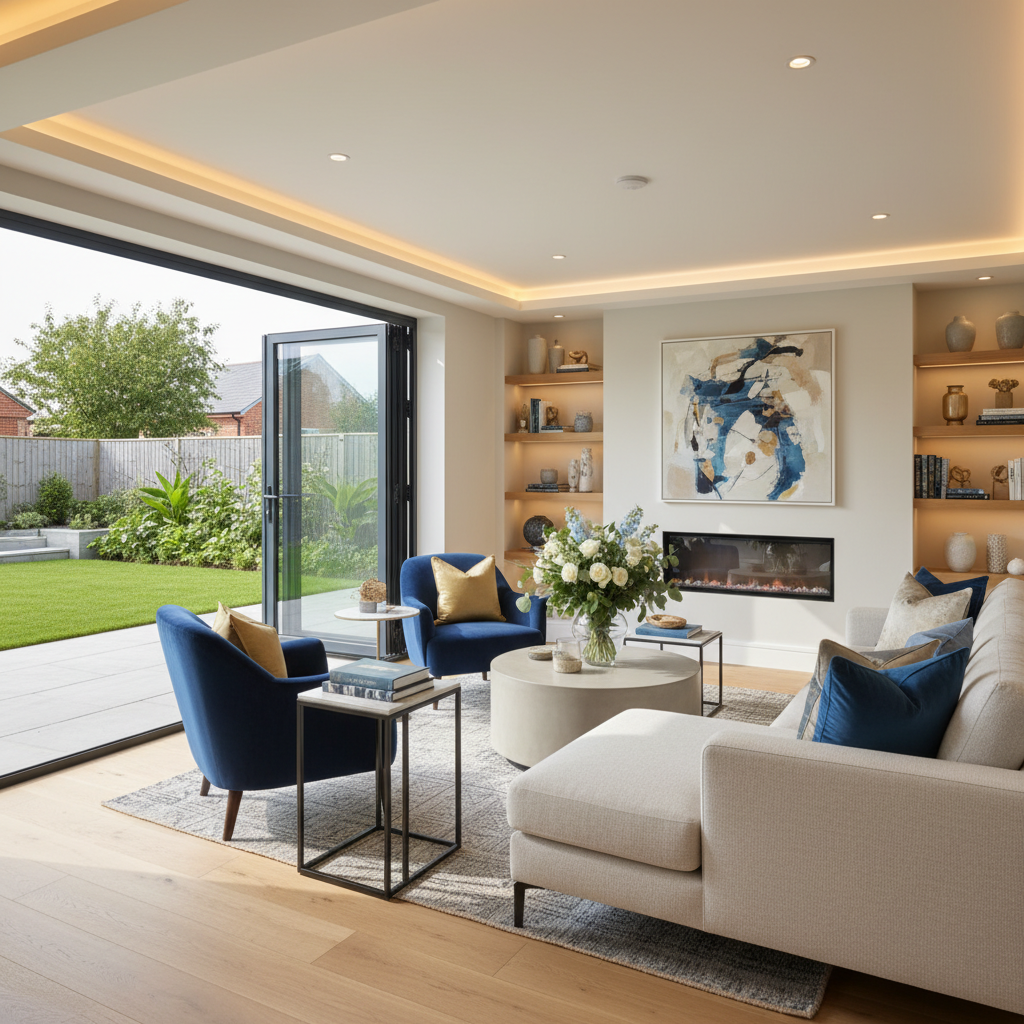
- The layout: Modern new build design prioritises open-plan living, and it works. The kitchen-living area feels spacious and sociable. The downstairs cloakroom is a luxury I never had in rented accommodation.
- The warranty: Knowing that structural defects are covered for 10 years, and that the developer's aftercare covers issues in the first two years, is genuinely reassuring. When the kitchen tap developed a drip, one phone call resolved it.
- The community: The development has a mix of first-time buyers, young couples, and small families. There is a real sense of community — we have a residents' WhatsApp group, we share recommendations for tradespeople, and several of us have become genuine friends.
Chapter 14: The 12-Month Retrospective — What I Would Do Differently
Twelve months into homeownership, I have the benefit of hindsight. Here is what I would do differently if I could start the process again.
1. Negotiate Harder on Reservation Day
I accepted the listed price of £169,995 without any real negotiation. I should have asked for a reduction, additional upgrades, or an enhanced flooring package. Even a modest 2% reduction (£3,400) would have made a meaningful difference to my deposit requirement and mortgage payments. The sales team expected negotiation, and by not negotiating, I left money on the table.
2. Use My Own Solicitor
The panel solicitor was competent but not proactive. They did not flag the estate management charge prominently (I discovered it in the small print of the transfer deed), and their communication was poor. An independent solicitor, working exclusively for me, would have been more thorough in highlighting issues and more responsive to my questions. The £1,500 saving on legal fees was not worth the reduction in service quality.
3. Budget Realistically for Setup Costs
I underestimated the cost of setting up a home from scratch. Furniture, white goods, curtains, light fittings, and garden basics cost approximately £3,500 in the first month. I should have budgeted for this explicitly and had the money set aside before completion, rather than scrambling to fund it from my monthly income.
4. Visit the Site More During Construction
I drove past the development occasionally but never asked for a formal site visit during construction. Some developers allow buyers to view their property at certain stages of construction (typically at timber frame or first fix stage). I wish I had asked, because seeing the construction quality first-hand would have either reassured me or flagged issues early.
5. Start the LISA Earlier
I opened my Lifetime ISA two years before buying. If I had opened it four years before, I would have received an additional £2,000 in government bonuses. The LISA is one of the best tools available to first-time buyers, but it requires time to maximise the benefit. My advice to anyone even vaguely considering buying in the future: open a LISA now, contribute the maximum £4,000 per year, and let the government bonuses compound.
6. Accept That Delays Happen
The six-week delay stressed me enormously, but it was ultimately manageable and the house was none the worse for it. If I had mentally prepared for the possibility of delay from the start — building in a two-month buffer for my tenancy, having the mortgage extension discussion with my broker proactively rather than reactively — the delay would have been an inconvenience rather than a crisis.
The Complete Cost Breakdown
For anyone considering a similar purchase, here is the complete financial picture of buying my new build home:
- Purchase price: £169,995
- Deposit (5%): £8,500
- Stamp duty: £0 (first-time buyer relief)
- Solicitor fees: £0 (paid by developer)
- Mortgage arrangement fee: £0 (fee-free product)
- Reservation fee: £500 (deducted from purchase price)
- Optional upgrades: £580
- Professional snagging inspection: £350
- Additional rent during delay: £1,250
- Removal costs: £280 (man with a van)
- First-month setup (furniture, white goods, curtains, lights, garden): £3,320
- Total cash required beyond the deposit: approximately £5,780
- Total cash spent (deposit + all costs): approximately £14,280
For anyone in a similar position, I would recommend having at least £15,000 in savings to comfortably cover a 5% deposit on a £170,000 property plus all associated costs. My £12,000 (including the parental gift) was just about enough, but it left no margin for error.
For more first-time buyer guidance, see our comprehensive first-time buyer new build guide and our step-by-step buying guide.
Final Thoughts
Buying my first home was the most challenging, stressful, expensive, and rewarding thing I have ever done. The process took 10 months from first viewing to completion, cost significantly more than the headline purchase price, and involved more paperwork than I thought possible. There were moments of genuine doubt — when the delay was announced, when the mortgage complication arose, when I saw the snagging list, when I checked my bank balance after furnishing the house.
But sitting here now, twelve months on, in my own living room, in my own house, writing this at the dining table I chose, under the lights I fitted, looking out at the garden I planted — I would not change a thing. Well, I would negotiate harder. But everything else, every stressful, terrifying, wonderful step of the journey, led me here. And here is exactly where I want to be.
If you are a first-time buyer considering a new build, my advice is simple: do your research, prepare your finances, be realistic about costs, and do not be afraid to ask for help. It is achievable. It is worth it. And the first time you put your key in your own front door, you will understand why.