What Is a New Build Reservation?
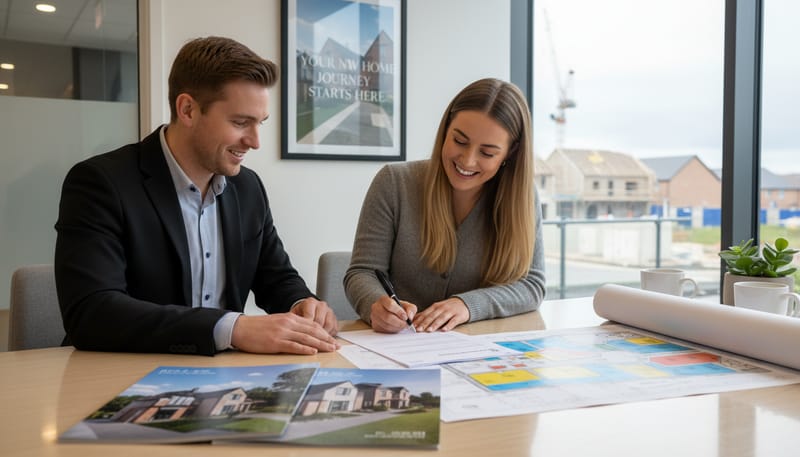
You’ve found the perfect new build plot, the sales adviser is smiling warmly across the desk, and suddenly the conversation turns to “reserving” the property. For most first-time buyers, this is uncharted territory — and understandably so. Reserving a new build home is a unique process that works quite differently from buying an existing property on the open market.
A reservation is essentially you telling the developer: “I want this specific plot, and I’m serious enough to put down a fee to prove it.” In return, the developer agrees to take the property off the market for a set period — usually 28 days — while you arrange your mortgage, instruct a solicitor, and get the legal wheels turning. It’s not the same as exchanging contracts, and it’s not legally binding in the way a full contract is, but it is a critical first step on your journey to homeownership.
If you’re still in the early stages of your home-buying journey, it’s worth reading our step-by-step guide to the new build buying process to understand where reservation fits into the wider picture. For now, let’s focus on exactly what happens when you reserve, what it costs, and how to make the most of that crucial 28-day window.
Understanding this process thoroughly will help you feel confident and in control from the moment you decide to proceed. Let’s break down every aspect of the new build reservation so you know exactly what to expect.
Understanding the Reservation Fee
The reservation fee is the first financial commitment you’ll make when buying a new build home. It’s a payment — typically between £500 and £1,000 — that secures your chosen plot and takes it off the market. Some developers may charge slightly more for premium plots or higher-value properties, but £500 to £1,000 is the standard range you’ll encounter across most major UK housebuilders.
How the Fee Works
When you pay the reservation fee, you’ll sign a reservation agreement — a short document that outlines the key terms of the reservation. This typically includes:
- The plot number and address of the property you’re reserving
- The agreed purchase price (including any negotiated incentives or upgrades)
- The reservation period — usually 28 days from signing
- Any conditions that must be met (such as obtaining a mortgage offer)
- Details of what happens if either party withdraws from the reservation
- Whether the fee is refundable or non-refundable
Is the Reservation Fee Refundable?
This is one of the most common questions first-time buyers ask, and the answer depends on the developer and the circumstances. Most reservation fees are described as “non-refundable” in the reservation agreement. However, in practice, many developers will refund the fee if:
- Your mortgage application is declined and you cannot obtain alternative finance
- The developer’s solicitor causes unreasonable delays in providing the contract pack
- A material issue arises during the legal process that wasn’t disclosed at reservation
- You withdraw within a cooling-off period (if one is offered)
Since April 2023, the New Homes Quality Code requires developers to provide a cooling-off period and clearer terms around reservation fee refunds. Under this code, if the developer is a registered member, you should have the right to withdraw and receive a refund within a set timeframe. Always check whether your developer is registered with the New Homes Quality Board.
If you’re still saving for your deposit, remember that the reservation fee is usually deducted from your deposit at exchange of contracts, so it’s not an additional cost — it’s an advance payment towards the total amount you’ll need.
Reservation Fee vs Deposit: What’s the Difference?
| Feature | Reservation Fee | Exchange Deposit |
|---|---|---|
| Typical amount | £500–£1,000 | 5%–10% of purchase price |
| When paid | At reservation (before contracts) | At exchange of contracts |
| Legally binding? | Not a binding contract | Yes — legally binding |
| Refundable? | Usually non-refundable (with exceptions) | Forfeited if you pull out after exchange |
| Deducted from deposit? | Yes, in most cases | N/A — this is the deposit |
| What it secures | Plot taken off market temporarily | Legally binding purchase agreement |
What You’re Committing To (and What You’re Not)
One of the biggest misconceptions first-time buyers have about reservation is that it’s a legally binding commitment to buy. It isn’t — at least not in the way that exchanging contracts is. However, it’s important to understand exactly what you are and aren’t agreeing to when you sign that reservation form.
What You ARE Committing To
When you reserve a new build, you’re making a good-faith commitment to proceed with the purchase. In practical terms, this means:
- Paying the reservation fee — this demonstrates your seriousness to the developer
- Acting promptly — you’re agreeing to instruct a solicitor, apply for a mortgage, and progress the purchase within the reservation period
- Dealing exclusively with this developer for this plot — you shouldn’t be reserving multiple properties with different developers simultaneously
- Providing accurate information about your financial situation and buyer status
Think of it as a mutual agreement between you and the developer: they take the plot off the market for you, and in return you commit your time, energy, and reservation fee towards making the purchase happen.
What You’re NOT Committing To
Crucially, you are not legally obligated to complete the purchase at the reservation stage. Until you exchange contracts, you can technically walk away — although you may lose your reservation fee. This distinction matters because it gives you a window to:
- Have your solicitor review the contract and raise any concerns
- Wait for your formal mortgage offer to be issued
- Review the developer’s documentation, including planning permissions, building regulations approvals, and management company details
- Carry out any additional due diligence you feel is necessary
The reservation period exists specifically so that you can do your homework without the pressure of a legally binding contract hanging over you. Use this time wisely — it’s your safety net.
The Cooling-Off Period
Under the New Homes Quality Code, developers who are registered members must offer a cooling-off period after reservation. This gives you a short window — typically 14 days — during which you can withdraw from the reservation and receive a full refund of your reservation fee, no questions asked.
Not all developers are registered with the New Homes Quality Board yet, so always ask at the point of reservation whether a cooling-off period applies. If it does, make sure you understand when the clock starts ticking and how to exercise your right to withdraw if needed.
The 28-Day Window: Your Action Plan
The 28-day reservation period is arguably the most important phase of your new build purchase. Everything needs to happen quickly and efficiently, and poor organisation during this window is one of the top reasons first-time buyer purchases fall through. Here’s exactly what you need to do and when.
Days 1–3: Immediate Actions
Don’t wait even a day to get started. The clock is ticking from the moment you sign the reservation agreement. Your immediate priorities are:
- Instruct a solicitor or licensed conveyancer. Ideally, you should have a solicitor lined up before you reserve. Many developers will recommend a solicitor, and while there’s nothing wrong with using them, you’re free to choose your own. Make sure they have experience with new build conveyancing, as it’s different from standard property transactions.
- Submit your full mortgage application. If you have a mortgage agreement in principle, now is the time to convert it into a full application. Contact your mortgage broker or lender immediately with the reservation details.
- Gather your documents. Your solicitor and mortgage lender will need proof of identity, proof of address, bank statements, payslips, and your full paperwork pack. Having these ready will prevent delays.
Days 4–14: Legal and Financial Progress
During this period, the key players in your purchase should be actively working on your behalf:
- Your solicitor will receive the contract pack from the developer’s solicitor and begin reviewing it
- Your mortgage lender will process your application and instruct a valuation of the property
- You should be responding promptly to any requests for information or documentation
- Check in with both your solicitor and mortgage broker at least once during this period to ensure everything is progressing
Days 15–21: Chase and Confirm
By now, your mortgage valuation should be completed or imminent, and your solicitor should have received the contract pack. This is the time to:
- Chase your solicitor for an update on the contract review and any enquiries raised
- Chase your mortgage lender if you haven’t received your formal mortgage offer
- Review any documents your solicitor shares with you — don’t just sign without reading
- Confirm that your deposit funds are accessible and ready for exchange
Days 22–28: Exchange Preparation
In an ideal scenario, you’ll be approaching exchange of contracts by the end of the 28-day window. However, it’s common for new build purchases to take a little longer. If you need more time:
- Speak to the sales adviser early — most developers will grant extensions if you can demonstrate genuine progress
- Have your solicitor confirm in writing what’s outstanding and the expected timeline
- Don’t panic — extensions are very common, especially for first-time buyers
Being organised during this 28-day window is crucial. If you’re wondering about the broader costs you’ll face, our guide to budgeting beyond your deposit covers everything from solicitor fees to moving costs.
From Reservation to Exchange: The Full Timeline
While the reservation period itself is typically 28 days, the full journey from reservation to exchange of contracts usually takes longer — typically 8 to 16 weeks for a new build purchase. Here’s a detailed breakdown of what happens and when.
| Stage | Typical Timeframe | What Happens | Who’s Responsible |
|---|---|---|---|
| Reservation signed | Day 1 | Reservation fee paid, agreement signed, plot taken off market | You & developer |
| Solicitor instructed | Days 1–3 | You appoint a conveyancer and provide their details to the developer | You |
| Full mortgage application | Days 1–3 | Full application submitted to lender with property details | You & broker |
| Contract pack issued | Days 3–10 | Developer’s solicitor sends legal pack to your solicitor | Developer’s solicitor |
| Mortgage valuation | Days 7–21 | Lender instructs and completes a valuation of the property | Mortgage lender |
| Contract review & enquiries | Days 10–35 | Your solicitor reviews the pack, raises enquiries with developer’s solicitor | Both solicitors |
| Formal mortgage offer | Weeks 3–6 | Lender issues your binding mortgage offer | Mortgage lender |
| Enquiries resolved | Weeks 4–10 | All legal queries answered satisfactorily | Both solicitors |
| Signing the contract | Weeks 6–12 | You review and sign the contract, arrange deposit transfer | You & solicitor |
| Exchange of contracts | Weeks 8–16 | Contracts exchanged, deposit paid, completion date set | Both solicitors |
| Completion | Varies (often 28 days after exchange, or on build completion) | Keys handed over, mortgage funds released, you move in | Everyone |
If you’re buying an off-plan property that’s still being built, your completion date will depend on the build schedule. The developer will usually provide an estimated completion date, but be prepared for this to shift by a few weeks in either direction. Your solicitor should include a longstop date in the contract — this is the latest date by which the developer must complete the build, after which you can withdraw and recover your deposit.
Typical Timeline: Reservation to Keys
Timescales are approximate and vary by developer, mortgage lender, and build stage.
Instructing a Solicitor for Your New Build Purchase
Choosing the right solicitor or licensed conveyancer is one of the most important decisions you’ll make during the reservation period. New build conveyancing is a specialist area — it involves different documentation, different timelines, and different legal considerations compared to buying an existing property.
What to Look For in a New Build Solicitor
Not all solicitors are experienced with new build transactions, so it’s essential to find one who is. Here’s what to prioritise:
- New build experience: Ask specifically how many new build transactions they’ve handled in the past year
- Responsiveness: Delays from your solicitor can cause you to miss your reservation deadline — choose someone who responds quickly
- Fixed fees: Most conveyancers offer fixed-fee quotes for new build purchases, typically ranging from £1,000 to £2,000 including disbursements
- Panel membership: Check whether they’re on your mortgage lender’s panel — this avoids the cost of a separate lender’s solicitor
- Reviews and recommendations: Ask friends, family, or your mortgage broker for recommendations
Should You Use the Developer’s Recommended Solicitor?
Many developers will suggest a solicitor for you to use. There are pros and cons to this approach:
| Consideration | Developer’s Recommended Solicitor | Your Own Independent Solicitor |
|---|---|---|
| Familiarity with the development | Often already familiar with the site documentation | Needs to review everything from scratch |
| Speed | May process faster due to existing relationships | May take slightly longer initially |
| Independence | Works with the developer regularly | Fully independent and working solely for you |
| Cost | Sometimes offered at a discounted rate | Market rate — shop around for quotes |
| Incentive alignment | Keen to maintain developer relationship | Focused entirely on your interests |
There’s no right or wrong answer here. The developer’s recommended solicitor can be perfectly competent and may even speed things up. However, if you want complete peace of mind that your solicitor is acting purely in your interests, choosing your own is a sensible option. For more on what your solicitor will handle, read our guide to the new build conveyancing process.
Common Mistakes First-Time Buyers Make at Reservation
The reservation stage is where many first-time buyer purchases start to go wrong — not because of any fundamental problem with the property or the buyer, but because of avoidable mistakes that cause delays, stress, and sometimes the loss of a much-wanted home. Here are the most common pitfalls and how to steer clear of them.
1. Not Having a Mortgage Agreement in Principle
Walking into a show home without a mortgage agreement in principle (AIP) is one of the biggest mistakes you can make. Without an AIP, you don’t truly know how much you can borrow, and the developer may question whether you’re a serious buyer. Always get your AIP sorted before you start viewing properties.
2. Delaying Solicitor Instruction
Every day counts during the 28-day reservation window. Some first-time buyers spend the first week casually researching solicitors rather than instructing one immediately. Ideally, you should have a solicitor identified before you reserve, so you can instruct them on day one. This single step can save you a full week of your precious reservation period.
3. Not Checking Your Credit Score Early Enough
Your full mortgage application involves a thorough credit check. If there are issues on your credit file that you weren’t aware of, they could delay or even derail your application entirely. Make sure you’ve checked and optimised your credit score well before you even start viewing show homes, let alone reserving a plot.
4. Underestimating the Total Costs Involved
The reservation fee and deposit are just the beginning. You’ll also need to budget for solicitor fees, local authority searches, mortgage arrangement fees, buildings insurance, and more. Many first-time buyers are caught off guard by the sheer number of additional costs that pile up during the buying process. Our comprehensive guide to budgeting beyond your deposit breaks down every cost you need to plan for so there are no nasty surprises.
5. Not Reading the Reservation Agreement Carefully
In the excitement of choosing your new home, it’s tempting to sign the reservation agreement without reading every detail. Always check:
- The exact purchase price and any agreed incentives or upgrades
- Whether the reservation fee is refundable or non-refundable and under what circumstances
- The reservation period length and what happens if you need an extension
- Any conditions or obligations you’re agreeing to fulfil
- The cooling-off period terms, including when it starts and how to exercise it
6. Forgetting to Document Agreed Upgrades and Extras
During the sales process, you may have the opportunity to choose upgrades — premium kitchen units, upgraded flooring, a landscaped garden, and so on. If you’ve agreed to any developer upgrades, make sure the agreed specifications are documented in the reservation agreement or a separate written confirmation. Verbal promises can be forgotten, so get everything in writing.
7. Not Communicating Proactively with All Parties
Once you’ve reserved, don’t assume everything will happen automatically. Stay in regular contact with your solicitor, your mortgage broker, and the developer’s sales team. A quick weekly phone call or email to check progress can prevent minor issues from becoming major delays. Many purchases stall simply because one party is waiting for information that nobody has chased.
Frequently Asked Questions
Can I lose my reservation fee?
Yes, in most cases the reservation fee is non-refundable if you withdraw voluntarily. However, if your mortgage application is declined or the developer fails to meet their obligations under the reservation agreement, you may be entitled to a refund. Under the New Homes Quality Code, developers who are registered members must provide clearer terms about refund conditions. Always read the reservation agreement carefully before signing, and ask the sales adviser directly about the refund policy for your specific development.
What happens if I can’t exchange contracts within 28 days?
Don’t worry — very few first-time buyer purchases exchange within exactly 28 days. The reservation period is a target rather than a hard deadline. If you can demonstrate that you’re making genuine progress (your mortgage application is in progress, your solicitor is actively working on the contract), most developers will happily extend the reservation period. The key is to communicate early and honestly — don’t wait until day 27 to ask for more time.
Can I reserve a new build without a mortgage agreement in principle?
Technically, some developers will allow you to reserve without an AIP, but it’s strongly advised against. Without an AIP, you don’t know for certain how much you can borrow, which means you might reserve a property you can’t ultimately afford. Most experienced sales advisers will want to see your AIP before accepting a reservation, as it protects both parties from wasted time and effort. Get your mortgage agreement in principle sorted first — it only takes a few days.
Do I need to choose all my options and upgrades before reserving?
Not necessarily. While some choices may need to be made early in the build process (such as kitchen layout, bathroom configuration, or electrical socket positions), many cosmetic choices like flooring colours, paint finishes, and tiling designs can be made later. The sales adviser will provide a clear schedule of when each decision needs to be made. It’s worth noting that for properties that are already built or near completion, your options for customisation may be more limited than for off-plan purchases.
What if another buyer offers more for the same plot after I’ve reserved?
Once you’ve signed the reservation agreement and paid your fee, the developer has agreed to take the plot off the market for the duration of the reservation period. Reputable developers will honour this commitment in full. The reservation agreement protects you from being “gazumped” during the reservation period, which is one of the significant advantages of buying new build compared to the open market. This protection is one of the many reasons the new build buying process is often considered more straightforward than purchasing a second-hand property.
Moving Forward with Confidence
Reserving a new build home is an exciting milestone — it’s the moment your dream of homeownership starts to become tangible. While the process can feel daunting as a first-time buyer, understanding what to expect at each stage will help you navigate it with confidence and clarity.
Remember the key principles: act quickly once you’ve reserved, keep communication channels open with your solicitor, mortgage broker, and the developer’s sales team, and don’t be afraid to ask questions at every stage. The reservation period is designed to work in your favour — it gives you a protected window to get everything in order without the risk of losing your chosen home to another buyer.
Before you reach the reservation stage, make sure you’ve done your homework. Check that your credit score is in good shape, ensure your deposit savings are on track, and familiarise yourself with the full first-time buyer timeline. With the right preparation, the reservation process will feel less like a leap of faith and more like a confident step towards your new front door.