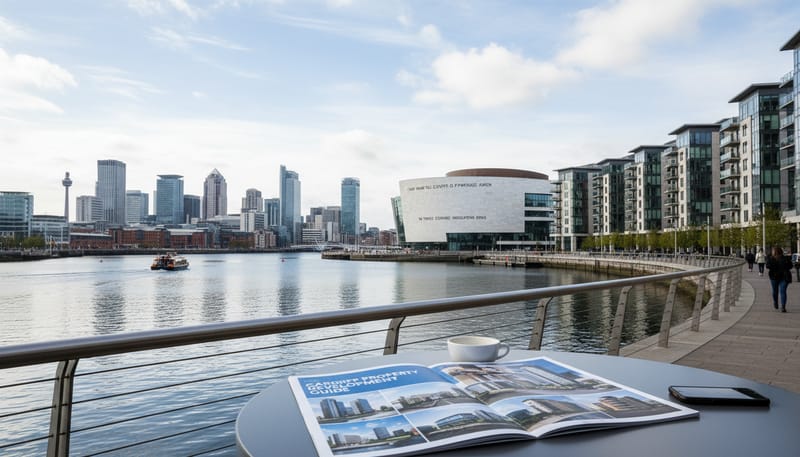
New Build Homes in Cardiff: Area Guide and Developments
Cardiff, the vibrant capital of Wales, has undergone a remarkable transformation over the past two decades. From the gleaming waterfront developments of Cardiff Bay to the tree-lined streets of Pontcanna and the family-friendly suburbs of Llanishen and Radyr, the city offers an extraordinary range of new build opportunities for every type of buyer. With average new build prices significantly below those of other UK capital cities, Cardiff represents outstanding value — particularly when combined with Wales’s own Help to Buy scheme and unique government support programmes.
Whether you’re a first-time buyer drawn by Cardiff’s affordability, a growing family seeking excellent schools and green spaces, or an investor eyeing strong rental yields driven by the city’s expanding student and professional population, this comprehensive guide covers everything you need to know about buying a new build home in the Welsh capital.
Why Choose Cardiff for Your New Build Home?
Cardiff has consistently ranked among the UK’s most liveable cities. It combines the cultural and economic advantages of a capital city with the compact, walkable character of a much smaller settlement. The city centre is home to world-class sporting venues — the Principality Stadium and Cardiff Arms Park — as well as a thriving arts scene centred around the Wales Millennium Centre in Cardiff Bay. The city’s economy is diversified across financial services, creative industries, public sector employment, and a growing technology sector, providing a stable base for the housing market.
From a property perspective, Cardiff offers remarkable value compared with English cities of similar size and economic importance. Average new build prices hover around £285,000 — considerably lower than Bristol (£370,000), Reading (£395,000), or any London borough. This affordability, combined with strong rental demand from the city’s three universities and expanding professional workforce, makes Cardiff a compelling proposition for both owner-occupiers and investors.
The Welsh Government also offers its own distinct set of support schemes for homebuyers, including Help to Buy – Wales, which operates on different terms to the now-closed English programme. This can make the financial step onto the property ladder considerably easier for Cardiff buyers compared with their counterparts across the Severn Bridge.
Area-by-Area Breakdown: Where to Buy in Cardiff
Cardiff’s neighbourhoods each have their own distinct personality, from the cosmopolitan buzz of Cardiff Bay to the village-like tranquillity of Radyr and St Fagans. Understanding these differences is essential when choosing where to buy your new build home. Below, we explore the city’s key residential areas in detail.
Cardiff Bay
Cardiff Bay has been the focal point of the city’s regeneration since the creation of the Cardiff Bay Barrage. Today, the area is home to striking contemporary apartment developments overlooking the waterfront, alongside cultural landmarks such as the Wales Millennium Centre and the Senedd (Welsh Parliament). New build apartments typically range from £180,000 for a one-bedroom to £350,000+ for premium two-bedroom units with water views. The area appeals strongly to young professionals and investors seeking strong rental yields from the nearby BBC Wales headquarters and growing tech scene.
Pontcanna & Canton
Pontcanna and Canton sit immediately west of the city centre and are among Cardiff’s most desirable inner suburbs. Known for independent cafes, boutique shops along Pontcanna Street, and proximity to the vast Bute Park and Sophia Gardens, these areas attract young professionals and families who want an urban lifestyle within walking distance of the city centre. New build opportunities are more limited here due to the established Victorian streetscape, but select infill developments and conversions command premium prices — typically £300,000 to £450,000 for a three-bedroom home.
Roath & Penylan
Roath is one of Cardiff’s most characterful neighbourhoods, known for its diverse community, independent food scene along City Road and Albany Road, and the beautiful Roath Park with its ornamental lake. Penylan, sitting just above Roath, offers a slightly quieter, more residential feel. New build developments in these areas tend to be smaller-scale apartment schemes or conversions of period properties. Prices are moderate, with two-bedroom apartments starting around £200,000 and three-bedroom houses from £280,000, making the area popular with first-time buyers and young families.
Llanishen & Lisvane
Llanishen and neighbouring Lisvane represent Cardiff’s premier northern suburbs, popular with families seeking excellent schools and a semi-rural atmosphere while remaining within easy reach of the city centre. The area has seen significant new build activity in recent years, with major developments offering detached and semi-detached family homes. Prices typically range from £300,000 for a three-bedroom semi to £500,000+ for a four-bedroom detached home. Llanishen station provides direct rail links to Cardiff Central in around 15 minutes.
Radyr & Morganstown
Radyr and Morganstown enjoy a village atmosphere on Cardiff’s north-western fringe, backed by the Taff Trail and surrounded by green countryside. The area is highly sought after for its outstanding schools, community feel, and beautiful surroundings — yet it’s just 20 minutes from Cardiff Central by train. New build developments here are typically executive-style detached homes priced from £400,000 to £650,000, targeting families willing to pay a premium for the combination of rural character and city convenience.
St Fagans & Fairwater
St Fagans is home to the world-famous National Museum of History and offers a uniquely historical setting for new build homes. Neighbouring Fairwater provides a more affordable alternative while still benefiting from excellent green space and good transport links along the A4119 corridor. New build three-bedroom homes in Fairwater start from around £260,000, while St Fagans itself commands higher premiums of £350,000 to £550,000 for detached properties, reflecting its prestige and limited development land.
Ely & Caerau
Ely and Caerau in west Cardiff represent some of the most affordable new build options in the capital. These areas have benefited from significant investment and regeneration in recent years, with new housing developments offering modern two and three-bedroom homes from as little as £180,000. While the areas have historically had a mixed reputation, ongoing improvements to community facilities, green spaces, and transport links are driving positive change. For first-time buyers and investors, Ely offers perhaps the strongest value proposition in Cardiff.
Cyncoed & Heath
Cyncoed is widely regarded as Cardiff’s most prestigious residential area, with tree-lined avenues and large detached properties. Heath, nearby, is home to the University Hospital of Wales and offers a slightly more accessible price point. New build opportunities in Cyncoed are rare and highly prized, typically starting from £450,000 for a modest new home and rising well above £700,000 for larger executive properties. Heath provides a more varied mix with new builds from £280,000 for two-bedroom apartments.
New Build Price Analysis: Cardiff in Context
Cardiff’s new build market offers exceptional value compared with other UK cities of similar importance. The table below shows how average new build prices in Cardiff’s key areas compare, giving buyers a clear picture of where their budget will stretch furthest and where premium prices apply.
Price growth in Cardiff has been steady over the past five years, averaging 4–6% annually across most areas. Cardiff Bay and the city centre have seen slightly higher growth driven by regeneration activity, while premium areas like Cyncoed and Radyr have shown resilient values underpinned by limited supply and strong demand. For a broader understanding of how Cardiff compares with other UK cities, see our guide to new build house prices across the UK.
Transport and Connectivity
Cardiff benefits from excellent transport infrastructure that connects the city to the rest of Wales, the West of England, and London. The ongoing South Wales Metro project promises to transform public transport further, with significant investment in rail frequency and integration.
Cardiff Airport, located in Rhoose approximately 12 miles from the city centre, provides flights to a range of European destinations. While more limited than Bristol Airport (which is also accessible from Cardiff in around 45 minutes), the Welsh Government has invested in the airport’s expansion with new routes being added regularly. For commuters to London, the Great Western Railway service from Cardiff Central to London Paddington takes approximately two hours, with trains running at regular intervals throughout the day.
Schools and Education
Education is a key consideration for family buyers in Cardiff, and the city offers a strong mix of English-medium, Welsh-medium, and faith schools across all levels. Cardiff is also unique in the UK for the prominence of its Welsh-medium education sector, which has seen significant expansion in recent years as more parents choose bilingual education for their children.
Notable primary schools include Llanishen Fach Primary (rated Excellent by Estyn), Radyr Primary School, and Ysgol Gymraeg Pwll Coch (a popular Welsh-medium school in Canton). At secondary level, Whitchurch High School is one of the largest in Wales and has produced several notable alumni including rugby star Gareth Bale, while Cardiff High School in Cyncoed consistently achieves among the best GCSE results in the city.
Cardiff is home to three universities — Cardiff University (a Russell Group institution), Cardiff Metropolitan University, and the University of South Wales — which together provide a large student population that underpins the rental market. The university presence also drives the local economy through research partnerships and graduate retention, with Cardiff University’s Innovation Campus attracting significant technology and research investment.
Help to Buy Wales and Welsh Government Schemes
One of the most significant advantages of buying a new build in Wales is access to the Welsh Government’s own Help to Buy scheme, which operates independently of the English programme. Help to Buy – Wales provides shared equity loans of up to 20% of the purchase price on new build homes valued up to £300,000, and it remains open to both first-time buyers and existing homeowners — unlike the final phase of the English scheme, which was restricted to first-time buyers before closing entirely in March 2023.
Help to Buy – Wales
- ✓ Up to 20% shared equity loan
- ✓ Maximum property value £300,000
- ✓ Open to first-time buyers AND movers
- ✓ Interest-free for first 5 years
- ✓ New builds only from registered builders
Land Transaction Tax (LTT)
- ● Replaces Stamp Duty in Wales
- ● 0% on first £225,000
- ● 6% on £225,001–£400,000
- ● Higher rates for additional properties
- ● Generally more favourable than SDLT
Wales also benefits from the Land Transaction Tax (LTT), which replaced Stamp Duty Land Tax in April 2018. The LTT threshold for residential properties is £225,000 — higher than the equivalent SDLT threshold in England — meaning many first-time buyers in Cardiff will pay no transaction tax at all. This represents a meaningful saving that can be put towards furnishing or improving a new home. For a comprehensive comparison of government schemes, visit our guide to Help to Buy and new build purchase schemes.
Developers Active in Cardiff
Cardiff attracts a healthy mix of national housebuilders and Wales-based developers, providing buyers with a range of options in terms of price point, style, and specification. Here are the key developers currently active in the Cardiff market:
Persimmon Homes
One of the UK’s largest housebuilders with multiple active sites across Cardiff, particularly in the northern suburbs and the St Mellons area. Known for affordable family homes suitable for Help to Buy Wales.
Bellway
Active in several Cardiff locations including popular schemes in Llanishen and Pontprennau. Offers a good range of two to five-bedroom homes at mid-market price points.
Redrow
Welsh-founded housebuilder headquartered in Flintshire, with a strong presence in the Cardiff market. Known for the Heritage Collection of traditional-style homes, Redrow targets the premium family market in locations like Radyr and Llanishen.
Taylor Wimpey
Another major national builder with several Cardiff developments, including sites in St Mellons and the northern expansion areas. Offers a wide price range and participates in Help to Buy Wales.
Lovell Homes
Active in partnership housing and affordable schemes across Cardiff. Specialises in mixed-tenure developments that combine private sale, shared ownership, and affordable rental homes.
Edenstone Group
A growing Welsh developer with an expanding portfolio in the Cardiff region. Known for thoughtfully designed homes in well-chosen locations, offering a boutique alternative to the national builders.
Lifestyle and Culture
Cardiff punches well above its weight for a city of its size when it comes to lifestyle, culture, and entertainment. The Principality Stadium in the heart of the city centre hosts international rugby and football, world-class concerts, and major events, while the nearby Sophia Gardens is a first-class cricket venue. The city’s cultural life revolves around the Wales Millennium Centre in Cardiff Bay, home to Welsh National Opera, and the diverse independent arts scene across the city.
For food lovers, Cardiff offers a thriving dining scene ranging from the historic Cardiff Market and its traditional Welsh cakes to contemporary restaurants in Mill Lane and the Brewery Quarter. The suburbs contribute their own culinary gems, with Pontcanna and Roath particularly noted for independent cafes and restaurants. The city’s craft beer scene has also flourished, with breweries like Crafty Devil and Tiny Rebel (from nearby Newport) well-represented in local bars.
Outdoor enthusiasts will appreciate Cardiff’s extraordinary green credentials. Bute Park provides a vast green lung in the city centre, the Taff Trail offers traffic-free cycling and walking from Cardiff Bay to Brecon (55 miles), and the Glamorgan Heritage Coast is just 20 minutes away for dramatic clifftop walks and sandy beaches. The Brecon Beacons National Park (now Bannau Brycheiniog) is less than an hour’s drive to the north, offering world-class hiking, mountain biking, and stargazing as a designated International Dark Sky Reserve.
Investment Outlook and Market Trends
Cardiff’s property market outlook is strongly positive, underpinned by several key factors that are driving both demand and price growth. The city’s population is growing steadily, economic investment is increasing, and major infrastructure projects are enhancing the city’s connectivity and appeal.
Positive Drivers
- ▲ South Wales Metro investment (£1bn+)
- ▲ BBC Wales relocation to Central Square
- ▲ Growing fintech and creative sectors
- ▲ Toll-free Severn crossings boosting Bristol corridor
- ▲ Strong university research investment
Considerations
- ● M4 relief road cancellation (traffic concerns)
- ● Limited airport connectivity vs. other cities
- ● Welsh rental regulation changes ongoing
- ● Higher LTT rates on additional properties
- ● Some areas still undergoing regeneration
The rental market in Cardiff remains robust, with average yields of 5–6% across the city and even higher returns possible in student-focused areas near the university campuses. The Renting Homes (Wales) Act 2016, which came into force in December 2022, introduced new regulation for the private rental sector in Wales, replacing assured shorthold tenancies with ‘standard occupation contracts’. While this represents a change for landlords, it also provides a more stable framework that can benefit long-term investment strategies.
Tips for Buying a New Build in Cardiff
Major Regeneration and Future Developments
Cardiff is in the midst of several transformative development programmes that will shape the city’s housing landscape for years to come. The most significant is the planned development of Plasdwr — a new garden city district on Cardiff’s north-western edge that will eventually provide around 7,000 new homes along with schools, shops, healthcare facilities, and green spaces. This represents one of the largest urban extensions in Wales and will significantly expand the available new build stock in the city.
In the city centre, the ongoing Central Square development has already attracted BBC Wales’s new headquarters and is transforming the area around Cardiff Central station into a modern business district. Further phases will add residential apartments, hotels, and commercial space, reinforcing the city centre as a desirable place to live and work. The adjacent Dumballs Road regeneration area promises further residential development close to the station and Cardiff Bay.
To the east, the International Sports Village continues to expand with a mix of leisure facilities and residential development, while the Cardiff Parkway project near St Mellons aims to create a new business park and railway station that could transform the eastern approach to the city. These projects collectively ensure a strong pipeline of new build opportunities across all price points and locations for the foreseeable future.
Frequently Asked Questions
Final Thoughts
Cardiff offers a compelling combination of affordability, quality of life, and growth potential that is hard to match in the UK. Whether you’re drawn by the waterfront apartments of Cardiff Bay, the leafy family suburbs of Llanishen and Radyr, or the accessible prices of Ely and the western suburbs, the city’s new build market has something for every buyer. The added advantages of Help to Buy Wales, favourable Land Transaction Tax thresholds, and major infrastructure investment through the South Wales Metro make this an excellent time to consider Cardiff for your new build purchase.
As with any property purchase, thorough research is essential. Visit your preferred areas at different times, understand the local school situation, and take full advantage of the financial support available through Welsh Government schemes. Cardiff’s transformation from a regional capital to a confident, internationally-minded city is well advanced, and early buyers in the right locations stand to benefit from continued growth in the years ahead. For more area guides across the UK, explore our guides to new builds in Newcastle and new builds in Southampton.