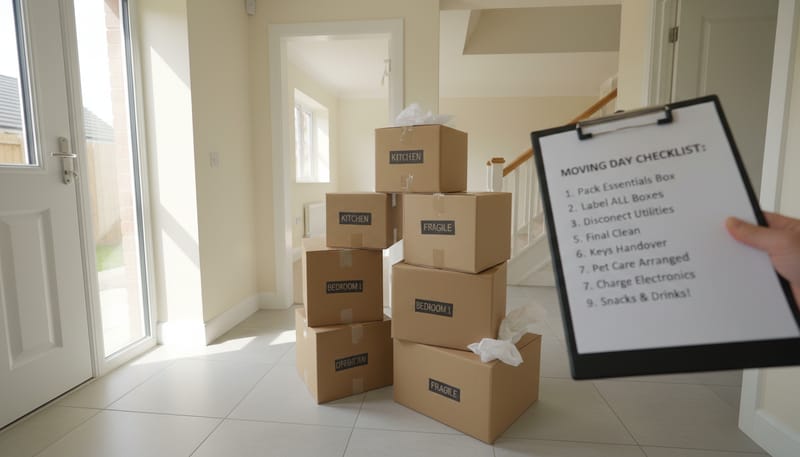
Buying a new build home is an enormous financial milestone, but many first-time buyers and even experienced movers seriously underestimate the costs that come after exchanging contracts. While you may have diligently saved for your deposit, arranged your mortgage, and budgeted for stamp duty and solicitor fees, the actual process of physically moving into your new home brings a raft of additional expenses that can easily add up to several thousand pounds. From hiring professional removal companies and buying mountains of packing materials to setting up utility accounts and redirecting your post, every single task on moving day — and the weeks surrounding it — carries a price tag that needs to be factored into your overall budget. In the UK market during 2024 and 2025, these costs have risen alongside general inflation, making it more important than ever to plan ahead with a thorough, realistic checklist.
This comprehensive guide breaks down every moving cost that new build buyers typically encounter, with real UK prices and practical tips for keeping expenses under control. Whether you are moving from rented accommodation into your first home, upsizing from a flat to a family house, or relocating across the country to a brand-new development, the costs outlined here will help you avoid nasty surprises. We have included visual breakdowns, comparison charts, and a detailed checklist structure so you can tick off each item as you plan. If you are still in the early stages of budgeting for your new build purchase, you may also want to read our guide on furniture and furnishing costs and our overview of estate management fees to get the complete picture of post-purchase spending.
Total Moving Cost Overview
Before diving into the individual line items, it helps to understand the total picture. The average UK household spends between £1,800 and £5,500 on moving costs alone — and that figure excludes the legal fees, stamp duty, and mortgage arrangement costs you have already accounted for. For new build buyers specifically, some costs may be slightly lower (for example, you will not need to budget for immediate repairs or renovations), but others can be higher if the property is on a new development where services like broadband need to be set up from scratch.
Removal Company Costs
For most people, hiring a professional removal company represents the single biggest expense on moving day. The cost varies enormously depending on the size of your home, the distance you are moving, the day of the week, and the time of year. Summer months (June to September) and end-of-month dates are peak periods when removal companies charge premium rates, so if your new build completion date offers any flexibility, moving mid-week in a quieter month can save you hundreds of pounds.
For a typical 2-3 bedroom home moving locally (under 50 miles), expect to pay between £600 and £1,200 for a professional removal service. This usually includes a team of 2-3 movers, a large van or small lorry, and the loading and unloading of your belongings. For a 4-5 bedroom home or a long-distance move (over 100 miles), costs can rise to £1,500-£3,000 or more. If you are moving from southern England to Scotland or vice versa, budget at the higher end of these ranges.
Full-Service vs Basic Removal Packages
Removal companies typically offer two main service tiers. A basic or standard package covers loading your boxes and furniture onto the van, transporting them, and unloading at the other end. You handle all packing and unpacking yourself. A full-service or premium package includes professional packing of all your belongings (usually the day before the move), transport, unloading, unpacking, and disposal of packing materials. The full-service option typically adds 40-60% to the cost but can be invaluable if you are working right up until moving day or have a large family home with decades of accumulated possessions.
Some companies also offer a partial packing service, where they pack fragile or high-value items (glassware, artwork, electronics) while you handle clothing, books, and other straightforward items. This middle-ground option usually adds 20-30% to the basic price and is a good compromise for many buyers.
Tips for Reducing Removal Costs
Getting at least three written quotes is essential — prices can vary by 50% or more between companies for exactly the same move. Always ask for an in-home survey or detailed video survey rather than relying on phone estimates, as companies that quote without seeing your belongings often add surcharges on the day. Check that each quote includes insurance cover (usually £50,000-£100,000 goods in transit), and verify the company is a member of the British Association of Removers (BAR) or the National Guild of Removers and Storers. Moving midweek can save 10-20% compared to Friday or Saturday moves, and avoiding the last week of the month (when most rental contracts end) can also help. If your new build developer offers a flexible completion date, use this to your advantage.
Another effective strategy is to declutter aggressively before moving. Every box you eliminate saves money on both removal costs and packing materials. Sell unwanted furniture and appliances on Facebook Marketplace, Gumtree, or eBay in the weeks leading up to your move. Many people find they can raise £200-£500 from selling items they no longer need, which directly offsets moving costs.
DIY Moving: Van Hire Costs
If you are on a tight budget or do not have a huge amount of furniture, hiring a van and doing the move yourself is a popular alternative. The main van hire companies in the UK — Enterprise, Europcar, Hertz, and specialist operators like HSS and National Truck Hire — offer a range of vehicle sizes from small panel vans to large Luton vans with tail lifts.
A small panel van (suitable for a 1-bed flat) typically costs £40-£70 per day. A medium-sized van like a long-wheelbase Transit or Sprinter (good for a 2-bed property) costs £60-£100 per day. A large Luton van with a tail lift (suitable for 3-4 bedrooms) costs £80-£150 per day. You will also need to factor in fuel costs (these vans are not fuel-efficient — budget £50-£100 for fuel depending on distance), any mileage surcharges, insurance excess reduction cover (typically £15-£25 per day), and the physical effort of loading and unloading everything yourself. Recruiting friends and family to help is traditional but consider whether you genuinely have enough people to safely lift heavy furniture — back injuries are no joke and can result in costly physiotherapy bills.
Packing Materials and Supplies
Even if you are doing a DIY move, packing materials add up surprisingly quickly. You will need cardboard boxes in various sizes, bubble wrap, packing paper, tape, marker pens, and possibly specialist items like wardrobe boxes, mattress protectors, and TV boxes. For a typical 3-bedroom house, expect to use 40-60 medium and large boxes, 2-3 rolls of bubble wrap, a large bundle of packing paper, and at least 4-5 rolls of strong packing tape.
Buying everything new from a moving supplies company or the removal company themselves typically costs £80-£150 for a full house pack. However, there are plenty of ways to reduce this cost. Supermarkets, off-licences, and local shops often have surplus cardboard boxes they are happy to give away — ask at the customer service desk. Facebook Marketplace and Freecycle frequently have listings from people who have just moved and want to get rid of their boxes. You can also buy second-hand boxes from companies like Box Recycler or Used Moving Boxes UK at roughly half the cost of new ones.
Essential Packing Materials Checklist
Here is what you will need as a minimum: 20-30 medium cardboard boxes (for kitchenware, books, ornaments), 10-15 large boxes (for bedding, clothing, toys), 5-10 small boxes (for heavy items like books to keep weight manageable), 2-4 wardrobe boxes if you have a lot of hanging clothes, a mattress bag for each bed, a TV box if you are transporting screens, 2-3 large rolls of bubble wrap, a pack of tissue or packing paper, 4-6 rolls of strong brown packing tape, a tape dispenser for efficiency, marker pens and labels for labelling each box with its room destination, and scissors or a Stanley knife. You might also want furniture blankets or moving pads to protect wooden surfaces during transit — these cost around £5-£10 each or can often be supplied by removal companies.
Mail Redirection
Royal Mail's postal redirection service ensures that any letters and parcels sent to your old address are forwarded to your new home. This is particularly important in the weeks and months after moving, as it takes time to update your address with every company, subscription, and organisation you deal with. Royal Mail offers three redirection durations, and all prices listed below are per surname redirected (so a couple with different surnames would need to pay twice).
We strongly recommend the 12-month option. It costs only £21 more than the 6-month service and gives you a full year of protection against missing important post. You would be surprised how many companies still send you correspondence at an old address months after you thought you had updated everything — pension providers, insurance companies, and HMRC are common culprits. You can set up mail redirection online at the Royal Mail website or at your local Post Office, and you should aim to arrange this at least 5 working days before your move date, ideally 2-3 weeks ahead to be safe.
Utility Transfers and Setup
Setting up utilities at your new build home is slightly different from moving into an existing property. New builds typically have brand-new meters and may have pre-agreed supply contracts with specific energy companies through the developer. While you are legally free to switch to any supplier you choose, the initial setup will usually involve the developer's nominated company. Here is what you need to budget for across all utility categories.
Gas and Electricity
New build homes benefit from modern insulation, efficient boilers, and often solar panels or heat pumps, meaning your energy bills should be lower than an equivalent older property. However, you still need to set up your account, provide meter readings, and potentially pay a security deposit or first month's payment upfront. In 2024/2025, the average UK energy bill under the Ofgem price cap is approximately £1,568 per year for a typical household (based on typical domestic consumption values). For a new build, you might expect to pay 10-25% less than this average due to superior energy efficiency, so budget roughly £1,200-£1,400 per year or £100-£120 per month. Your first bill may be slightly higher as the heating system beds in and you establish usage patterns.
Water
Water rates in England and Wales are set by your regional water company and are not subject to the same kind of switching as energy. You simply need to register with the relevant provider (for example, Thames Water, Severn Trent, United Utilities, etc.). New builds are required to have water meters, which means you pay for what you use rather than a fixed rateable value charge. Average water bills in England are around £448 per year (2024/25 figures), though new build households often use slightly less thanks to water-efficient fixtures like dual-flush toilets and aerated taps. Budget around £350-£450 per year.
Broadband and Phone
Setting up broadband on a new development can sometimes be trickier than expected. While most new builds are now pre-wired for fibre to the premises (FTTP), the actual connection still needs to be ordered and activated, which can take 2-4 weeks. Some new developments have exclusive deals with providers like Openreach, Hyperoptic, or CityFibre. Budget £25-£55 per month for a decent broadband package. For a more detailed breakdown, see our full guide on broadband and technology setup costs in new builds. There is usually no setup fee for standard installations, but if your development is brand new and infrastructure is not yet fully commissioned, there may be temporary delays.
Council Tax
Council tax is a significant ongoing cost that many new buyers underestimate. Your council tax band is determined by the Valuation Office Agency based on what your property would have been worth on 1 April 1991 (in England) or 1 April 2003 (in Wales). New builds are assessed based on comparable properties in the area. The average Band D council tax in England for 2024/25 is approximately £2,171 per year, but this varies enormously by local authority — from around £1,400 in some London boroughs to over £2,500 in some rural councils.
You need to register for council tax with your local authority as soon as you complete on your new build. There is no grace period — council tax is due from the date you become the legal owner. If your property is a new build that has not yet been banded, the council may issue a temporary band (often Band D as a default) and adjust it later. If you believe your banding is incorrect, you can challenge it through the Valuation Office Agency within 6 months of receiving your first council tax bill. Some local authorities offer council tax discounts: single occupancy gives you a 25% reduction, and some councils have specific new build exemption periods for unsold properties (though this benefits the developer, not you).
Remember that council tax covers essential local services including rubbish collection, road maintenance, street lighting, police, fire services, and schools. On new build estates, some of these services (particularly road and green space maintenance) may also be covered by a separate estate management fee, which effectively means paying twice for certain services — something to be aware of when budgeting.
Insurance Costs
You will need buildings insurance from the date of exchange (your mortgage lender will insist on this) and contents insurance from the day you move in. For a new build, buildings insurance is often slightly cheaper than for an older property because the structure is brand new, meets current building regulations, and comes with an NHBC or equivalent structural warranty. However, the rebuild cost of a modern property can still be substantial.
Average annual buildings insurance for a new build 3-bedroom house in England is approximately £150-£300, depending on your location, the sum insured, and the policy excess. Contents insurance depends entirely on the value of your belongings, but a typical new homeowner policy covering £40,000-£60,000 of contents costs around £100-£250 per year. Combined buildings and contents policies often offer discounts of 10-15% compared to buying separately. Consider adding accidental damage cover, which typically adds £30-£60 per year but covers incidents like spilling wine on the carpet or drilling through a pipe.
Address Updates and Administrative Costs
Updating your address might seem like a free task, but some changes carry costs. The most important update is your driving licence — this is free to do online via the DVLA website, and it is a legal requirement to update it as soon as you move. Updating your V5C vehicle registration is also free. However, updating your passport with your new address does not require any action — your passport remains valid regardless of your address.
Other administrative tasks include registering with a new GP surgery (free but can involve lengthy waits for registration), updating your address on the electoral roll (free and essential for maintaining your credit score), and notifying your bank, credit card companies, and investment providers. Most of these changes are free but collectively they consume several hours of your time. It is worth creating a master list and working through it systematically in the days after your move.
One often-overlooked cost is re-registering your vehicle's parking permit if you live in an area with residents' parking. Depending on your council, annual permits cost £30-£200, and you may need a visitor permit book (typically £15-£30) as well. New build estates generally have dedicated off-street parking, but if your property is on the edge of a development near a controlled parking zone, check whether you need a permit for street parking.
Cleaning Costs
If you are leaving rented accommodation, your landlord or letting agent will almost certainly require a professional end-of-tenancy clean to release your deposit. This typically costs £150-£400 depending on the size of the property and whether you need carpet cleaning, oven cleaning, and window cleaning as extras. Even if you are leaving a property you own, a clean property shows better to buyers and can avoid issues during the sale process.
At the new build end, your developer should hand over a clean property, but in practice many new builds have a layer of construction dust over everything. A professional post-construction clean can cost £200-£400 but is often unnecessary — a thorough clean with standard household products usually suffices. Budget for cleaning supplies (£20-£40) including an all-purpose cleaner, glass cleaner, microfibre cloths, a mop and bucket, and a vacuum cleaner if your old one is not up to the task.
Storage Costs
Sometimes the timing of your move does not align perfectly — perhaps your new build completion is delayed, or you need to leave your current home before the new one is ready. In these situations, you may need temporary storage. Self-storage units in the UK typically cost £80-£200 per month for a room-sized unit (approximately 50-75 square feet, enough for a 1-2 bed flat's worth of furniture). Larger units suitable for a full house of furniture cost £150-£350 per month. Most storage companies require a minimum rental period of one month, and some charge for insurance, padlocks, and access cards on top of the base rental price.
Removal companies also offer containerised storage, where your belongings are loaded into wooden containers at your home and stored in their warehouse. This is often cheaper than self-storage for shorter periods and saves you the trouble of transporting items to a storage facility. Expect to pay £30-£50 per container per week, with a typical house requiring 3-5 containers.
Moving Day Essentials and Incidental Costs
Moving day itself brings various small but cumulative expenses. You will want to have an essentials box packed with items for the first night: kettle, mugs, tea and coffee, milk, toilet roll, hand soap, towels, bedding, phone chargers, basic tools (screwdriver, allen keys for furniture assembly), and any medications. If you have children, pack a separate box with their favourite toys, snacks, and a change of clothes. For pets, ensure you have carriers, food, water bowls, and any comfort items easily accessible.
Feeding your moving team is a traditional and appreciated gesture. Budget £20-£40 for pizzas, sandwiches, snacks, and drinks for the removal team and any friends helping. Tipping removal staff is customary though not obligatory — £10-£20 per person is standard for a good job. You might also need to pay for parking permits if the removal van needs to park on a restricted street (£15-£30 per day depending on the council), and some councils require you to book a parking bay suspension for larger vehicles (£30-£60).
If your move involves an overnight stay (perhaps you are moving long distance and cannot do everything in one day), factor in hotel costs. A budget hotel near your new property costs £50-£100 per night for a family room. Alternatively, if your new build is habitable but you have not yet received all your furniture, an air mattress and sleeping bags for the first night or two is a common strategy — just make sure you have heating and hot water set up.
Childcare and Pet Care on Moving Day
If you have young children, arranging childcare for moving day can make the entire process enormously less stressful and significantly safer with heavy furniture being carried through narrow doorways. A day with grandparents is the free option, but if family help is not available, a day nursery session costs £50-£80 or a childminder £40-£60 for a full day. Similarly, dogs and cats should ideally be looked after elsewhere on moving day. Doggy daycare costs £20-£35 per day, or a pet sitter visiting your friend's house might charge £15-£25 for a few hours. Cattery rates are typically £10-£18 per day.
The Complete Moving Costs Checklist
Below is a comprehensive checklist with typical cost ranges for each item. Use this as your master planning document and tick off items as you arrange them. Remember that not every cost will apply to your situation — tailor it to your specific circumstances.
Timeline: When to Arrange Each Item
Timing is everything when it comes to a smooth, cost-effective move. Here is a recommended timeline for arranging each task, working backwards from your completion date.
Money-Saving Tips for Your Move
With careful planning, you can trim hundreds of pounds from your moving budget. Here are our top recommendations for keeping costs down without compromising on the quality of your move.
Move midweek: Tuesday, Wednesday, and Thursday moves are typically 15-20% cheaper than weekends. If you can take a day off work, the savings easily outweigh the lost earnings for most people.
Avoid peak months: June to September is peak moving season. If your new build completion can be scheduled for October through March, you will find removal companies more willing to negotiate on price and more likely to have availability on your preferred date.
Declutter ruthlessly: Less stuff means a smaller van, fewer hours, and lower costs. Be honest with yourself about what you actually use and need. Selling unwanted items can fund a significant portion of your moving costs.
Source free boxes: Supermarkets, wine shops, and online marketplaces are full of free cardboard boxes. Start collecting 3-4 weeks before your move.
Compare utility providers: Do not just accept the default energy supplier nominated by your developer. Use comparison sites to find the best deal — switching could save £100-£300 per year.
Bundle insurance: Combining buildings and contents insurance with one provider typically saves 10-15% compared to separate policies.
New Build-Specific Considerations
Moving into a new build brings some unique considerations compared to moving into an existing property. Firstly, new build completion dates can be unpredictable. Developers may give you a target date but reserve the right to delay if construction is not finished. This uncertainty can make it difficult to book removal companies and arrange utilities with confidence. We recommend booking your removal company provisionally with a flexible date, and confirming the final date once your solicitor has a firm completion date from the developer.
Secondly, access to new build estates can be restricted during construction. Large removal vans may struggle with narrow access roads, temporary one-way systems, or construction site traffic. Ask your developer's sales team about access arrangements for moving day and whether there are any restrictions on vehicle size or time of day. Some developments have specific moving-in slots to prevent chaos on the shared access roads.
Thirdly, your new build may not have everything finished on completion day. Snagging items (minor defects), unfinished landscaping, and incomplete communal areas are common on new developments. While these should not prevent you from moving in, they may mean you need to allow tradespeople access in the weeks after moving, which could affect where you unpack and arrange furniture. If you are interested in what the garden situation looks like on a new build, check our guide on landscaping and garden costs for new build properties.
Moving from Rented Accommodation
If you are moving from a rental property into your new build, there are some additional costs and considerations. The biggest is coordinating your tenancy end date with your completion date. Ideally, you want some overlap — perhaps a week — so you have time to move without rushing. However, this means paying rent and mortgage simultaneously for that overlap period. For an average UK rental property costing £1,200-£1,500 per month, even a one-week overlap costs £300-£375.
You will also need to arrange a professional end-of-tenancy clean (as mentioned earlier, £150-£400) to meet the standards required by your landlord's check-out inspection. This is separate from any cleaning at your new property. Take dated photographs of the rental property after cleaning and before handing back the keys, as evidence in case of deposit disputes. Your deposit should be returned within 10 days of both parties agreeing on deductions (or no deductions), but in practice this can take longer, especially if your landlord raises issues. Having your deposit returned promptly can help fund immediate costs at your new home.
The First Month's Running Costs
Once you have moved in, the first month's running costs at your new build home can feel like a financial hit as all the regular outgoings kick in simultaneously. Your mortgage payment (typically the largest monthly outgoing), council tax, energy, water, broadband, insurance, and potentially an estate management fee will all land within the first 4-6 weeks. Make sure your bank account can handle this initial clustering of payments.
Final Thoughts
Moving into a new build home is one of the most exciting experiences of your life, but it is important to approach it with open eyes and a realistic budget. The costs outlined in this guide represent the typical range of expenses that UK new build buyers face, and while your total will depend on your specific circumstances, having a clear picture of what to expect means there should be no unwelcome surprises. We recommend setting aside a dedicated moving fund of at least £2,500-£3,500 on top of your deposit, stamp duty, and legal fees to cover all the costs described here comfortably.
Start planning your move as early as possible — ideally 8-10 weeks before your anticipated completion date. Book your removal company or van hire early, arrange mail redirection, and work through the checklist methodically. The more organised you are, the smoother and cheaper your move will be. And remember, once you are settled in your brand-new home with everything unpacked and arranged, the cost and stress of moving day will quickly fade into a distant memory.
For more guidance on the costs you will face after moving day, explore our guides on furniture and furnishing costs, broadband and technology setup, and landscaping and garden costs for new build properties.