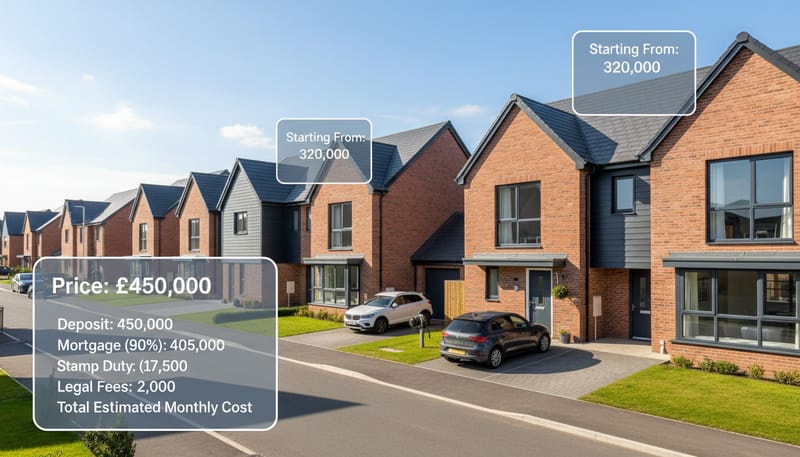
Buying a new build home is one of the most exciting milestones you will ever experience, but it is also one of the most financially complex. Beyond the headline purchase price, there is a surprisingly long list of additional costs that can catch even the most prepared buyer off guard. In 2026, the average new build property in England is priced at approximately £365,000, but the true cost of getting through the front door and settling in comfortably can be anywhere from £15,000 to £30,000 on top of that figure. Understanding every single cost from the moment you pay your reservation fee to the day your last piece of furniture arrives is not just sensible planning, it is essential for avoiding financial stress during what should be a joyful time.
This comprehensive guide breaks down every expense you will encounter when buying a new build home in 2026. We have researched current fees, consulted industry data, and compiled real-world figures so you can budget with confidence. Whether you are a first-time buyer stepping onto the property ladder, a growing family upsizing, or an investor adding to your portfolio, this guide covers every cost category in meticulous detail. We also include visual breakdowns and comparison charts so you can see exactly where your money goes. If you are also exploring government support options, our guide to first-time buyer schemes for new builds is well worth reading alongside this article.
The Total Cost at a Glance
Before we dive into each cost individually, let us look at the big picture. On a typical new build home priced at £365,000, a buyer can expect to pay the following additional costs on top of the purchase price. This overview assumes a first-time buyer using a 90% LTV mortgage.
1. The Deposit
Your deposit is typically the single largest upfront cost. For a new build home, most mortgage lenders require a minimum deposit of 10% of the purchase price, though some lenders offer 5% deposit mortgages for new builds. On our example property of £365,000, that means:
The larger your deposit, the better mortgage rate you will typically secure. There is a significant rate difference between 90% and 85% loan-to-value (LTV) products, and an even bigger jump when you reach 75% LTV. For many first-time buyers, the government-backed Lifetime ISA can contribute up to £1,000 per year in bonus funds towards your deposit, though the total property price must be under £450,000 to qualify.
With new builds specifically, you will usually pay a reservation fee of £500 to £1,000 when you first reserve the plot. This is typically deducted from your deposit on completion. Some developers charge non-refundable reservation fees, so always check the terms carefully before handing over any money. The remainder of the deposit is paid on exchange of contracts, which for new builds can be several months before the property is completed.
2. Stamp Duty Land Tax (SDLT)
Stamp Duty Land Tax is a government tax on property purchases in England and Northern Ireland. The rates and thresholds have changed multiple times in recent years, and the current structure for 2026 is as follows. If you are buying in Scotland (LBTT) or Wales (LTT), different rates apply.
Current SDLT Rates (2026)
| Property Price Band | Standard Rate | First-Time Buyer Rate |
|---|---|---|
| Up to £125,000 | 0% | 0% |
| £125,001 - £250,000 | 2% | 0% |
| £250,001 - £300,000 | 5% | 0% |
| £300,001 - £500,000 | 5% | 5% |
| £500,001 - £925,000 | 5% | 5% |
| £925,001 - £1,500,000 | 10% | N/A |
| Over £1,500,000 | 12% | N/A |
First-time buyers purchasing a property up to £300,000 pay zero stamp duty. For properties between £300,001 and £500,000, first-time buyers pay 5% only on the portion above £300,000. This relief is not available on properties over £500,000, where standard rates apply.
Stamp Duty Examples
Let us see how stamp duty works in practice with three common new build price points:
If you are purchasing an additional property such as a buy-to-let investment, there is a 5% surcharge on top of the standard rates from the first pound. This can add tens of thousands of pounds to the total cost, so it is essential to factor this in when assessing investment viability. For more detail on maximising incentives, see our post on how to save money on your new build purchase.
3. Solicitor and Conveyancing Fees
Conveyancing is the legal process of transferring property ownership. For a new build purchase, conveyancing tends to be slightly more complex than a standard resale because your solicitor needs to review the developer's contracts, check planning conditions, examine the build warranty, and handle any specific clauses related to new build properties. The typical cost breakdown for solicitor fees is:
In total, you should budget between £1,650 and £2,550 for legal costs on a new build purchase. Some developers offer to pay your legal fees as part of an incentive package, though this usually means using their panel solicitor rather than one you choose independently. While this can save you money, be aware that a panel solicitor may be more inclined to expedite the process in the developer's favour. It is worth weighing the savings against the benefit of truly independent legal advice.
What Property Searches Cover
Your solicitor will carry out several searches as part of the conveyancing process. These are essential for uncovering any issues that could affect your property or its value:
| Search Type | What It Covers | Typical Cost |
|---|---|---|
| Local Authority Search | Planning permissions, building regs, road schemes, conservation areas | £100 - £250 |
| Environmental Search | Flood risk, contaminated land, subsidence, radon | £40 - £60 |
| Water & Drainage Search | Water supply, drainage connections, public sewers | £40 - £65 |
| Chancel Repair Liability | Historic church repair obligations on the land | £20 - £30 |
| Mining Search (if applicable) | Coal mining activity, subsidence risk | £40 - £55 |
For new build properties, some of these searches may already be covered by the developer's own due diligence, but your solicitor should always carry out independent searches to protect your interests. If you are buying a leasehold new build, conveyancing may be more expensive due to the additional complexity of reviewing the lease terms. Read our detailed guide on ground rent and service charges on leasehold new builds for more on what to watch out for.
4. Mortgage Arrangement and Broker Fees
Getting the right mortgage is crucial, and there are several fees associated with the process. Here is what to expect:
The mortgage arrangement fee is charged by the lender and can vary enormously. Some of the best-rate mortgages come with higher arrangement fees of £999 to £1,999, while slightly higher-rate products may have no fee at all. You need to calculate the total cost of the mortgage over the initial rate period to determine which option is genuinely cheaper. For example, a mortgage at 4.2% with a £999 fee might work out cheaper over 5 years than a 4.5% mortgage with no fee, depending on your loan amount.
A mortgage broker can be invaluable when buying a new build because they understand which lenders are comfortable with new build properties and which offer extended mortgage validity periods. Many brokers work on commission from the lender and charge no fee to the buyer, while others charge a flat fee of around £300 to £500. Either way, the savings they find often more than offset any fee. The mortgage valuation is a basic check the lender carries out to confirm the property is worth what you are paying. For new builds, this is typically a desktop valuation and many lenders include it free of charge.
5. Survey and Snagging Costs
One of the advantages of buying a new build is that you generally do not need a full structural survey, since the property is brand new and comes with a 10-year structural warranty from the likes of NHBC, LABC, or Premier Guarantee. However, there are still inspection costs worth budgeting for:
A professional snagging inspection is one of the best investments you can make when buying a new build. A qualified snagging inspector will typically find between 50 to 150+ defects in a brand new property, ranging from cosmetic issues like paint blemishes and scratched glass to more serious problems such as poorly fitted doors, incomplete insulation, or plumbing issues. Most developers allow snagging inspections to be carried out before completion, giving you the opportunity to have defects rectified before you move in.
For our example property at £365,000, we recommend budgeting around £500 for a snagging survey with a follow-up re-inspection. This relatively modest outlay can save you thousands in future repair costs and ensures your home meets the standard you are paying for.
6. Insurance Costs
You will need several types of insurance when purchasing a new build home. Buildings insurance is required by your mortgage lender from the point of exchange, while other types are strongly recommended:
New build homes often benefit from lower buildings insurance premiums because everything is new, meets current building regulations, and comes with a structural warranty. You can read our full guide to insurance costs for new build homes for a detailed explanation of every type of cover and when to arrange it.
7. Moving Costs
The cost of physically moving into your new home varies depending on how much furniture you have, how far you are moving, and whether you opt for a professional removal company or a DIY approach. Here are the typical costs:
| Service | Typical Cost | Notes |
|---|---|---|
| Professional removal company | £800 - £1,500 | 3-bed home, local move |
| Long-distance removal | £1,500 - £3,000 | 100+ miles, packing included |
| Van hire (self-move) | £100 - £250 | Luton van, plus fuel |
| Packing materials | £50 - £150 | Boxes, tape, bubble wrap |
| Storage (monthly) | £80 - £250 | If timing does not align |
| Cleaning (old property) | £100 - £300 | Professional end-of-tenancy |
For a first-time buyer moving from a rented flat, total moving costs might be as low as £300 to £500 with a van hire and DIY approach. For a family relocating from one house to another with a professional removal company, budget around £1,000 to £2,000 including packing materials and a cleaning service for the old property.
8. Furnishing and Setting Up Your New Home
One of the aspects that many buyers underestimate is the cost of furnishing a new build home from scratch. Unlike a resale property where you might inherit curtain poles, light fittings, and garden landscaping, a new build typically arrives as a blank canvas. Here is what you should budget for:
| Item | Budget Range | Mid-Range |
|---|---|---|
| Sofa | £400 - £3,000 | £900 |
| Double bed frame + mattress | £300 - £2,500 | £700 |
| Dining table and chairs | £200 - £1,500 | £450 |
| Blinds/curtains (whole house) | £500 - £2,500 | £1,000 |
| White goods (washer, dryer, fridge-freezer) | £800 - £3,000 | £1,500 |
| Garden basics (turf, fencing, patio) | £500 - £3,000 | £1,000 |
| TV and entertainment | £300 - £2,000 | £600 |
In total, furnishing a 3-bedroom new build from scratch at mid-range prices will cost approximately £6,000 to £10,000. If you are upgrading from a smaller property and already own furniture, you may need significantly less. For more detail on extras and upgrades, see our guide on how to budget for new build extras and finishing touches.
9. Complete Cost Summary
Let us now bring everything together into a complete cost summary for our example new build purchase at £365,000. We will look at two scenarios: a first-time buyer and a home mover.
| Cost Item | Amount |
|---|---|
| Stamp Duty | £3,250 |
| Solicitor & Searches | £2,000 |
| Mortgage Fees | £1,500 |
| Snagging Survey | £500 |
| Insurance (Year 1) | £550 |
| Moving Costs | £500 |
| Furnishing | £8,000 |
| Total Additional | £16,300 |
| Cost Item | Amount |
|---|---|
| Stamp Duty | £8,250 |
| Solicitor & Searches | £2,200 |
| Mortgage Fees | £1,500 |
| Snagging Survey | £500 |
| Insurance (Year 1) | £550 |
| Estate Agent (sale) | £4,800 |
| Moving Costs | £1,500 |
| Furnishing Top-Up | £3,000 |
| Total Additional | £22,300 |
10. Hidden and Often-Forgotten Costs
Beyond the major cost categories above, there are several smaller expenses that buyers frequently overlook. While each one may seem minor, they add up quickly:
Other costs to consider include council tax (which begins from the day you move in), utility deposits or meter installations, and any immediate garden work such as laying turf or erecting fences that the developer has not included. Speaking of ongoing costs, if your new build is leasehold, make sure you understand the ongoing charges that come with it. Our guide on ground rent and service charges covers this in detail.
11. Monthly Running Costs After Moving In
Once you are in your new home, you will face regular monthly outgoings. New build homes typically have better energy efficiency ratings than older properties, which can lead to meaningful savings on energy bills. Here is what to expect monthly:
Your total monthly outgoings for a £365,000 new build home with a £36,500 deposit (10%) will be approximately £2,100 per month, including the mortgage, council tax, utilities, and insurance. This figure does not include food, transport, or lifestyle spending.
12. Regional Cost Variations
Property costs in the UK vary enormously by region. While the national average for a new build is around £365,000, there are significant differences depending on where you buy. The following vertical bar chart illustrates average new build prices across key regions:
These regional differences have a cascading effect on stamp duty, deposit requirements, and overall affordability. A first-time buyer in the North East could pay zero stamp duty on a £260,000 new build, while a buyer in London faces a £12,500 stamp duty bill on a £550,000 property even with the first-time buyer relief. When comparing regions, always factor in the total cost of purchase, not just the asking price.
13. Tips for Managing Your Budget
Armed with a full understanding of every cost, here are our top tips for managing your new build purchase budget effectively:
14. Timeline of When Costs Are Due
Understanding when each cost needs to be paid is just as important as knowing the amount. Here is a timeline of when you can expect to pay each expense during the new build buying process:
| Stage | Payment Due | Amount |
|---|---|---|
| Reservation | Reservation fee | £500 - £1,000 |
| Pre-exchange | Solicitor fees, searches, mortgage broker fee | £2,000 - £3,000 |
| Exchange | Deposit (less reservation), buildings insurance | £36,000+ |
| Pre-completion | Snagging survey, mortgage arrangement fee | £1,000 - £2,500 |
| Completion | Stamp duty, land registry (via solicitor) | £3,500 - £9,000 |
| Moving week | Removal company, initial furnishing | £1,500 - £10,000 |
Final Thoughts
Buying a new build home in 2026 involves a significant financial commitment beyond the purchase price. By understanding and planning for every cost, from stamp duty and solicitor fees through to snagging surveys and furnishing, you can approach your purchase with confidence and avoid any unpleasant surprises. The total additional costs typically range from £15,000 to £25,000 depending on your circumstances, the property price, and your furnishing requirements.
Remember that many of these costs are negotiable or can be reduced with careful planning. Developer incentive packages can cover legal fees and stamp duty. Using a mortgage broker can save you money on your mortgage deal. Phasing your furnishing over several months can spread the financial impact. And taking advantage of first-time buyer stamp duty relief can save you thousands of pounds.
For further reading, explore our guides on how to save money on your new build purchase, budgeting for new build extras, and insurance costs for new build homes. Each provides deeper detail on specific aspects of the buying process that will help you make the most informed decisions possible.