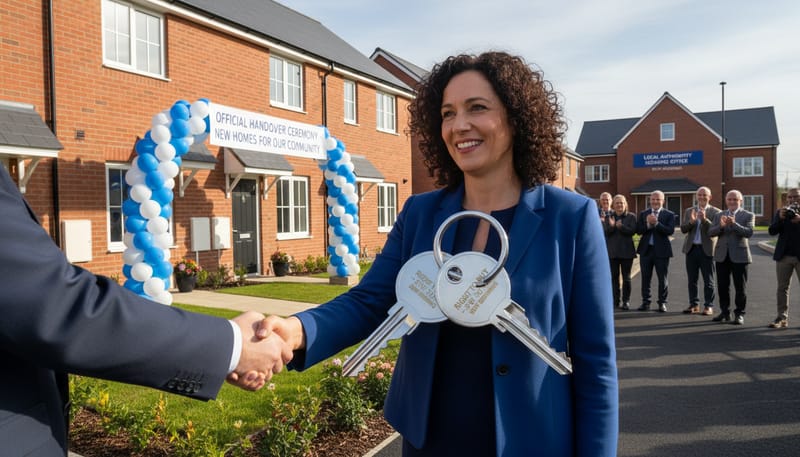
The Right to Buy scheme is one of the most well-known housing policies in the UK, having helped millions of council tenants purchase their homes since its introduction in 1980. But when it comes to new build properties, the picture becomes more complex. Can you use Right to Buy on a brand-new home? What alternatives exist for social housing tenants who want to move into a new build? And how do the various regional schemes differ across England, Wales, Scotland, and Northern Ireland?
This comprehensive guide unpacks everything you need to know about Right to Buy in the context of new build homes in 2026. Whether you’re a current council tenant exploring your options or a housing association resident wondering about your rights, we’ll cover the eligibility criteria, discount levels, alternative pathways, and practical considerations that could shape your journey to homeownership.
Right to Buy: The Basics
Right to Buy (RTB) gives eligible council tenants in England the legal right to purchase the property they currently live in at a discount. The discount is based on how long you’ve been a public sector tenant (not necessarily in the same property), the type of property, and its market value.
The key principle is simple: if you’ve been a council tenant for at least 3 years (reduced from the previous 5-year requirement), you may be entitled to buy your council home at a price below its full market value. The scheme is designed to reward long-term tenants and give them a stake in the property market.
However, there is an important distinction to understand upfront: Right to Buy applies to the home you currently live in — not to any property you choose on the open market. This means, in its traditional form, RTB cannot be used to purchase a new build home from a developer. You are buying your existing council house or flat, not choosing a property from a housebuilder’s development.
Can Right to Buy Apply to New Builds?
This is the central question, and the answer requires some nuance. In a strict sense, traditional Right to Buy cannot be used to purchase a new build home from a private developer. The scheme is specifically designed for tenants to buy the property they currently rent from their local authority.
However, there are several scenarios where Right to Buy and new builds intersect:
There are also important exemptions that affect newer council properties. Local authorities can apply to have newly built council homes exempted from Right to Buy for up to 15 years from their first letting. This exemption was introduced to protect the investment in new council housing stock and ensure it remains available for social tenants. Many councils building new homes in 2026 are taking advantage of this exemption.
The government’s position has evolved on this issue. The focus has shifted towards ensuring that new council housing stock is protected while still allowing established tenants in older properties to exercise their Right to Buy. This means that if you’re specifically hoping to use RTB on a recently built council property, you may face restrictions.
Right to Buy Discounts by Region
The discount you receive through Right to Buy depends on the type of property, your length of tenancy, and whether you’re in London or elsewhere in England. These discounts are updated annually in line with the Consumer Price Index (CPI).
The £102,400 cap for London and £77,900 cap for the rest of England represent the maximum monetary discount, regardless of the percentage calculation. For example, if you qualify for a 60% discount on a £200,000 council flat in Manchester, your discount would be £77,900 (the cap) rather than £120,000 (60% of value). The caps are adjusted annually and typically rise in line with CPI inflation.
There is also a cost floor rule: if your council has spent money on building, buying, repairing, or maintaining your home in the 15 years before your application, the discount cannot reduce the price below what was spent. This is particularly relevant for newer council homes or those that have undergone significant renovation.
Right to Shared Ownership: The New Build Route
For social housing tenants who specifically want to move into a new build property, Right to Shared Ownership (RtSO) is often a more relevant pathway than traditional Right to Buy. This scheme was introduced to give housing association and council tenants a route into shared ownership on new build and other properties.
Under Right to Shared Ownership, eligible tenants can purchase a share of their home (typically starting at 10–75%) and pay rent on the remaining share. Over time, you can “staircase” up to full ownership by buying additional shares. Many shared ownership new builds are specifically designated for social housing tenants through this route.
Voluntary Right to Buy Pilots
The government has run pilot programmes to extend Right to Buy-style discounts to housing association tenants — known as the Voluntary Right to Buy (VRtB). Unlike the statutory Right to Buy for council tenants, this is a voluntary arrangement that housing associations can choose to participate in.
The Midlands pilot, which ran from 2018, allowed housing association tenants in selected areas to apply for discounts similar to those under Right to Buy. The government funded the discounts, and participating housing associations agreed to use the proceeds to build replacement homes — often new builds.
As of 2026, a full national rollout of Voluntary Right to Buy for housing association tenants has not materialised. The current government’s priority has been on building more affordable homes, including new build social housing, rather than extending the right to purchase existing stock. However, individual housing associations may still operate their own voluntary sale schemes, so it’s worth enquiring with your landlord.
The Right to Buy Process
If you are an eligible council tenant and wish to exercise your Right to Buy, the process follows a defined legal pathway. Understanding each stage helps you plan effectively, especially regarding timelines and finances.
Limitations and Clawback Rules
Right to Buy comes with important restrictions that buyers must understand before proceeding. These rules are designed to prevent misuse of the discount and to protect the social housing stock.
Beyond the clawback, if you sell within 10 years of your RTB purchase, you must offer the property back to your former landlord (the council) or another social landlord first. This “right of first refusal” gives the council the opportunity to buy the property back at market value, helping to replenish the social housing stock.
If you purchased a flat through Right to Buy, be aware of service charges and ground rent obligations. Council-owned blocks often have service charges for maintenance, communal areas, and building insurance. These can be substantial, particularly if major works (such as roof replacement or cladding remediation) are required. This is an important cost to factor into your purchase decision.
Alternatives for Social Tenants Wanting New Builds
If your goal is specifically to own a new build home, and traditional Right to Buy doesn’t provide a direct route, several alternative schemes are worth exploring. These are designed to help people on lower incomes, including social housing tenants, access new build homeownership.
Using RTB proceeds for a new build: One practical strategy is to exercise your Right to Buy on your existing council home, benefit from the discount, and then sell the property (after the 5-year clawback period) to fund a new build purchase. While this is a longer-term strategy, the equity built through the RTB discount can provide a substantial deposit for a new build home in the future.
Another approach is to use your RTB discount to purchase your current home, then rent it out (if your mortgage allows) and use the rental income plus your existing household income to qualify for a new build purchase. However, this requires careful financial planning and may trigger additional stamp duty (the 5% surcharge on second properties).
For tenants who are exploring all options for getting into a new build, we recommend reading our guides on shared ownership on new builds, the Mortgage Guarantee Scheme, and stamp duty relief for first-time buyers. Each of these schemes can work alongside or as alternatives to Right to Buy, depending on your specific circumstances and housing goals.
Eligibility Quick Reference
Use this reference to check whether you qualify for Right to Buy or one of the alternative new build schemes available in 2026.
To check your specific eligibility for Right to Buy, contact your local council’s housing department or use the government’s online Right to Buy tool at GOV.UK. For shared ownership and First Homes eligibility, contact your local Help to Buy agent or housing association. Many new build developments also have dedicated sales advisers who can explain which schemes are available on their specific sites.
While Right to Buy in its traditional form may not directly lead to a new build purchase, it remains a valuable stepping stone. Combined with the growing range of affordable homeownership schemes available on new build developments across England, social housing tenants have more routes into homeownership than ever before. The key is understanding which pathway best fits your situation, timeline, and financial circumstances — and seeking professional advice before making any commitments.