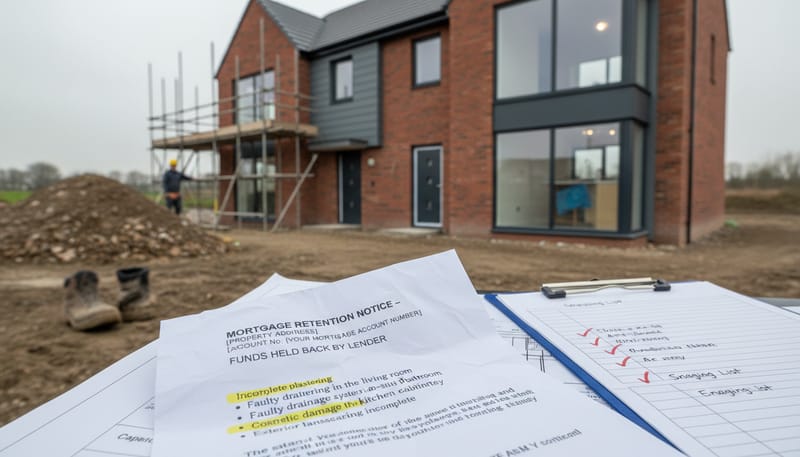
Mortgage Retention on New Build Properties Explained
A comprehensive guide to understanding mortgage retentions, why lenders withhold funds, and how to navigate the process when buying a new build home in the UK.
If you are purchasing a new build property in the United Kingdom, there is a reasonable chance you will encounter something called a mortgage retention. This is a mechanism used by mortgage lenders to protect their financial interests when there are outstanding issues with a property at the point of completion. Rather than releasing the full mortgage advance to your solicitor on completion day, the lender holds back a portion of the funds, typically between 5% and 15% of the total property value, until certain conditions are met. For many first-time buyers and even experienced property purchasers, this can come as an unwelcome surprise, particularly if they have not budgeted for the possibility or factored in the additional administrative steps required to release the retained amount. Mortgage retentions are particularly common in the new build sector, where properties may not be fully finished at the point of legal completion, or where the lender's surveyor has identified defects or incomplete works during the valuation inspection.
Understanding how mortgage retentions work is essential for anyone buying a new build home. The process involves multiple parties, including your mortgage lender, your solicitor or conveyancer, the developer's sales team, and potentially an independent surveyor. The retention amount is not lost money; it is simply held in reserve by the lender until the property meets the agreed standard. However, the timeline for releasing these funds can vary significantly, ranging from a few weeks to several months depending on the nature of the outstanding works and how quickly they are resolved. In this comprehensive guide, we will explore every aspect of mortgage retentions, from the initial triggers that cause a lender to impose one, through to the practical steps you need to take to get the funds released. Whether you are buying your first home through the Help to Buy scheme or upgrading to a larger family home, this knowledge will help you navigate the process with confidence and avoid costly delays.
What Is a Mortgage Retention?
A mortgage retention is a formal arrangement where your mortgage lender withholds a specified sum from the total mortgage advance at the point of completion. Instead of releasing the full loan amount to your solicitor to pass on to the seller or developer, the lender retains a portion of the funds. This retained sum is held by the lender, not by your solicitor, and it will only be released once the lender is satisfied that the conditions of the retention have been met. The retention is noted on your mortgage offer, and your solicitor will be made aware of it before completion takes place.
In practical terms, this means that on completion day, the developer will receive less than the full purchase price. You, as the buyer, will still be liable for the full mortgage amount and will make repayments on the full sum from day one, including the retained portion. This is an important point that many buyers overlook: you are paying interest on money that has not yet been released. The retention does not reduce your monthly payments; it simply means the lender is holding back part of the advance until the property is deemed satisfactory.
The amount retained varies based on the severity of the issues identified. For minor cosmetic snagging items, a retention of around 5% of the property value is common. Where there are more significant incomplete works, such as unfinished landscaping, missing fixtures, or partially completed communal areas, the retention might be 10% or more. In serious cases where structural defects or major building works remain outstanding, retentions of 15% or even higher can be imposed. On a typical new build property worth £300,000, a 10% retention would mean £30,000 is held back, which is a substantial sum that the developer will be keen to see released as quickly as possible.
Why Do Lenders Impose Retentions on New Builds?
Mortgage lenders are fundamentally risk-averse institutions. When they lend you money to purchase a property, they are using that property as security for the loan. If you were to default on your mortgage, the lender would need to repossess and sell the property to recover their funds. For this reason, lenders need to be confident that the property is worth the amount they are lending, and that it is in a habitable, mortgageable condition. If the lender's surveyor inspects a new build property and identifies issues that could affect its value or habitability, the lender will protect their position by imposing a retention.
New build properties are particularly susceptible to retentions for several reasons. First, they may be inspected at a stage where construction is not fully complete. Developers often push for early completions to meet quarterly targets, and this can mean buyers are asked to complete on properties where external landscaping, communal areas, or finishing touches are still outstanding. Second, the pace of new build construction can lead to quality issues. When builders are working to tight deadlines, corners can be cut, and defects may be present at handover. Third, new build developments often involve phased construction, where some elements like roads, pavements, street lighting, and communal facilities are not finished until later phases of the development are complete.
The surveyor appointed by your lender plays a crucial role in determining whether a retention is necessary. When they visit the property to carry out the valuation, they will assess not just the market value but also the condition of the property and its surroundings. If they note any issues that could affect the value or habitability of the home, these will be flagged in their report to the lender. The lender will then decide whether to proceed with the full advance, impose a retention, or in extreme cases, decline to lend on the property at all until the issues are resolved. It is worth noting that different lenders have different appetites for risk, and what triggers a retention with one lender might not with another. This is why working with a specialist new build mortgage broker can be invaluable, as they will know which lenders are more accommodating when it comes to new build properties.
The Snagging List and Its Impact on Retentions
A snagging list is a detailed inventory of defects, unfinished items, and quality issues identified in a new build property, usually compiled either by the buyer or by a professional snagging inspector before or shortly after completion. While a snagging list is separate from a mortgage retention, the two are closely related. The items identified during the lender's valuation inspection may overlap significantly with those on your snagging list, and the quality of the developer's response to snagging items can influence whether a retention is imposed or how quickly it is released.
Professional snagging inspections typically cost between £300 and £600 depending on the size and location of the property. Many buyers choose to have a snagging inspection carried out before legal completion, which gives them leverage to negotiate with the developer about rectifying issues. However, some developers resist pre-completion snagging inspections and only allow access after the keys have been handed over. In either case, having a comprehensive snagging list is valuable, as it provides documented evidence of the property's condition at handover and can be used to support your case when requesting the release of retained mortgage funds.
Typical snagging items range from minor cosmetic issues like paint blemishes, scuffed skirting boards, and poorly aligned doors, to more significant problems such as incorrectly fitted windows, plumbing leaks, missing insulation, and drainage faults. The average new build property in the UK has between 50 and 120 snagging items, though this varies considerably between developers and individual plots. Major housebuilders like Barratt Homes, Taylor Wimpey, and Persimmon have all faced criticism over build quality in recent years, and the introduction of the New Homes Quality Code in 2022 was designed in part to address these concerns. Professional snagging companies report that around 15% of new builds have issues serious enough to potentially trigger a mortgage retention, which underlines the importance of thorough inspections before and after completion.
How the Retention Process Works Step by Step
Understanding the step-by-step process of a mortgage retention will help you manage expectations and plan accordingly. The process begins long before completion day and can extend well beyond it, so having a clear picture of each stage is essential for smooth progression through your purchase.
The timeline for this entire process can vary enormously. In straightforward cases where the retention relates to minor incomplete landscaping that is completed within a few weeks, the whole process from completion to retention release might take just four to six weeks. However, in more complex situations involving structural defects, disputes with the developer, or communal areas that depend on later phases of construction, the process can take six months or even longer. During this time, you are paying interest on the full mortgage amount, which adds to the overall cost. For example, on a £300,000 mortgage at 4.5% interest, a £30,000 retention that takes six months to release means you will have paid approximately £675 in interest on money that was never actually advanced to the developer.
Financial Impact of Mortgage Retentions
The financial implications of a mortgage retention extend beyond the obvious inconvenience. As mentioned, you begin paying interest on the full mortgage amount from day one, regardless of whether the full advance has been released. This means the retention effectively costs you money for every day it remains in place. Understanding these costs can help you prioritise getting the retention resolved quickly and can give you ammunition when negotiating with the developer about timelines for completing outstanding works.
Beyond the direct interest costs, mortgage retentions can also affect your relationship with the developer and your ability to settle into your new home. The developer is financially motivated to get the retention released because they do not receive the full sale proceeds until the funds are released. This can work in your favour, as developers will typically be responsive to requests to complete outstanding works when they know there is money at stake. However, it can also create tension if the developer disputes the need for certain works or drags their feet on completing them.
Conditions for Releasing Retained Funds
The specific conditions for releasing retained funds will be set out in your mortgage offer and will depend on what issues the surveyor identified. Common conditions include the completion of external landscaping and boundary treatments, the rectification of specific defects identified in the valuation report, the adoption of roads and drainage by the local authority, the completion of communal facilities and amenity areas, or the provision of specific certificates or documentation such as building regulation completion certificates, electrical installation certificates, or gas safety records.
To trigger the release of retained funds, you will typically need to provide evidence to your lender that the conditions have been met. This usually involves instructing a re-inspection by a RICS-registered surveyor, who will confirm that the outstanding works have been completed satisfactorily. The cost of this re-inspection, which is typically between £150 and £300, is usually borne by the borrower, though some lenders will accept photographic evidence or a letter from the developer's customer care team for minor items. Your solicitor will coordinate the submission of evidence to the lender and handle the release of funds once the lender confirms they are satisfied.
Which Lenders Are Most Likely to Impose Retentions?
Not all mortgage lenders approach retentions in the same way. Some are more cautious and will impose retentions for relatively minor issues, while others take a more pragmatic view and will release the full advance as long as the property is habitable and the issues are cosmetic in nature. Understanding which lenders are more likely to impose retentions can help you make informed decisions when choosing your mortgage, particularly if you know there are potential issues with your new build property.
Among the major high street lenders, Halifax and Nationwide tend to be among the more cautious when it comes to new build retentions. Both lenders have relatively strict requirements around the condition of the property at completion and are more likely to flag issues that other lenders might overlook. Barclays and NatWest occupy something of a middle ground, while HSBC has historically been somewhat more relaxed about minor snagging items, though their approach can vary depending on the specific property and the surveyor appointed. Specialist lenders and building societies, such as Skipton Building Society and Leeds Building Society, often have more flexible approaches and may be willing to proceed without a retention in cases where a high street lender would hold back funds.
It is important to note that the surveyor's report is typically the determining factor, rather than the lender's general policy. A surveyor who takes a conservative view will produce a report that gives the lender little choice but to impose a retention, regardless of how pragmatic that lender might otherwise be. Conversely, a surveyor who focuses primarily on habitability and market value might not flag issues that would trigger a retention. This is one area where your mortgage broker can add significant value, as they may have insights into which surveyor firms are typically appointed by different lenders and what their general approach tends to be.
How to Avoid or Minimise Mortgage Retentions
While you cannot completely eliminate the risk of a mortgage retention on a new build property, there are several practical steps you can take to reduce the likelihood and minimise the impact if a retention is imposed. Prevention is always better than cure, and being proactive in the lead-up to completion can save you considerable time, money, and stress.
First and foremost, stay in close communication with your developer's sales team and site manager in the weeks leading up to your expected completion date. Ask for regular updates on the progress of your plot and any communal areas that could affect the valuation. If possible, arrange a pre-completion inspection of the property, either personally or through a professional snagging inspector, before the lender's surveyor visits. This allows you to identify and raise any issues with the developer before they appear in the valuation report. If the developer is willing to address issues before the surveyor's visit, you may be able to avoid a retention altogether.
Second, work with a mortgage broker who has experience with new build properties. A good broker will understand which lenders are most likely to impose retentions and can steer you towards a lender whose approach is better suited to your situation. They can also advise on the timing of the valuation, as completing the valuation too early in the construction process is more likely to result in a retention than waiting until the property is closer to being finished. For more guidance on timing, see our article on handling mortgage delays on new builds.
Third, ensure all necessary documentation is in place before completion. This includes building regulation completion certificates, NHBC or other warranty documentation, electrical installation certificates, gas safety certificates, and energy performance certificates. Missing documentation is a common trigger for retentions, and ensuring everything is available before the surveyor visits can prevent unnecessary holdups. Your solicitor should be requesting these documents from the developer as a matter of course, but it is worth following up to make sure nothing has been overlooked.
Dealing with Disputes and Difficult Retentions
In some cases, resolving a mortgage retention is not straightforward. Disputes can arise between the buyer and the developer about the quality of works, between the buyer and the lender about the conditions for release, or between all three parties about timelines and responsibilities. Understanding your rights and options in these situations is important for protecting your financial interests.
If the developer is slow to complete the outstanding works, your first step should be to escalate the matter through their formal complaints process. Most major developers have a customer care or after-sales team that handles snagging and defect issues. Put your concerns in writing and keep copies of all correspondence. If the developer is a member of the New Homes Quality Board, you can escalate to their independent resolution service. For developments covered by the NHBC Buildmark warranty, you can also raise the issue with the NHBC, who can intervene if the developer is not meeting their obligations under the warranty terms.
If the dispute is with the lender, for example if you believe the retention conditions have been met but the lender is refusing to release the funds, your options include requesting a review of the decision by a senior underwriter, instructing an independent RICS surveyor to provide a second opinion on the condition of the property, or escalating to the Financial Ombudsman Service if you believe the lender is acting unreasonably. Your solicitor can advise on the most appropriate route based on your specific circumstances.
Retention vs Indemnity Insurance
In some cases, an indemnity insurance policy can be used as an alternative to a retention. Indemnity insurance provides the lender with financial protection in case the identified issues cause a loss in the property's value. If the lender is willing to accept an indemnity policy, the full mortgage advance can be released on completion, avoiding the need for a retention altogether. The cost of the indemnity policy, which is typically a one-off payment of between £50 and £300, is usually borne by the borrower, though in some cases the developer may agree to cover it.
Not all issues are suitable for indemnity insurance, and not all lenders will accept it as an alternative to a retention. Indemnity insurance is most commonly used for missing documentation, such as a delayed building regulation completion certificate, rather than for physical defects or incomplete works. Your solicitor will be able to advise on whether an indemnity policy is a viable option in your situation and, if so, will arrange for the policy to be put in place before completion. This is a common approach that can save considerable time and hassle, particularly for issues that are administrative rather than structural in nature.
The Developer's Perspective on Retentions
Understanding the developer's viewpoint can help you navigate the retention process more effectively. Developers are financially motivated to resolve retentions quickly because the retained funds represent money they have not yet received for the sale. Large housebuilders track retention levels closely, and site managers may face performance targets related to retention resolution times. This financial pressure can work in your favour, as developers will typically prioritise completing outstanding works on plots where retentions are in place.
However, developers also have to balance retention resolution against other priorities, such as completing new plots, managing their workforce across multiple sites, and dealing with supply chain issues. During busy periods, retention works may be deprioritised in favour of new completions, particularly towards the end of financial reporting periods when developers are under pressure to hit sales targets. Being persistent and maintaining regular contact with the developer's customer care team is important for keeping your retention works on their radar.
Some developers have dedicated retention resolution teams that handle outstanding works across their developments. If your developer has such a team, it is worth establishing a direct line of communication with them, rather than relying solely on the sales office or site manager. You can also ask for a specific timeline for completing the outstanding works and request regular progress updates. Documenting everything in writing creates a paper trail that can be useful if you need to escalate the matter later.
Key Differences Between New Build and Resale Retentions
While mortgage retentions can occur on both new build and resale properties, there are some important differences in how they are handled and resolved. On resale properties, retentions are typically triggered by specific issues identified during the survey, such as damp, subsidence, or structural problems. The seller is usually required to carry out remedial works, and the retention is released once a re-inspection confirms the works have been completed satisfactorily. The seller is motivated to resolve the issue quickly because they want to receive the full sale proceeds.
On new build properties, the situation is often more complex because the issues may relate to ongoing construction works rather than specific defects. Communal areas, external landscaping, and infrastructure works may be subject to phased completion schedules that extend well beyond the date you move in. This means that some elements of a retention on a new build property may be outside the developer's immediate control, particularly where they depend on third-party contractors or local authority adoption processes. Understanding these distinctions can help you manage your expectations and plan your approach to resolving the retention more effectively.
Practical Tips for Managing Your Retention
Managing a mortgage retention effectively requires organisation, persistence, and clear communication with all parties involved. Here are the most important practical steps you should take to ensure the retention is resolved as quickly and smoothly as possible.
Keep a detailed file of all correspondence related to the retention, including the surveyor's report, the mortgage offer with retention conditions, all communications with the developer, and any photographs or evidence of completed works. This documentation will be invaluable when requesting the release of retained funds. Create a simple spreadsheet listing each retention condition, the current status, the responsible party, and the expected completion date. Update this regularly and share it with your solicitor so they can track progress and coordinate the release request when all conditions have been met.
Photograph the property extensively at the point of handover, including any areas that are the subject of the retention. Take date-stamped photographs that clearly show the condition of the property and any outstanding works. When the developer completes remedial works, take further photographs to document the improvements. This photographic evidence can be submitted to the lender alongside a re-inspection report and may help to expedite the release of funds. Some lenders will accept photographic evidence for minor items without requiring a formal re-inspection, which can save you the cost and delay of instructing a surveyor.
Stay in regular contact with your solicitor throughout the process. Your solicitor is the intermediary between you and the lender when it comes to the retention, and they will need to submit the release request on your behalf. Make sure they are aware of the progress of any outstanding works and provide them with evidence as soon as it is available. A proactive solicitor can make a significant difference to the speed at which the retention is resolved. For broader guidance on the conveyancing process, visit our guide to new build conveyancing timelines.
Mortgage Retention and Your Deposit
One question that frequently arises is how a mortgage retention affects your deposit and the overall financial structure of the purchase. The key point to understand is that a mortgage retention does not change the amount of your deposit or the total purchase price. The retention is applied to the mortgage advance, not to your deposit. Your deposit is paid in full on completion, and the shortfall created by the retention sits between the mortgage advance and the total purchase price.
In practice, this means the developer receives your full deposit plus the reduced mortgage advance on completion day. The retained portion is then paid to the developer when the lender releases it. This arrangement means the developer bears the financial impact of the retention, not you as the buyer, in the sense that they do not receive the full sale proceeds immediately. However, you bear the cost of paying interest on the retained amount, as discussed earlier, which is why it is in both parties' interests to resolve the retention as quickly as possible.
If you are buying with a small deposit, say 5% or 10% through schemes like Help to Buy or other first-time buyer incentives, a large retention can create complications. For example, if you are buying a £300,000 property with a 5% deposit of £15,000 and a 95% mortgage of £285,000, a 15% retention would mean the lender holds back £45,000. The developer would only receive £255,000 on completion day, which is £45,000 less than expected. Some developers may be reluctant to proceed with completion in these circumstances, particularly if they have concerns about the buyer's ability to get the retention released promptly. Your solicitor and mortgage broker should work together to manage the developer's expectations and ensure the completion proceeds smoothly.
Frequently Asked Questions About Mortgage Retentions
Final Thoughts
Mortgage retentions on new build properties are a common but manageable aspect of the home-buying process. By understanding what they are, why they are imposed, and how to resolve them efficiently, you can navigate the process with confidence and minimise the financial impact. The key is to be proactive: work with experienced professionals, maintain clear communication with the developer, and stay organised with your documentation.
Remember that a mortgage retention is not a reflection of a problem with you or your mortgage application. It is a standard risk management tool used by lenders to protect their financial interests, and it is particularly common in the new build sector where properties may not be fully finished at the point of completion. With the right approach and support from your mortgage broker, solicitor, and developer, most retentions are resolved within a few weeks to a few months, and the retained funds are released without significant difficulty.
If you are in the early stages of your new build purchase and want to understand more about the mortgage process, explore our guides on choosing between tracker and fixed rate mortgages and when it makes sense to overpay your new build mortgage. Being well-informed at every stage of the process is the best way to ensure a smooth and successful purchase.