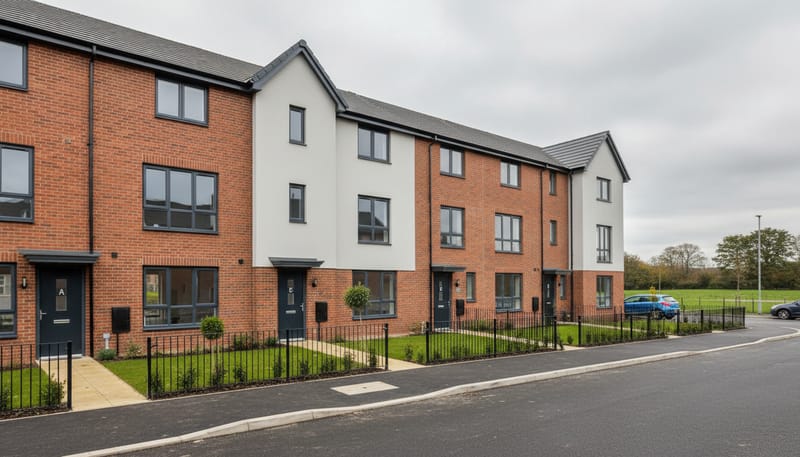
How Council Tax Banding Works
Council tax in England and Scotland is based on property valuations from 1 April 1991. Wales revalued in 2003. This means your brand-new home is assigned a band based on what it would have been worth over 30 years ago — not what you actually paid for it.
England and Scotland: Council Tax Bands
| Band | Property Value (England, 1991) | Property Value (Scotland, 1991) | Ratio to Band D |
|---|---|---|---|
| A | Up to £40,000 | Up to £27,000 | 6/9 |
| B | £40,001–£52,000 | £27,001–£35,000 | 7/9 |
| C | £52,001–£68,000 | £35,001–£45,000 | 8/9 |
| D | £68,001–£88,000 | £45,001–£58,000 | 9/9 (reference band) |
| E | £88,001–£120,000 | £58,001–£80,000 | 11/9 |
| F | £120,001–£160,000 | £80,001–£106,000 | 13/9 |
| G | £160,001–£320,000 | £106,001–£212,000 | 15/9 |
| H | Over £320,000 | Over £212,000 | 18/9 |
Wales: Council Tax Bands
Wales revalued properties in 2003 and has nine bands (A to I):
| Band | Property Value (Wales, 2003) | Ratio to Band D |
|---|---|---|
| A | Up to £44,000 | 6/9 |
| B | £44,001–£65,000 | 7/9 |
| C | £65,001–£91,000 | 8/9 |
| D | £91,001–£123,000 | 9/9 |
| E | £123,001–£162,000 | 11/9 |
| F | £162,001–£223,000 | 13/9 |
| G | £223,001–£324,000 | 15/9 |
| H | £324,001–£424,000 | 18/9 |
| I | Over £424,000 | 21/9 |
The 1991 Valuation Problem for New Builds
When the Valuation Office Agency (VOA) in England or the Scottish Assessors Association (SAA) in Scotland bands a new build, they must estimate what the property would have sold for on 1 April 1991 — even though it did not exist then. They consider:
- The size, type, and specification of the property
- The location and neighbourhood
- What similar-sized properties in the area were worth in 1991
- The general character of the property (number of rooms, garage, garden)
This process is inherently imprecise. A 4-bedroom detached house in an area where 1991 values were £90,000–£125,000 would likely fall into Band E or F. But a 2-bedroom apartment in the same area where equivalent properties were £45,000–£55,000 in 1991 would be Band C. The valuer is making an educated estimate — and sometimes they get it wrong.
Why New Builds Often End Up in Higher Bands
New build buyers frequently notice that their council tax band is higher than older properties of a similar size nearby. There are several reasons for this:
| Factor | Why It Pushes the Band Up | Is It Fair? |
|---|---|---|
| Larger footprint | Modern building regulations require wider staircases, larger bathrooms, and utility spaces that older properties may lack | Often yes — the property is technically larger even if room sizes feel similar |
| En-suite bathrooms | An extra bathroom adds to the notional 1991 value | Debatable — en-suites were rare in 1991, making comparison difficult |
| Garage / parking | Integral garages and allocated parking spaces add value in the 1991 assessment | Usually yes, if comparable properties in the area without garages are in lower bands |
| New estate premium | Valuers may assume a new estate would have commanded a premium even in 1991 | Questionable — this is speculative and can be grounds for challenge |
| Location changes | If the area has improved significantly since 1991 (new transport links, regeneration), the 1991 value should NOT reflect this — but sometimes the valuer overestimates | Potentially unfair — the 1991 value should reflect 1991 conditions, not current improvements |
What You Will Actually Pay: Council Tax Bills by Band and Region
Council tax rates vary enormously depending on where you live. The same Band D property can cost £1,200 in one council area and £2,500 in another. Here are illustrative Band D rates for different types of council area:
| Council Area Type | Typical Band D (2025/26) | Monthly (10 instalments) | Examples |
|---|---|---|---|
| Inner London borough | £1,200–£1,600 | £120–£160 | Westminster, Wandsworth, City of London |
| Outer London borough | £1,600–£2,100 | £160–£210 | Croydon, Bromley, Barnet |
| Major city | £1,800–£2,200 | £180–£220 | Birmingham, Manchester, Leeds, Bristol |
| County / shire district | £1,900–£2,500 | £190–£250 | Dorset, Rutland, Nottinghamshire |
| Northern town | £1,700–£2,200 | £170–£220 | Durham, Hartlepool, Middlesbrough |
| Scotland (average) | £1,400–£1,800 | £117–£150 (12 instalments in Scotland) | Edinburgh, Glasgow, Aberdeen |
| Wales (average) | £1,700–£2,200 | £170–£220 | Cardiff, Swansea, Caerphilly |
These are illustrative ranges. Check your specific council's published rates for the exact figure. Scotland typically collects council tax over 10 or 12 monthly instalments (your choice); England and Wales default to 10 instalments (April–January) with the option to request 12.
What Your Band Costs Relative to Band D
Once you know your local Band D rate, you can calculate your bill precisely:
| Band | Fraction of Band D | If Band D = £1,800 | If Band D = £2,200 | If Band D = £2,500 |
|---|---|---|---|---|
| A | 6/9 (67%) | £1,200 | £1,467 | £1,667 |
| B | 7/9 (78%) | £1,400 | £1,711 | £1,944 |
| C | 8/9 (89%) | £1,600 | £1,956 | £2,222 |
| D | 9/9 (100%) | £1,800 | £2,200 | £2,500 |
| E | 11/9 (122%) | £2,200 | £2,689 | £3,056 |
| F | 13/9 (144%) | £2,600 | £3,178 | £3,611 |
| G | 15/9 (167%) | £3,000 | £3,667 | £4,167 |
| H | 18/9 (200%) | £3,600 | £4,400 | £5,000 |
Typical Council Tax by New Build Type
Based on common banding patterns for new builds:
| Property Type | Typical Band (England) | Approximate Annual Cost | Monthly (10 instalments) |
|---|---|---|---|
| 1-bed apartment | A–C | £1,200–£2,000 | £120–£200 |
| 2-bed apartment | B–D | £1,400–£2,200 | £140–£220 |
| 2-bed terraced house | B–D | £1,400–£2,200 | £140–£220 |
| 3-bed semi-detached | C–E | £1,600–£2,700 | £160–£270 |
| 4-bed detached | D–F | £1,800–£3,600 | £180–£360 |
| 5-bed detached / executive | E–G | £2,200–£4,200 | £220–£420 |
These ranges reflect how property type, size, and location interact to determine the band. A 3-bed semi in a low-value area of the North East might be Band B, while the same house type in Surrey could be Band E.
New Build Council Tax Exemptions
New builds qualify for specific council tax exemptions that can save you money in the first months of ownership. The most relevant are:
Class B Exemption: Newly Built, Unoccupied Property
A newly built property that has never been occupied is exempt from council tax for up to 6 months from when it is substantially completed (i.e. when the building control completion certificate is issued). This exemption applies to the developer, not the buyer — but it affects you in two ways:
- If you buy a completed new build that has been sitting unsold, some of the exemption period may already have been used by the developer. You do not get a fresh 6 months
- If you move in immediately on completion, the exemption ends on the day you move in — you start paying council tax from your completion date
In practice, most buyers of new builds move in on completion day and start paying council tax immediately. This exemption primarily benefits developers holding unsold stock.
Class A Exemption: Major Repairs or Structural Alterations
A property undergoing major repair work or structural alteration is exempt for up to 12 months. This rarely applies to new builds unless you are buying a property that was substantially demolished and rebuilt.
Discounts That Apply to All Properties (Including New Builds)
| Discount / Exemption | Reduction | Who Qualifies | How to Claim |
|---|---|---|---|
| Single person discount | 25% off | Only one adult (18+) lives in the property. Students, some carers, and certain others are "disregarded" for this count | Apply to your council — usually online or by phone |
| Full-time student exemption | 100% exempt | All residents are full-time students (or property occupied only by students) | Provide student certificates to the council |
| Severely mentally impaired discount | 25% off (or exempt if living alone) | Person certified as severely mentally impaired by a doctor and receiving qualifying benefits | Apply with medical certificate and benefits evidence |
| Armed Forces discount | 50% off (if absent on duty) | Property left empty because the resident is deployed | Apply with evidence of deployment |
| Council tax support (CTR/CTS) | Varies — up to 100% in some councils | Low-income households. Each council sets its own scheme | Apply to your local council — means-tested |
| Disability reduction | Reduced by one band (Band A gets a further reduction) | Property has been adapted for, or is essential for, a disabled resident (extra room, wheelchair access, etc.) | Apply with evidence of the adaptation or need |
The single person discount is by far the most commonly claimed — approximately 8 million households in England receive it. If you are moving into your new build alone, apply as soon as you register for council tax.
How to Check Your Council Tax Band Before Buying
You can and should check the likely council tax band before committing to a new build purchase. Here is how:
Step 1: Check the VOA Website
The Valuation Office Agency (VOA) website allows you to search for the council tax band of any property in England and Wales by address. For new builds that have not yet been banded, the property will not appear until the VOA assesses it — which typically happens after the building control completion certificate is issued.
Step 2: Check Similar Properties on the Development
If earlier phases of the same development have been completed, check the bands of those properties. A 3-bed semi on Phase 1 is very likely to be in the same band as an identical 3-bed semi on Phase 2 — unless the later phase includes specification upgrades or is in a different location within the development.
Step 3: Ask the Developer
Developers cannot guarantee a council tax band (because it is set by the VOA, not by them), but they can tell you:
- What band similar properties on the same or nearby developments have been placed in
- What the estimated council tax will be — most sales brochures include an indicative figure
- Whether they have had any banding disputes on earlier phases
Step 4: Check Comparable Properties Nearby
Look at the VOA listing for properties of similar size and type in the surrounding area. If all the 3-bed semis within a mile are Band C or D, your new build 3-bed semi is likely to be Band C or D — possibly one band higher due to the new build specification.
Scotland
In Scotland, use the Scottish Assessors Association (SAA) website to check bands. The process is the same, but the valuation date is 1 April 1991 and the band thresholds are different from England.
How to Challenge Your Council Tax Band
If you believe your new build has been placed in the wrong band, you have the right to challenge it. New build buyers have a specific window of opportunity:
When Can You Challenge?
| Circumstance | Challenge Window | Who Can Challenge |
|---|---|---|
| New property — first banding | Within 6 months of the property being first entered in the valuation list | The owner or any council tax payer for that property |
| You are a new council tax payer (just moved in) | Within 6 months of becoming the council tax payer | The new owner/occupier |
| Material change in the area | Any time, if there has been a physical change to the locality that affects value | Any council tax payer |
| General challenge (you believe the band is wrong) | Only when you first become liable or within 6 months of being banded | The council tax payer |
The Challenge Process (England)
- Gather evidence: Find properties of similar size and type in the same area that are in a lower band. The VOA website is your primary tool. Note their addresses, bands, and how they compare to your property in terms of size, rooms, and features
- Contact the VOA: You can make a proposal (formal challenge) online through the VOA website. Explain why you believe the band is wrong and provide your comparable evidence
- VOA reviews: The VOA will consider your evidence and may inspect properties (yours and your comparables). They will either agree to change the band, or confirm the current band
- Valuation Tribunal: If the VOA disagrees and you still believe the band is wrong, you can appeal to the Valuation Tribunal — an independent body that will hear both sides and make a binding decision
Important Warnings About Challenging
- Your band can go up: If the VOA reviews your property and determines it should actually be in a higher band, they can increase it — even if you were trying to get it lowered. This is rare but it does happen
- Neighbours' bands can be reviewed: Your challenge may prompt the VOA to review other properties in the area. Your neighbours' bands could also change as a result
- You must continue paying: While your challenge is being considered, you must continue paying council tax at the current band. If the band is reduced, you will receive a refund for any overpayment
- Time limit: For new builds, the most important deadline is 6 months from when the property first appears in the valuation list. Do not delay — check your banding as soon as you complete and if it seems wrong, act quickly
What Makes a Strong Challenge
| Strong Evidence | Weak Evidence |
|---|---|
| Comparable properties of the same size and type within the same area that are in a lower band | "My council tax is too expensive" without comparisons |
| Properties on the same development (earlier phases) with identical floor plans in a lower band | Properties in a different area or of a very different type |
| Evidence that your property has fewer rooms, no garage, or a smaller garden than comparables in the same band | Citing the purchase price — the band is based on 1991 values, not the current price |
| VOA data showing inconsistency in banding for similar nearby properties | General complaints about the council tax system |
When Council Tax Starts and How to Register
Your council tax liability begins on the day you complete and take ownership. Here is the process:
Registration
- Your solicitor will typically notify the council of the ownership change, but you should also contact the council yourself to register — do not assume it happens automatically
- You will receive a council tax bill within a few weeks of completion. The first bill will usually be calculated from your completion date to the end of the financial year (31 March)
- If you complete mid-month, you pay a proportional amount for the remaining days of that month plus the remaining instalments
Payment Options
| Payment Method | Detail | Benefit |
|---|---|---|
| 10 monthly instalments | Default in England and Wales — April to January. February and March are payment-free months | Standard arrangement; manageable monthly amounts |
| 12 monthly instalments | Available on request in most councils | Smaller monthly payments spread over the full year |
| Direct debit | Most councils offer a choice of payment dates (1st, 15th, or 28th of the month) | Automatic; avoids missed payments |
| Annual lump sum | Pay the full year upfront | Some councils offer a small discount (typically 1–2%) for paying in advance |
Tip: If you are buying a new build that will not be ready for several months, you do not pay council tax until you complete and take ownership. The developer (or the empty-property exemption) covers the period before you move in.
Council Tax vs. Service Charges: Understanding Both Costs
New build buyers — especially those buying apartments or houses on managed estates — often confuse council tax with service charges. They are completely separate:
| Feature | Council Tax | Service Charge |
|---|---|---|
| Who charges it | Local council | Management company / freeholder / residents' association |
| What it pays for | Public services: waste collection, roads, policing, schools, social care, fire service | Estate or building maintenance: communal areas, gardens, lifts, cleaning, buildings insurance |
| Who pays it | Every homeowner (with exceptions) | Residents of managed developments and leasehold properties |
| How it is calculated | Based on property band and local council rates | Based on actual maintenance costs, divided among residents |
| Can you challenge it? | Yes — through the VOA and Valuation Tribunal | Yes — through the First-tier Tribunal (Property Chamber) or Right to Manage |
| Can you reduce it? | Through banding challenges, discounts, and exemptions | Through scrutinising costs, competitive tendering, and management changes |
| Typical amount (new build) | £100–£300/month depending on band and area | £50–£400/month depending on property type and facilities |
Both costs must be budgeted for. A new build apartment buyer could be paying £150/month council tax plus £200/month service charge — £350/month before mortgage, utilities, or any other bills. For a detailed breakdown of service charges, see our Service Charges Explained guide.
Scotland: Key Differences
Council tax in Scotland follows the same banding principle but with important differences:
- Band thresholds are different: The 1991 value thresholds are lower in Scotland (see the table above), so a property worth £35,000 in 1991 would be Band B in Scotland but Band A in England
- Multipliers were reformed in 2017: Bands E–H pay more relative to Band D than in England. Band E is 1.31× Band D (vs 1.22× in England), Band F is 1.63× (vs 1.44×), Band G is 1.96× (vs 1.67×), and Band H is 2.45× (vs 2× in England)
- Single person discount: 25% reduction — same as England
- Council Tax Reduction: Scotland has its own Council Tax Reduction scheme for low-income households, separate from the English system
- Water charges: In Scotland, water and sewerage charges are collected alongside council tax (not billed separately by a water company as in England). This adds approximately £200–£500 per year to your council tax bill depending on band
- Payment schedule: Scottish councils typically offer 10 or 12 monthly payment options
Wales: Key Differences
Welsh council tax has its own characteristics:
- 2003 valuation: Properties are banded based on their value on 1 April 2003 — more recent than England and Scotland's 1991 date
- Nine bands: Wales has an additional Band I for properties valued over £424,000 in 2003
- Revaluation planned: The Welsh Government has indicated a future revaluation of all properties. This could significantly change bands for many homes, including new builds. Keep an eye on announcements if you are buying in Wales
- Empty property premiums: Welsh councils can charge a premium of up to 300% on properties that have been empty for a year or more. This does not affect new build buyers who move in on completion, but it is relevant if you are buying as an investment
- Second home premiums: Councils in popular areas (like Gwynedd and parts of Pembrokeshire) can charge up to 300% on second homes
Council Tax and Your Monthly Budget
Council tax should be one of the first costs you factor into your monthly budget after your mortgage. Here is how it fits into the overall picture for typical new build buyers:
| Monthly Cost | 2-Bed Apartment (Band C) | 3-Bed Semi (Band D) | 4-Bed Detached (Band E) |
|---|---|---|---|
| Mortgage (illustrative) | £900–£1,200 | £1,200–£1,600 | £1,600–£2,200 |
| Council tax (10 instalments) | £140–£200 | £170–£250 | £210–£310 |
| Service charge (if applicable) | £100–£250 | £30–£80 | £0–£60 |
| Energy bills | £80–£120 | £100–£160 | £130–£200 |
| Water | £25–£40 | £30–£50 | £35–£60 |
| Buildings insurance | Included in service charge | £20–£40 | £25–£50 |
| Contents insurance | £10–£25 | £15–£30 | £20–£40 |
| Total monthly (excl. mortgage) | £355–£635 | £365–£610 | £420–£720 |
Council tax typically represents 30–50% of your non-mortgage housing costs. For a comprehensive monthly budget breakdown including all running costs, see our Running Costs of New Build Homes guide and the Complete New Build Budget Planner.
Frequently Asked Questions
Can I find out the council tax band before I buy?
For completed new builds, yes — check the VOA website. For off-plan or under-construction properties, the band will not be set until the building is complete. You can estimate by checking similar properties on the development or in the area.
Do new builds get a council tax holiday?
No. There is no general council tax exemption or discount simply for being a new build. The Class B exemption (up to 6 months for unoccupied new builds) benefits developers, not buyers who move in immediately.
If I buy a new build as a second home, do I pay more council tax?
Potentially. Many councils in England now charge a premium of up to 100% on second homes (doubling the bill). Wales allows up to 300%. Scotland allows up to 100%. Check your local council's policy.
Does council tax go up every year?
Yes — councils typically increase rates annually by 2–5%. Over 10 years, this compounds significantly. A Band D bill of £2,000 today could be £2,400–£2,600 in 10 years at typical increase rates.
Is council tax included in mortgage affordability calculations?
Not directly. Mortgage lenders assess affordability based on income, debt, and the mortgage payment. Council tax is a living cost that you budget for separately. However, it does affect how much disposable income you have after all housing costs.
Can I pay less if I move in partway through the year?
Yes. You only pay from your completion date. The council calculates a proportional bill for the remaining days of the financial year.
Council Tax Checklist for New Build Buyers
| ✓ | Action | When |
|---|---|---|
| ☐ | Check the council tax band of comparable properties on the VOA/SAA website | Before reserving |
| ☐ | Ask the developer what band they expect and what earlier phases were banded at | Before reserving |
| ☐ | Look up the Band D rate for your specific council area | Before reserving |
| ☐ | Include council tax in your monthly budget calculation | Before reserving |
| ☐ | Register with the council for council tax on completion day | Completion day |
| ☐ | Apply for single person discount if you live alone | Immediately after registration |
| ☐ | Set up direct debit and choose 10 or 12 monthly payments | When you receive your first bill |
| ☐ | Check the banding when the property appears on the VOA website | Within a few weeks of completion |
| ☐ | If the band seems wrong, gather comparable evidence and challenge within 6 months | Within 6 months of the banding |
| ☐ | Check eligibility for Council Tax Support if on a low income | Any time |